Ford F-150 Bed Size & Dimensions Guide (All Cab Styles)

- Ford Expedition Years to Avoid A Mechanic’s Complete Guide (2026) - January 28, 2026
- 5 Signs You Need to Change Your Transmission Fluid Chevy Silverado - January 27, 2026
- Ford Maverick Years to Avoid: Worst & Best Models (2022-2026) - January 26, 2026
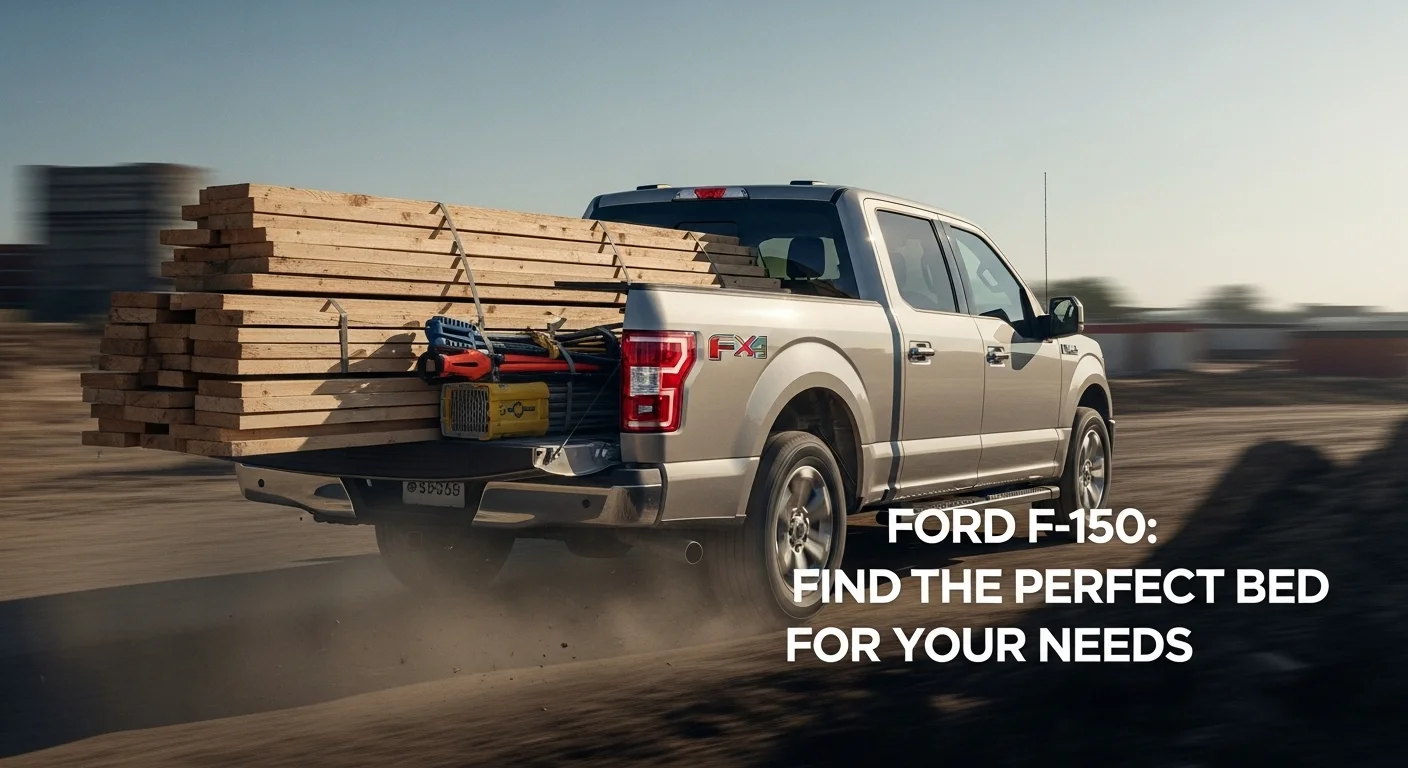
Saturday morning last month. Guy pulls up to my shop with a brand new F-150 SuperCrew. Five and a half foot bed. Gorgeous truck. Says he needs help loading some lumber. We walk around back. He’s got twelve foot boards. Trying to figure out how to make them fit.
Why’d you get the short bed? I ask. Dealer said it was the most popular. Popular doesn’t mean right for everyone. We ended up having to angle the boards diagonally with the tailgate down and a red flag hanging off the back. Looked ridiculous. Drove home at thirty miles an hour.
Three weeks later he trades it in. Gets a SuperCab with the six and a half foot bed. Much happier now. Point is, bed size matters. Really matters. Get it wrong and you’ll regret it every time you need to haul something. Ford offers three bed lengths on the F-150. Each one works better for different situations. Let me break down which one actually makes sense for what you do with your truck.
Quick Answer
Ford F-150 comes with three bed options. Five and a half feet. Six and a half feet. Eight feet. Short bed works great for city driving and daily commuting. Fits in parking spots easier. Turns tighter. Better for people who mostly haul smaller stuff like groceries or sports gear.
Mid-size bed at six and a half feet is the sweet spot for most folks. Long enough for plywood sheets. Short enough to still park reasonably. Good all-around choice. Long bed at eight feet is for serious work. Contractors. Landscapers. Farmers. People who regularly haul full sheets of building materials or big equipment.
Your choice depends entirely on what you actually need to haul. Not what looks cool. Not what the dealer has on the lot. What you’re really gonna use it for. Let me walk through each option so you can figure out which one fits your life.
What Are the Ford F-150 Bed Sizes
The 2025 F-150 gives you three bed lengths to pick from. Same three lengths they’ve been offering for years now. Five and a half footer is the shortest. Technically listed as 5.5 feet but actually measures about 67 inches inside the bed. Good for around town driving and lighter loads.
Six and a half footer is middle ground. Measures about 78 inches inside. Most versatile option for people who need a real truck but don’t want something massive. Eight footer is the long bed. Around 96 inches inside. Full eight feet. Handles anything you can throw in there.
All three use what Ford calls the Styleside box. Basically means the bed sides are flush with the cab. Not those old Flareside beds with the rounded wheel wells sticking out. Inside width stays the same across all three. About 50 inches between the wheel wells. Depth is roughly 21 inches from bed floor to the top of the bed rail.
Volume changes based on length obviously. Short bed holds about 52 cubic feet. Mid bed is around 62 cubic feet. Long bed maxes out at about 77 cubic feet. Those numbers don’t mean much until you actually try loading stuff. Then you realize how much difference that extra foot or two makes.
Overview of Ford F-150 Bed Sizes & Cab Styles
Here’s where it gets interesting. Not every cab style can be matched with every bed length. Regular Cab is the two door setup. Bench seat. No back seat. Can get it with either six and a half foot bed or eight foot bed. Can’t get the short bed with Regular Cab.
SuperCab has the smaller rear doors that open backwards. Little jump seats in back. Can get either five and a half foot bed or six and a half foot bed. No eight footer available. SuperCrew has four full doors. Real back seat. Most popular configuration by far. Only comes with five and a half foot bed or six and a half foot bed. Eight footer isn’t an option.
So if you absolutely need that eight foot bed, you’re limited to Regular Cab or SuperCab. Want a crew cab with full doors and actual back seat space? Maximum bed length is six and a half feet. This trips people up constantly. They want a crew cab with an eight foot bed. Doesn’t exist. Can’t get it.
Ford designs it this way because overall truck length matters. SuperCrew with an eight foot bed would be ridiculously long. Couldn’t park it anywhere. Horrible turning radius. Think about what matters more. Passenger space or bed length. Can’t max out both.
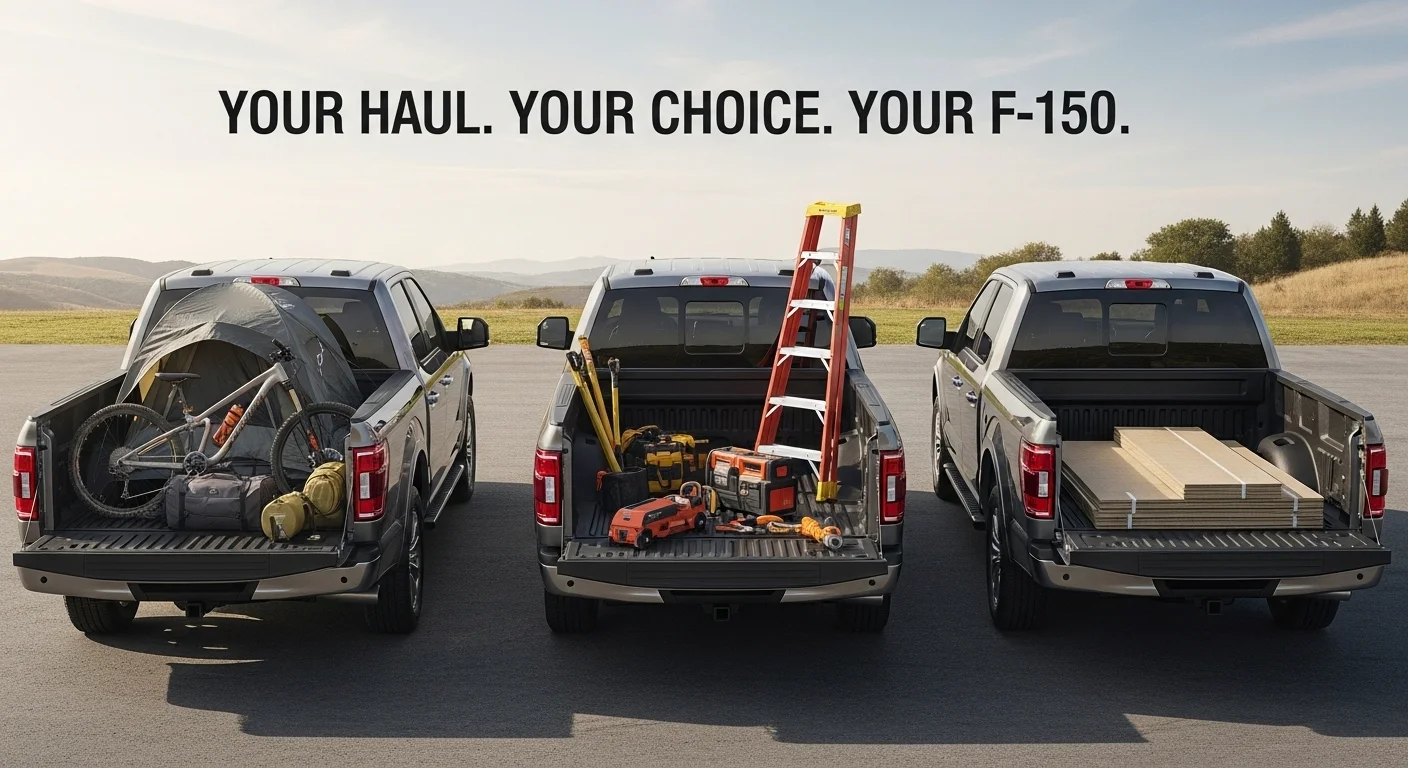
Your Haul Your Choice Your F-150
Choosing bed size comes down to what you haul most often.
Daily driver who occasionally throws some bags of mulch in back? Short bed works fine. Maybe you grab some two by fours from Home Depot once in a while. Toss in some camping gear on weekends. Five and a half footer handles all that.
Contractor who needs to haul materials but also wants back seat space for the crew? Six and a half footer makes sense. Full sheets of plywood fit diagonally with the tailgate down. Four by eight drywall sheets same deal. Not perfect but workable.
Full-time work truck that’s loading construction materials every single day? Eight footer is mandatory. Plywood lies flat. Longer boards fit without hanging out. Way easier to secure loads.
I’ve watched guys struggle for years with the wrong bed size. Contractor with a short bed constantly has stuff hanging out the back. Flagging it. Tying it down at weird angles. Pain in the butt every single day.
Meanwhile some office worker bought an eight foot long bed because he thought it looked more like a real truck. Thing barely fits in his garage. Never hauls anything bigger than a cooler. Wasted all that extra length. Match the bed to your actual life. Not the life you imagine having. The one you really live.
Ford F-150 Bed Size Dimensions by Year
Good news here. Bed dimensions haven’t changed much in recent years. From 2018 through 2025 the measurements stayed pretty consistent. Inside width between wheel wells is 50.6 inches. Depth is 21.4 inches. Those numbers are the same whether you’re looking at a 2020 or a 2025.
Bed lengths stayed the same too. 5.5 footer, 6.5 footer and 8 footer. No changes year to year. Volume stayed consistent. Short bed around 52 to 53 cubic feet. Mid bed around 62 cubic feet. Long bed about 77 cubic feet.
Why’s this matter? Because if you’re shopping used, you don’t have to worry about year-to-year differences. A 2019 six and a half foot bed hauls the same as a 2024 six and a half foot bed. Makes shopping easier. Expands your options when looking at different model years. Only real differences between years show up in trim levels and technology. Bed size itself hasn’t changed.
2025 Ford F-150 Dimensions Width Length And Height
Overall truck size changes based on what bed and cab you pick. Width is pretty consistent. About 80 inches wide not counting mirrors. With mirrors folded out you’re closer to 96 inches. Matters when squeezing through tight spots or parking in a standard garage.
Length varies a lot. SuperCrew with short bed runs about 231 inches total. Regular Cab with long bed stretches out to around 250 inches. That’s almost 20 inches difference. Over a foot and a half.
Height depends on suspension and trim. Base models sit around 75 inches. Lifted trims or ones with bigger tires can hit 78 or 79 inches. Most residential garages have eight foot doors so you’re usually fine.
These numbers matter for real-world stuff. Will it fit in your garage? Can you park it in a standard parking spot? How’s it gonna handle tight city streets? I had customers buy trucks without checking garage clearance. Get home and the door won’t close. Truck’s too long. Ends up sitting in the driveway. Could’ve avoided that by measuring first.
Room for Crew or Cargo Define Your Drive
Different people need different setups. Family hauler who occasionally needs to throw bikes in back? SuperCrew with short bed. Comfortable for five people. Enough bed space for normal stuff. Easy to park at the grocery store.
Weekend warrior who does home improvement projects? SuperCrew with mid bed. Fits building materials when needed. Still comfortable for passengers. Good balance. Work truck that’s on job sites all day? Regular Cab with long bed. Maximum cargo space. Don’t need back seat room. Truck’s sole purpose is hauling.
Mixed use where you need people space and work capability? SuperCab with mid bed. Compromise between the extremes. Not perfect at either thing but handles both okay. Think about what you do ninety percent of the time. Not the one time a year you might need extra space. Buy for how you actually use the truck daily.
Smarter Access Harder Work
Bed length affects more than just cargo space. Short bed makes tight parking way easier. Shorter wheelbase means better turning radius. Fits in compact parking spots. Easier to maneuver in parking garages.
Long bed is more stable when towing. Extra weight in back helps with tongue weight distribution. Less likely to get pushed around by heavy trailers. Mid bed splits the difference. Decent maneuverability. Decent stability. Jack of all trades.
Also think about loading height. Shorter beds usually sit a bit lower because overall weight is less. Makes getting stuff in and out easier. Longer beds often come on work-spec trucks with stiffer suspension. Bed sits higher. Harder to load heavy stuff. Might need a step stool.
F-150 Bed Options And Model Availability
Not every trim offers every bed length. Base work truck trims like XL and XLT give you all the options. Any cab, any bed length that’s compatible. Ford knows these are work trucks and guys need choices.
Mid-level trims like Lariat and King Ranch mostly focus on the popular configurations. SuperCrew with short or mid bed. Don’t usually see long beds on these. Luxury trims like Platinum and Limited are almost always SuperCrew with short bed. Built for comfort not hauling. If you need a long bed you’re probably not shopping Platinum trim.
Raptor only comes with short bed. Built for off-road performance. Keeping weight down and length manageable matters more than cargo space. Tremor off-road package usually pairs with mid bed. Still capable off-road but more practical for everyday hauling than Raptor. Check what’s actually available before you fall in love with a specific trim. Might not come with the bed you need.
Own the Night Own Your Build
Each bed size has specific advantages. Short bed shines in urban environments. Tight streets. Parallel parking. Underground parking garages. Anywhere space is tight. Also better for off-roading because of shorter wheelbase and better breakover angle.
Downside is limited cargo space. Full sheets of plywood won’t fit flat even diagonally. Long boards stick way out. Reduced payload capacity compared to longer beds. Mid bed works for most people. Four by eight sheets fit with tailgate down. Most lumber fits reasonable well. Still manageable length for parking. Best all-around choice if you can’t decide.
Compromise is you’re not maximizing either capability. Not as maneuverable as short bed. Not as much capacity as long bed. Middle ground. Long bed is pure work truck. Maximum cargo volume. Everything fits. Loading and securing cargo is way easier. Payload capacity is highest.
Tradeoff is size. Thing’s massive. Parking is a hassle. Turning radius suffers. Not fun in city traffic. Really only makes sense if you’re constantly hauling bulky or long materials.
Measure Twice Buy the Right Truck Once
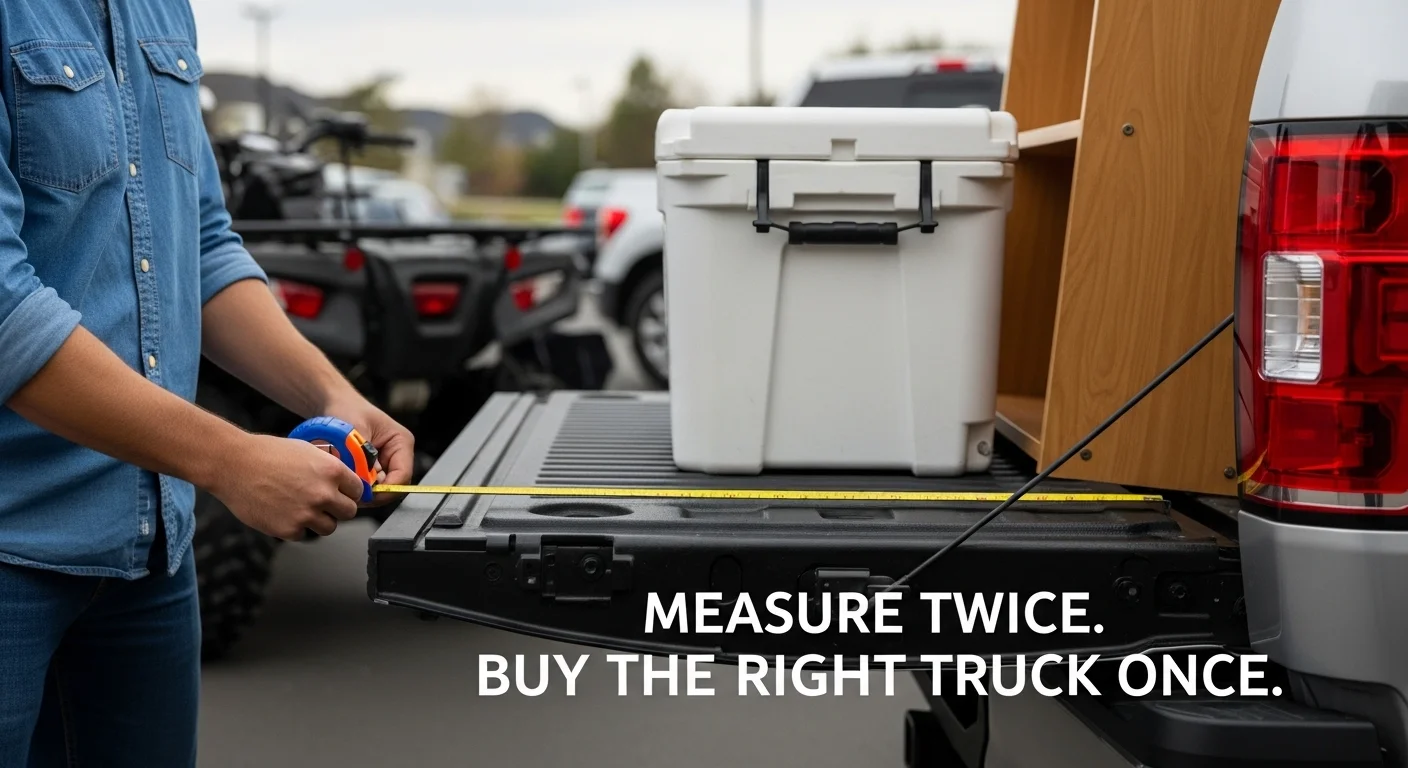
Don’t just guess at what you need. Actually measure stuff. Grab a tape measure. Check how long your typical loads are. Plywood sheets? Eight feet diagonal. Two by fours? Eight feet long. Drywall? Four by eight sheets.
Measure your garage if you plan to park inside. Measure from where the door closes to the back wall. Don’t forget to account for walking space. Measure parking spots you use regularly. Your work parking lot. Your gym. Grocery store. See if a longer truck would create problems.
Think about how often you really need maximum bed length versus how often you deal with parking and maneuverability. Be honest with yourself. I have seen too many guys buy long beds because it feels more like a real work truck. Then they never haul anything that actually needs eight feet. Wasted all that extra size.
Benefits of Different F-150 Bed Sizes
Five and a half foot bed excels at daily driving. Fits everywhere a regular car fits. Well almost everywhere. Great fuel economy compared to longer beds because of less weight and better aerodynamics. Perfect for light hauling. Groceries. Sports equipment. Small furniture. Camping gear. If you rarely haul construction materials this is your bed.
Six and a half foot bed handles serious work while staying practical. Plywood fits with tailgate down. Most building materials work. Appliances fit. Furniture fits. You can still park in normal spots without too much hassle. Turning radius is acceptable. This is the goldilocks bed. Not too short, not too long. Why it’s so popular.
Eight foot bed dominates for commercial work. Full sheets lay flat. Ladders fit inside. Long boards don’t stick out. Maximum payload rating. Easier to organize tools and materials because everything fits properly. If your truck is primarily a work vehicle and passenger comfort doesn’t matter, this is the answer. No compromises on cargo capability.
Ford F-150 Bed Features And Technology
Modern F-150 beds come loaded with useful features. LED bed lighting is standard on most trims. Actually bright enough to work by. Way better than the old incandescent bulbs. Tie-down hooks in each corner. Some models have extra tie-downs in the bed sides. Makes securing loads way easier.
Boxlink system on some trims. Cleats that lock into the bed rail. Attach ramps, dividers, bike racks, whatever you need. Pretty clever system. Power outlets inside the bed on some models. Regular 110 volt outlets. Can run power tools right from the truck. Super convenient on job sites.
Tailgate step on higher trims. Built-in step and handle in the tailgate. Makes climbing into the bed way easier. Especially useful with lifted trucks. Spray-in bedliner options from factory. More durable than drop-in liners. Won’t move around. Better looking. Quieter too.
Proven Dimensions Unmatched Reliability
Ford’s been building trucks forever. They know what dimensions work. Bed width between wheel wells stayed at 50 inches because that’s what fits standard sheets of plywood. Make it narrower and four by eight sheets won’t fit. Make it wider and the truck gets too wide overall.
Bed depth at 21 inches handles most cargo without needing super high sides. Tall enough to contain loose materials. Not so tall you can’t reach over from the side.
The three bed length options cover pretty much every use case. Short for urban drivers. Mid for balanced needs. Long for commercial work. Hard to think of a situation that isn’t covered. These dimensions have been proven over millions of trucks and decades of use. Ford isn’t guessing. They know these sizes work.
Customizing Your Ford F-150 Bed
Most F-150 owners add stuff to their beds eventually. Bedliner is first priority for most people. Protects the bed from scratches, dents and rust. Spray-in liner is best but expensive. Drop-in liner is cheaper but can trap water underneath. Bed mat is cheapest option but doesn’t protect as well.
Tonneau covers are super popular. Keeps stuff dry. Keeps stuff out of sight so it doesn’t get stolen. Marginally improves fuel economy. Lots of styles to choose from. Bed dividers or organizers help if you carry tools regularly. Keeps stuff from sliding around. Makes finding what you need easier.
Toolboxes either mount behind the cab or along the bed sides. Great for securing expensive tools. Weatherproof. Lockable. Takes up bed space though. Bed extender flips out from the tailgate. Gives you extra length for long cargo. Useful compromise if you have a short bed but occasionally need more length.
Rack systems mount to the bed rails. Carry ladders, kayaks, lumber up high. Frees up bed space underneath. Popular with contractors. Most accessories work with any bed length. Just check compatibility before buying.
Leading the Pack The F-150 Advantage
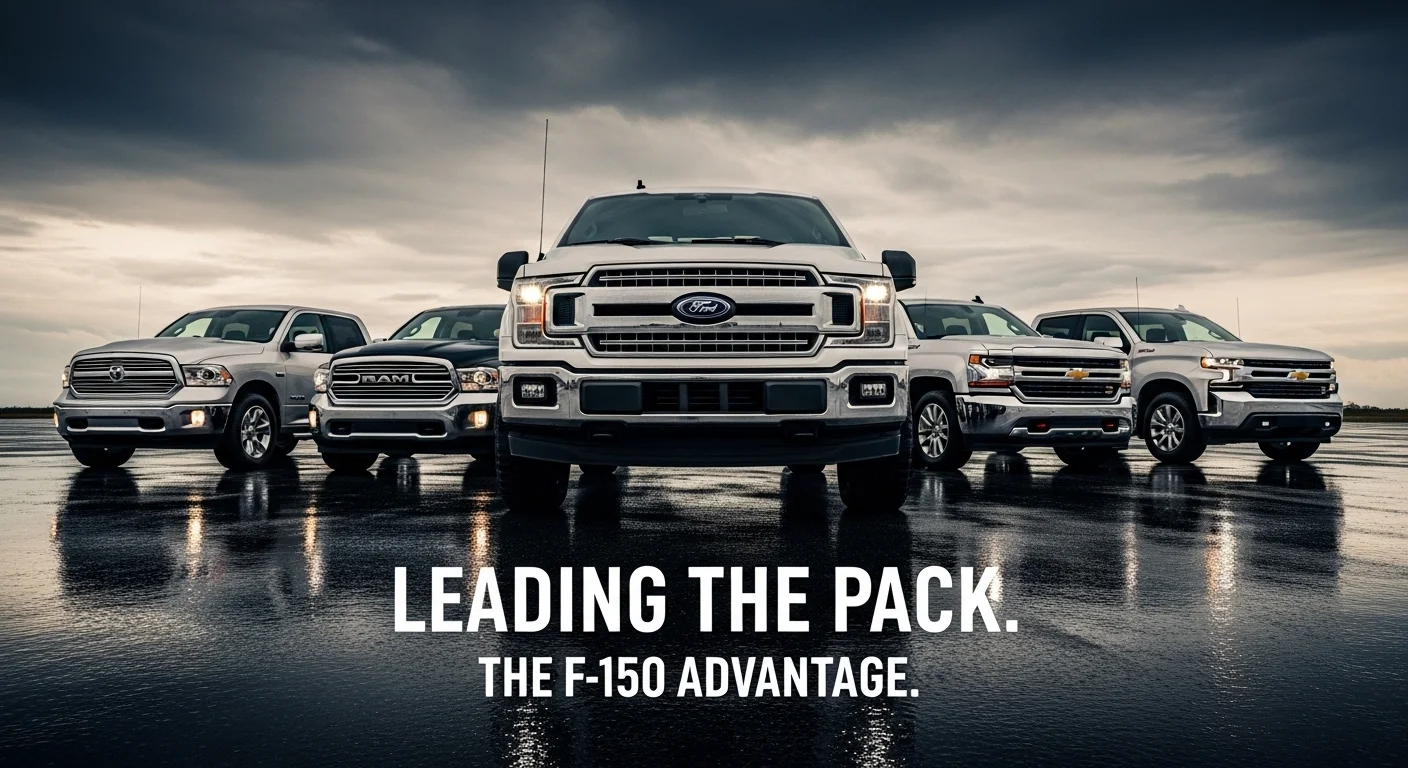
F-150 competes mainly with Chevy Silverado, Ram 1500 and Toyota Tundra. Silverado offers similar bed length options. Five foot eight, six foot six and eight foot beds. Pretty comparable to Ford. Slightly different measurements but basically the same idea.
Ram 1500 has five foot seven, six foot four and eight foot beds. Again, really similar. All the major brands figured out these lengths work best. Tundra offers five and a half, six and a half and eight foot beds. Exact same as Ford. These lengths are industry standard at this point.
Where F-150 pulls ahead is configuration options. More trim levels. More cab and bed combinations. More choices overall. Also higher towing and payload numbers in most matchups. But honestly, all these trucks are good. Bed size differences between brands are minimal. Choose based on overall truck features, not just bed dimensions.
Choosing the Right F-150 Bed Size for Your Needs
Back to the original question. Which bed should you get?
Ask yourself these questions. Do I regularly haul full sheets of plywood or drywall? If yes, you need at least a six and a half footer. Eight footer is better.

Do I need comfortable back seat space for adults? If yes, you’re limited to SuperCrew which maxes out at six and a half feet. Do I mostly drive in the city with tight parking? If yes, short bed makes life easier.
Is this primarily a work truck? If yes, get the longest bed that fits your cab choice. Maximize cargo space. Do I tow heavy trailers often? If yes, longer bed provides better stability.
Is off-roading a priority? If yes, short bed gives better maneuverability and approach angles. Match your answers to the right configuration. Don’t overthink it. The truck should fit how you actually use it ninety percent of the time.
Workhorse or Weekend Warrior Find Your Fit
Different buyers need different setups. Contractor or tradesman. Get Regular Cab or SuperCab with eight foot bed. Maximum cargo space. Hauls everything you need. Back seat isn’t important if it’s just a work vehicle.
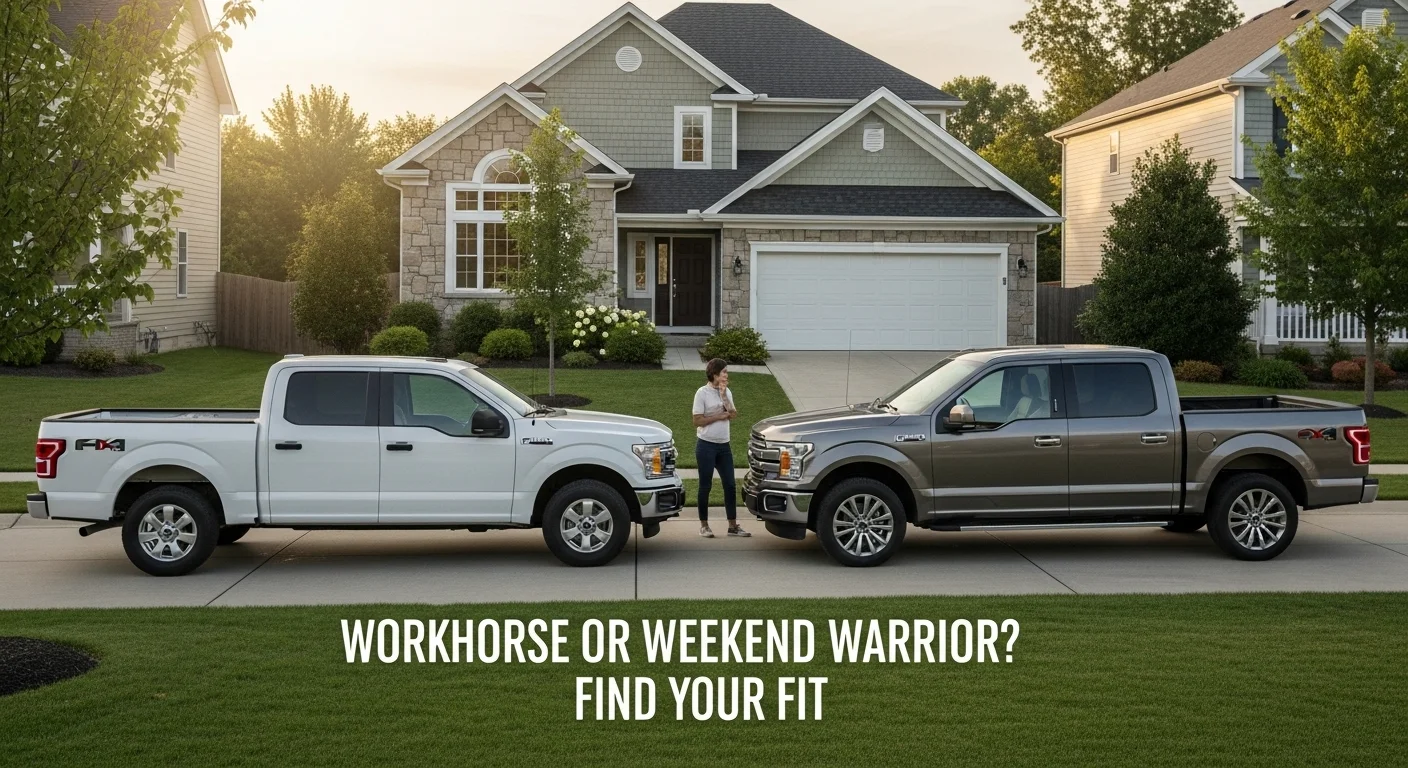
Family man who occasionally does DIY projects. SuperCrew with six and a half foot bed. Comfortable for the family. Enough bed for weekend projects. Good balance. City dweller who needs a truck sometimes. SuperCrew with five and a half foot bed. Easy parking. Still useful. Comfortable daily driver.
Outdoor enthusiast. SuperCab or SuperCrew with short bed. Fits camping gear and bikes. Good off-road with shorter wheelbase. Easier to handle on trails. Fleet or commercial. Regular Cab with eight foot bed. Lowest price. Maximum utility. Built to work. Figure out which category you fall into. Pick the bed that matches.
Conclusion
Ford’s three bed lengths cover just about every possible need. Short bed for easy driving and light hauling. Mid bed for balanced capability. Long bed for serious work.
Most people end up with the six and a half footer. It’s the compromise that works for the widest range of uses. You can haul building materials when needed. You can still park in normal spots. It’s the safe choice if you’re not sure.
But if you know your specific needs, don’t settle for compromise. Need maximum cargo space daily? Get the eight footer. Need maximum maneuverability? Get the five and a half.
Measure your typical loads. Measure your parking situations. Think about how you really use the truck. Not how you imagine using it. How you actually use it today. Test drive different lengths if possible. See how they feel. Park them. Load stuff in them. Nothing beats real experience.
Whatever you pick, buy quality accessories. Good bedliner. Decent tonneau cover. Proper tie-downs. Take care of the bed and it’ll last as long as the truck. The right bed size makes owning an F-150 way better. Wrong bed size is a constant frustration. Take the time to choose correctly up front.
FAQ
What are the different bed sizes for Ford F-150?
Ford offers three bed lengths. Five and a half feet, six and a half feet and eight feet. Each one works better for different hauling needs and driving situations.
What are the different cab and bed options for the Ford F-150?
You can get Regular Cab with six and a half or eight foot bed. SuperCab with five and a half or six and a half foot bed. SuperCrew with five and a half or six and a half foot bed. Eight foot bed isn’t available with SuperCrew.
Are all Ford truck beds the same size?
No. Bed length changes based on what you order. Width between wheel wells stays the same at about 50 inches but length and total volume vary by configuration.
What are the different sizes of Ford F-150?
F-150 comes in multiple sizes based on cab and bed. Smallest is SuperCrew with five and a half foot bed. Biggest is Regular Cab with eight foot bed. Overall length ranges from about 231 inches to 250 inches.
What are the F-150 cab sizes?
Three cab sizes available. Regular Cab is two doors with no back seat. SuperCab has small rear doors and jump seats. SuperCrew has four full doors and real back seat. Each pairs with different bed lengths.