
Ford Flex Years to Avoid: Worst & Best Models (2009-2019)

- Ford Expedition Years to Avoid A Mechanic’s Complete Guide (2026) - January 28, 2026
- 5 Signs You Need to Change Your Transmission Fluid Chevy Silverado - January 27, 2026
- Ford Maverick Years to Avoid: Worst & Best Models (2022-2026) - January 26, 2026
Alright so just last week I had this customer come in with a 2013 Ford Flex and he was absolutley devastated about the water pump failure that mixed coolant with his engine oil. The oil looked like a chocolate milkshake which is never a good sign and it was only at 72000 miles which is way too early for such a catastrophic failure. Cost him like 4800 bucks for engine damage repair plus water pump replacement cause the water pump is inside the engine which makes it super expensive to fix.
Ive been working on Ford Flex SUVs for probly like 10 years now maybe even longer and if theres one thing I can tell you its that some Ford Flex years are absolutley solid especialy the later ones like 2016-2019 and some years are complete disasters especialy 2013 with all those recalls and electrical problems. The year you buy makes a huge difference like a realy big difference Im telling you. Ive seen Flex SUVs run perfect at 180000 miles and Ive seen them with catastrophic water pump failures at 70000 miles.
So let me save you from making an expensive mistake with the wrong Ford Flex year ok. This guide covers everything about Ford Flex reliability and which model years you should stay away from and which ones are solid choices. Im gonna tell you exactly what problems to watch for especialy that internal water pump issue how much repairs cost and what to check when buying used.
Ford Flex Years to Avoid – Complete List
If theres one thing Ive learned from working on Flex SUVs its that you should stay far away from certain years especialy 2009-2010 for early problems and 2013 which is the absolute worst year with the most complaints and recalls. After working on literaly hundreds of these 3-row crossovers over 10 years these are the years I tell people to completly avoid.
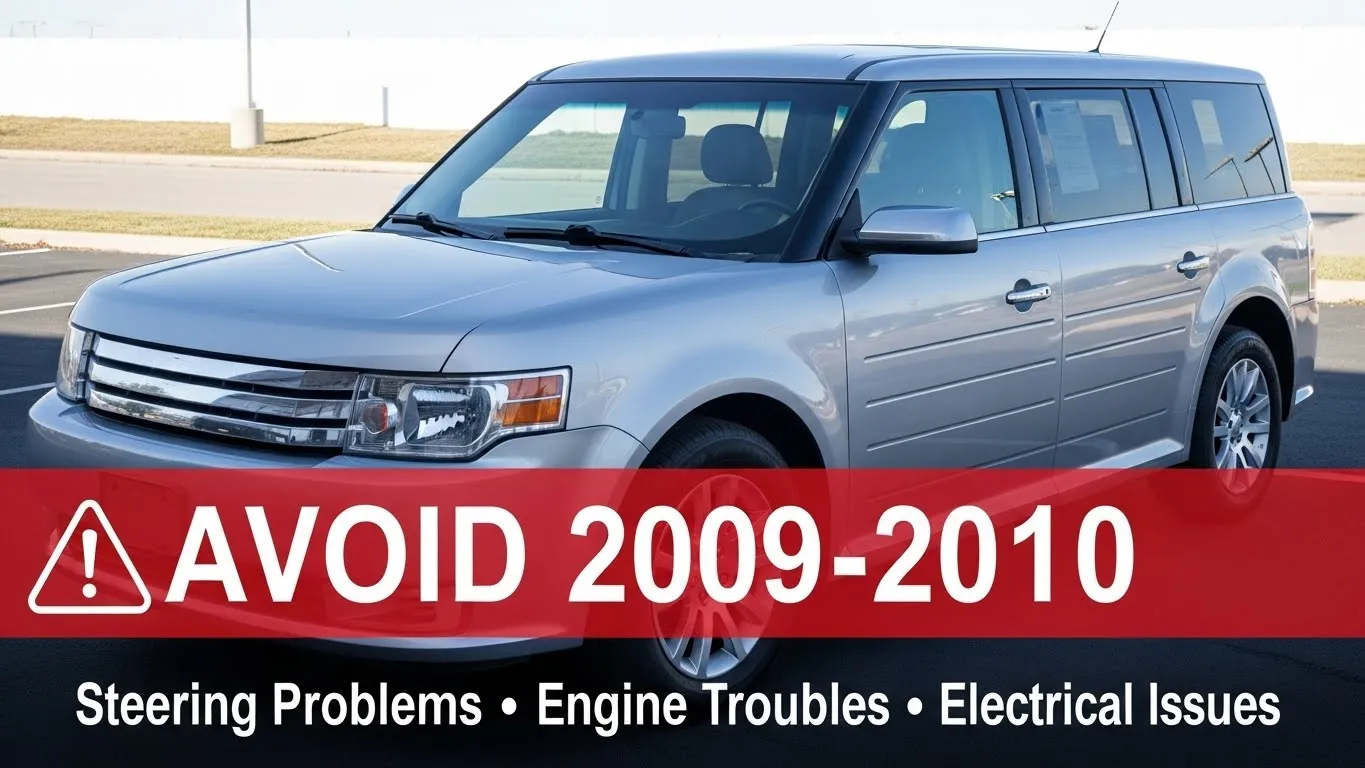
2009-2010 Flex – Early Generation Problems
The 2009 and 2010 Ford Flex had alot of problems especialy the early ones cause they were the first years of production and Ford hadnt worked out all the bugs yet.
Major Problems with 2009-2010:
Steering Problems: The 2009 Focus especialy had steering problems that made driving uncomfortable and potentialy unsafe. Owners reported difficult steering that required alot of effort especialy at low speeds. Some needed complete rack and pinion replacement and power steering pump replacement which is expensive.
I remember one customer with a 2009 Flex and the steering was so hard to turn in parking lots she could barely maneuver the vehicle. Had to replace the rack and pinion which cost her like 1800 bucks maybe even 2000 with labor.
Engine Troubles: The 2010 model is considered one of the worst years cause it was most prone to engine issues including blown engines engine failure and persistent check engine light problems. These problems often occurred at lower mileages which is realy frustrating for owners.
One customer had a 2010 Flex with only 65000 miles and the engine blew up completly. Some internal component failed and destroyed the whole engine. The whole engine had to be replaced which cost him like 5500 bucks maybe even 6000 with labor and installation.
Electrical Issues: Both 2009 and 2010 models had various electrical problems including battery drain warning lights staying on and intermittent electrical failures.
Transmission and PTU Leaks: Some owners reported fluid leaks from the transmission or Power Transfer Unit (PTU) on all-wheel-drive models. These leaks can lead to transmission or PTU failure if not addressed.
Frame Rust: Some 2009 models especialy in rust-belt states had significant frame rust which is a serious safety concern.
Repair Costs:
- Rack and pinion replacement: $1,200-$2,000
- Power steering pump: $400-$800
- Engine replacement: $4,000-$6,000
- Transmission/PTU repair: $1,500-$3,000
- Electrical diagnosis: $200-$500
If you see a 2009-2010 Flex for sale especialy a 2010 model just walk away like seriously just dont do it. The repair costs will be way more than you save on the purchase price I guarantee it.
2013 Flex – Most Complaints & Recalls (WORST YEAR)
The 2013 Ford Flex is absolutley the worst year with the highest number of complaints on platforms like Car Complaints and NHTSA along with the most recalls which was six total recalls. This year had so many problems its crazy.
Electrical System Glitches: The most prominent issue with 2013 models was electrical problems. The door ajar light would stay on even when all doors were closed. Some owners experienced complete loss of power while driving which is super dangerous. Others had no-start conditions where the vehicle just wouldnt start at all.
Electronic Power-Assist Steering (EPAS) Failure: The 2013 Flex was included in the 2011-2013 EPAS recall. The EPAS system could fail completly causing sudden loss of power steering assist or even steering lock-up. When this happens the steering wheel becomes super hard to turn especialy at low speeds which can lead to loss of vehicle control.
I had one customer with a 2013 Flex and the EPAS failed while she was driving on the highway. The steering wheel suddenly became realy hard to turn and she almost lost control of the vehicle. Super scary situation. The EPAS module replacement cost her like 2500 bucks maybe even 2800 with labor.
Fuel Pump Control Module Defects: The 2013 Flex with 3.5L GTDI EcoBoost engine was recalled for defective fuel pump control modules. When the module fails the engine can stall while driving or the vehicle wont start at all. This is a major safety issue especialy if it happens in traffic.
Rear Suspension Toe Link Fracture: Certain 2013-2018 models were recalled due to fractured rear toe links. The rear toe links can fracture due to excessive movement which causes unpredictable handling and increases the risk of a crash. This is a serious safety concern.
Internal Water Pump Failure: The 2013 Flex like all Flex models has the internal water pump problem which Ill cover in detail later. When the water pump fails coolant mixes with engine oil causing catastrophic engine damage.
Brake Issues: Some 2013 owners noticed longer stopping distances which is a safety concern. The brakes just didnt feel as responsive as they should be.
Repair Costs:
- EPAS module replacement: $2,000-$3,000
- Fuel pump control module: Free under recall (if not covered: $800-$1,500)
- Rear toe link replacement: Free under recall (if not covered: $600-$1,200)
- Internal water pump + engine damage: $3,000-$5,000
- Electrical system diagnosis and repair: $500-$1,500
The 2013 Flex is absolutley terrible with six recalls and countless complaints. If you see one for sale even if its cheap run away as fast as you can. The repair costs will bankrupt you I promise.
2014-2015 Flex – Continued Problems
The 2014 and 2015 Ford Flex were a little better than 2013 but they stil had significant issues especialy with electrical systems and fuel pump control modules.
Electrical Problems Continue: The 2014 model had electrical problems as the top complaint similar to 2013. Owners reported various electrical glitches including warning lights battery drain and intermittent failures.
Fuel Pump Control Module: The 2015 Flex was included in the fuel pump control module recall along with 2013-2014 models. This defect can cause engine stalling or no-start conditions.
Electric Power Steering Failure: The 2014 Flex had EPAS failures even though it wasnt included in the official 2011-2013 recall. Some owners reported sudden loss of power steering which is dangerous.
Power Liftgate Struts: Both 2014 and 2015 models had issues with power liftgate struts failing prematurely. The liftgate wouldnt stay open or would close unexpectedly.
Power Takeoff Unit (PTU) Leaks: Some owners reported oil leakage from the PTU on all-wheel-drive models. If the PTU runs low on oil it can fail completly which is expensive to replace.
Lost Power While Driving: The 2015 model had reports of complete loss of power while driving which is a major safety issue.
Repair Costs:
- Electrical system repair: $800-$1,500
- Fuel pump control module: Free under recall (if not covered: $800-$1,500)
- EPAS repair: $2,000-$3,000
- Power liftgate struts: $300-$600
- PTU replacement: $1,500-$2,500
The 2014-2015 years are not as bad as 2013 but theyre stil risky especialy the 2014 with electrical problems and 2015 with fuel pump issues.
Best Ford Flex Years to Buy
Now for the good news cause there are some realy solid Flex years out there especialy the later models from 2016-2019.

2016-2019 – Latest Generation (RECOMMENDED)
The 2016 2017 2018 and 2019 Ford Flex are the most reliable years with the fewest complaints and issues. These are the years I recommend if you want a Flex.
Why 2016-2019 Stand Out:
- Improved reliability (Ford addressed earlier issues)
- SYNC 3 infotainment system (way better than older SYNC)
- Modern safety features (blind spot monitoring lane keeping assist)
- Better build quality
- Fewer electrical problems
- Very few major complaints
The 2016+ models show that Ford finaly got the Flex right after years of problems. The electrical systems are more stable the EPAS steering is more reliable and overall quality is better.
Personal Experience: Ive worked on probly 15 of the 2016-2019 models and havent seen any major problems like nothing serious at all. Just regular maintenance stuff like brakes oil changes tires you know the normal stuff. One customer has a 2017 Flex with like 125000 miles and its stil running strong.
What to Look For:
- Check for water pump leaks (stil a concern even on newer models)
- Make sure all recalls have been completed
- Test SYNC 3 system
- Check for any electrical glitches
- Look for maintenance records
Value Proposition: You can find 2016-2019 Flex SUVs for like 15000 to 28000 bucks depending on mileage trim and condition. Thats a good value for a reliable 3-row crossover with good space and features.
Non-Turbo Models – Best Reliability
If you want the most reliable Ford Flex get a non-turbo model with the 3.5L naturally aspirated V6 engine. The non-turbo models are way more reliable than the EcoBoost turbo models.
Why Non-Turbo is Better:
- Avoids turbocharger problems (oil leaks turbo failure)
- No turbo oil consumption issues
- No carbon buildup problems
- Better longevity past 150000 miles
- Simpler engine design
- Cheaper to maintain
The EcoBoost turbo models especialy the 3.5L GTDI have issues like turbo problems oil consumption ignition problems and carbon buildup. The non-turbo 3.5L V6 avoids all these problems.
Personal Recommendation: If your buying a used Flex especialy an older one like 2011-2015 go with the non-turbo model. Youll have way fewer problems and lower maintenance costs.
What Makes 2016+ Better
The 2016 and newer Flex models are better cause Ford addressed most of the earlier issues:
- Better electrical system design
- Improved EPAS steering reliability
- SYNC 3 instead of problematic older SYNC
- Better build quality overall
- Modern safety features
- Fewer recalls
The 2016+ models are the sweet spot for Ford Flex reliability.
Common Ford Flex Problems by Year
Let me break down what Ive seen with each year range cause this will help you know what to look for when buying used or what to expect if you already own one.
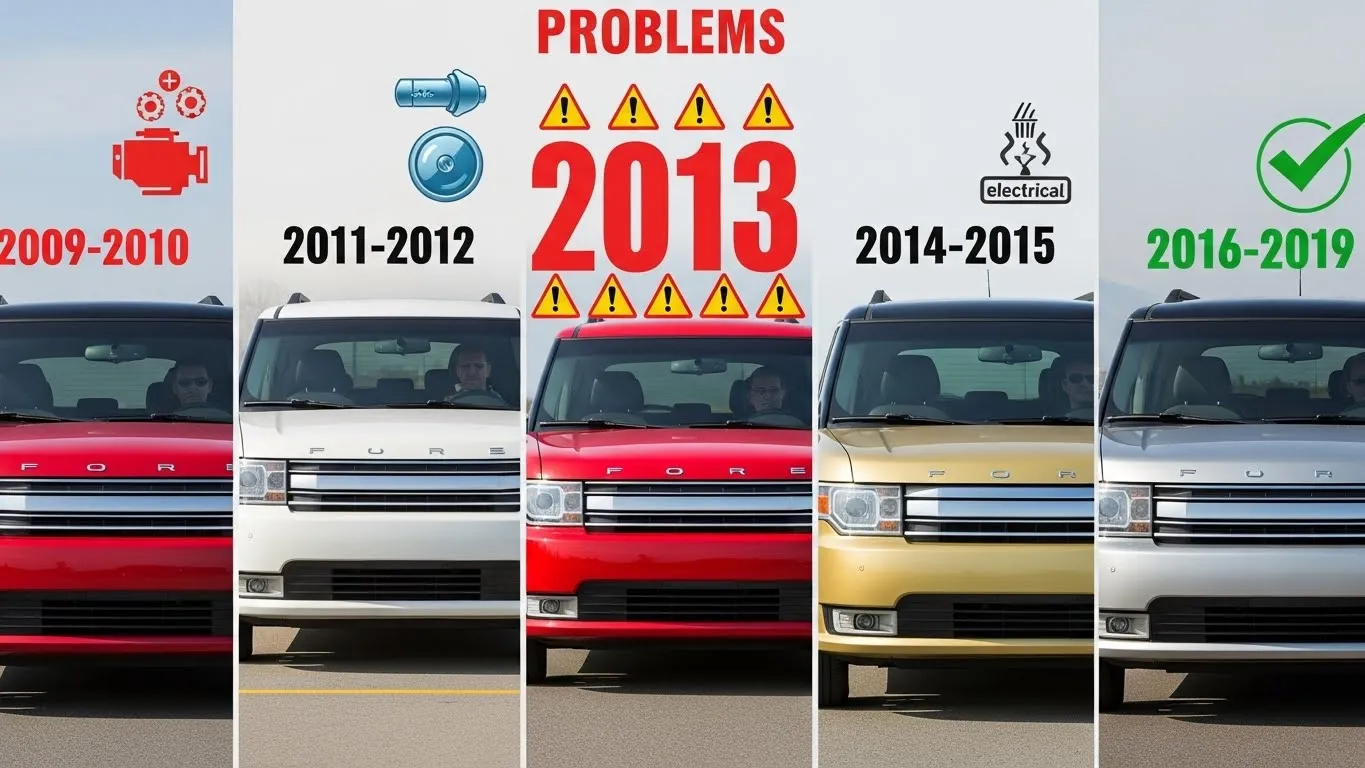
2009-2010 Common Problems
Steering Problems: Difficult steering especialy in parking lots. Rack and pinion failures. Power steering pump failures. Mostly on 2009 models.
Engine Troubles: Blown engines at low mileage. Engine failure. Check engine light. Mostly on 2010 models.
Electrical Issues: Battery drain. Warning lights staying on. Intermittent electrical failures.
Transmission/PTU Leaks: Fluid leaks from transmission or PTU on AWD models.
2011-2012 Common Problems
EcoBoost Engine Problems: Turbo failures. Oil consumption. Ignition problems. Carbon buildup. Mostly on EcoBoost models.
EPAS Failures: Electronic Power-Assist Steering failures. Included in 2011-2013 recall.
Internal Water Pump Failure: Water pump inside engine fails. Coolant mixes with oil. Catastrophic engine damage.
2013-2015 Common Problems
Electrical System Glitches: Door ajar light staying on. Loss of power while driving. No-start conditions. Worst on 2013 and 2014.
EPAS Failures: Sudden loss of power steering. Steering lock-up. 2013 in recall 2014 not in recall but stil has problems.
Fuel Pump Control Module: Engine stalling. No-start conditions. 2013-2015 recall issued.
Rear Toe Link Fracture: Rear suspension toe links fracture. Loss of vehicle control. 2013-2018 recall.
Internal Water Pump Failure: Stil a major concern on all years.
2016-2019 Common Problems
Minor Electrical Glitches: Occasional electrical issues but way less than earlier years.
Power Liftgate Malfunctions: Liftgate sporadically fails to open or close. Mostly on 2019 models.
Backup Camera Issues: Camera occasionally blacks out. Mostly on 2019 models.
Door Ajar Warning Light: Stays on due to early failure of door lock sensors. Mostly on 2019 models.
Water Pump: Stil a concern even on newer models but less common.
Very Few Major Issues: The 2016-2019 models are way more reliable than earlier years. Most problems are minor and covered under warranty.
Ive probly seen like 15 water pump failures on Flex SUVs over the years. Thats how serious that problem is.
Internal Water Pump Problems – Deep Dive
The internal water pump in Ford Flex is one of the worst design flaws Ive ever seen in automotive history like seriously one of the worst. Let me explain exactly what happens cause Ive dealt with so many of these failures I could write a book about it.
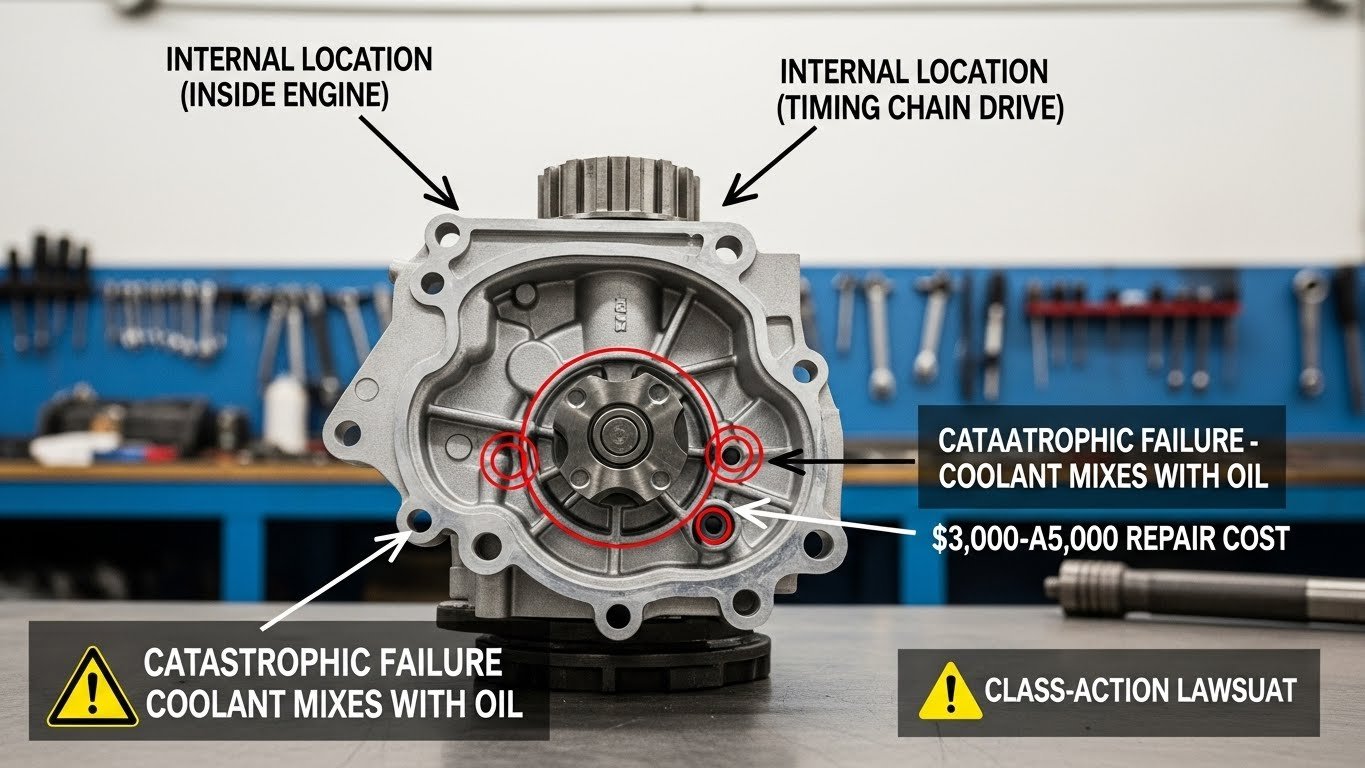
Design Flaw – Water Pump Inside Engine
The major problem with the Ford Flex especialy models equipped with the 3.5L and 3.7L V6 Cyclone engines is that the water pump is located inside the engine. Most cars have external water pumps that are easy to access and replace. But Ford decided to put the water pump inside the engine driven by the timing chain.
Why This is a Problem: When an external water pump fails it leaks coolant outside the engine. You see a puddle under your car and you know theres a problem. You replace the water pump and your done.
But when an internal water pump fails it leaks coolant directly into the engine oil. The coolant mixes with the oil creating what looks like a chocolate milkshake. This contaminated oil cant lubricate the engine properly which causes catastrophic engine damage or complete engine failure.
Catastrophic Failure – Coolant Mixing with Oil
When the internal water pump fails heres what happens:
Stage 1 – Initial Leak: The water pump seal starts to fail. Small amounts of coolant leak into the engine oil. You might not notice anything at first.
Stage 2 – Oil Contamination: More coolant leaks into the oil. The oil level rises cause coolant is being added. The oil turns milky or looks like chocolate milk. Engine lubrication starts to fail.
Stage 3 – Engine Damage: The contaminated oil cant lubricate the engine bearings pistons and other moving parts. Metal-on-metal contact occurs. Engine components start to wear rapidly. You might hear knocking or rattling noises.
Stage 4 – Complete Failure: The engine seizes or fails completly. You need a complete engine replacement or major engine rebuild. This can cost 5000 to 8000 bucks or even more.
Personal Experience – 15+ Water Pump Failures
Ive seen probly 15 or more Flex water pump failures over the years. The most common scenario is an owner brings in their Flex cause the check engine light is on or the engine is running rough. I check the oil and it looks like chocolate milk which is never a good sign.
One customer had a 2013 Flex with 72000 miles. She noticed the engine running rough and brought it in. Checked the oil and it was completly contaminated with coolant. The water pump had failed and coolant had been mixing with oil for probly a few weeks. The engine bearings were damaged the cylinder walls had scoring and the whole engine needed to be rebuilt. Cost her like 4800 bucks for the repair.
Another customer had a 2011 Flex with 95000 miles. Same problem water pump failed coolant in oil engine damage. He caught it early cause he checks his oil regularly so the damage wasnt as bad. But it stil cost him like 3200 bucks for water pump replacement and minor engine work.
Symptoms of Water Pump Failure
Early Warning Signs:
- Coolant level dropping (check your coolant reservoir regularly)
- Sweet smell from exhaust (coolant burning)
- Engine running slightly rough
- Check engine light
Advanced Symptoms:
- Oil looks milky or like chocolate milk (check your dipstick)
- Oil level rising (coolant adding to oil)
- Engine overheating
- White smoke from exhaust (coolant burning)
- Knocking or rattling noises from engine
Critical Stage:
- Engine wont start
- Complete loss of power
- Engine seized
If you see any of these symptoms especialy milky oil get your Flex to a mechanic imediately. The sooner you catch it the less damage there will be.
High Repair Costs
The repair costs for internal water pump failure are insane cause the water pump is inside the engine:
Water Pump Replacement Only: If you catch it early before major engine damage: $1,500-$2,500
The mechanic has to remove the timing chain cover disassemble part of the engine replace the water pump and reassemble everything. Its a 8-12 hour job.
Water Pump + Minor Engine Damage: If theres some bearing wear or cylinder scoring: $3,000-$4,000
Water Pump + Major Engine Damage: If the engine needs rebuild or replacement: $4,500-$8,000
Some owners have reported costs as high as 5000 to 6000 bucks just for the water pump and related repairs.
Class-Action Lawsuits
The internal water pump problem has led to multiple class-action lawsuits against Ford. Thousands of Flex owners and owners of other Ford vehicles with the same engine have joined these lawsuits.
2021 Class-Action Settlement: In June 2021 a class-action settlement was approved. The settlement offered:
- Reimbursement of up to $675 for water pump repairs
- Extended warranty coverage: 7 years or 100000 miles from original purchase date
- Covers 2010-2017 Ford models with Cyclone V6 engines including the Flex
2022 Renewed Lawsuit: A renewed class-action lawsuit was filed in New York in January 2022. The lawsuit claims Ford knew about the defective water pumps but continued to sell vehicles without warning buyers. The lawsuit seeks compensation for owners who suffered engine damage due to water pump failures.
Canadian Class Action: A similar class-action lawsuit was certified in Canada citing defective water pumps causing engine failures due to internal coolant leaks.
No Official Recall in US
Despite numerous complaints and class-action lawsuits Ford has not issued an official recall for the water pump issue in the United States. This is frustrating for owners cause a recall would force Ford to fix the problem for free.
The extended warranty from the class-action settlement helps but it only covers repairs up to 7 years or 100000 miles. If your Flex is older or has higher mileage your out of luck.
Prevention Tips (None Really Work)
Unfortunately theres not much you can do to prevent internal water pump failure. Its a design flaw so even if you maintain your vehicle perfectly the water pump will eventualy fail.
What You Can Do:
- Check your coolant level regularly (every month)
- Check your oil regularly (look for milky appearance)
- Watch for early warning signs
- If you notice anything unusual get it checked imediately
What Doesnt Work:
- Regular maintenance wont prevent it (its a design flaw)
- Using special coolant wont help
- Driving gently wont prevent it
The only real solution is to replace the water pump before it fails but that costs 1500 to 2500 bucks which most people dont want to pay for preventive maintenance.
Best Advice: If you own a Flex monitor it closely. If you see any signs of water pump failure get it fixed imediately before it causes engine damage. If your buying a used Flex have a mechanic inspect it thoroughly especialy check the oil for coolant contamination.
EPAS Steering Problems Explained
Electronic Power-Assist Steering failures on 2011-2013 Flex models are serious safety issues that can lead to loss of vehicle control.
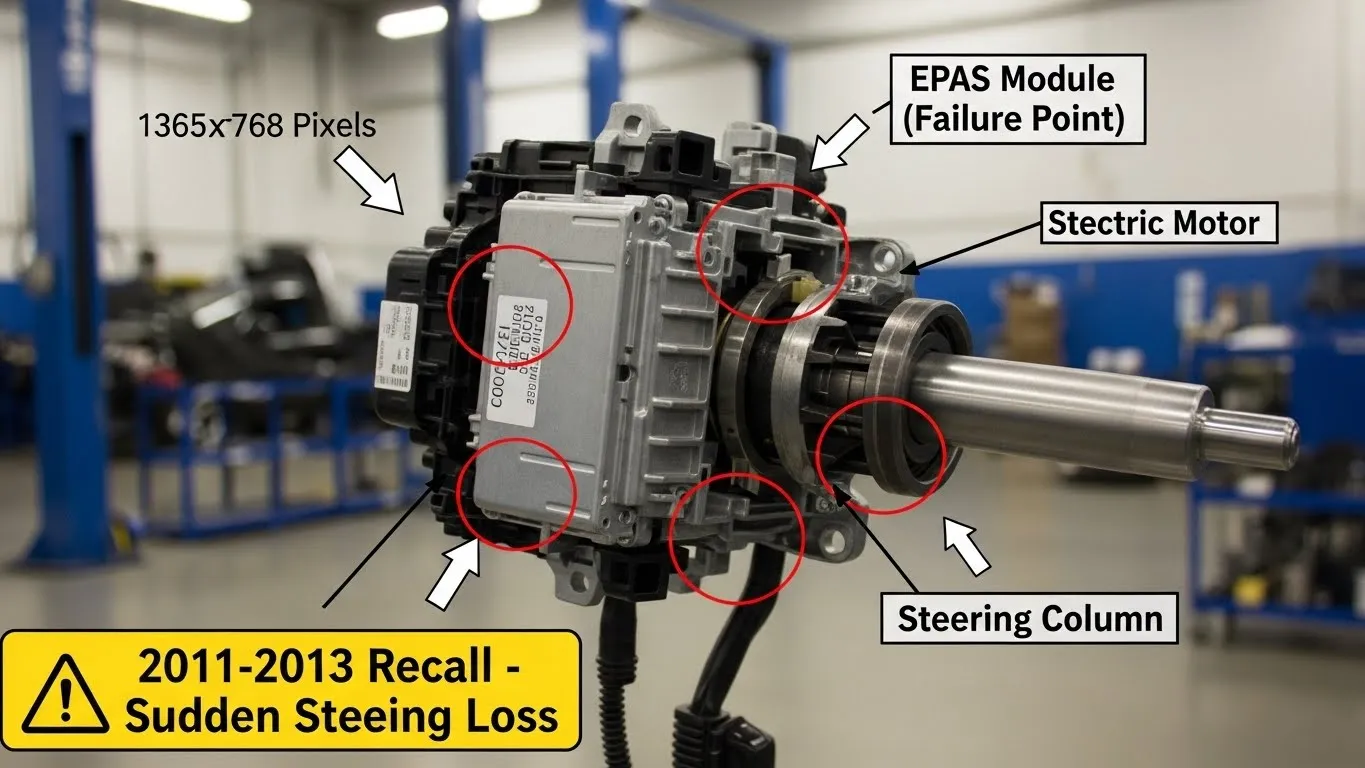
EPAS System Failure
The EPAS (Electronic Power-Assist Steering) system uses an electric motor to provide power steering assist instead of a hydraulic pump. When the EPAS system fails you lose power steering assist which makes the steering wheel super hard to turn.
What Happens: The EPAS system can fail completly causing sudden loss of power steering assist. The steering wheel becomes very hard to turn especialy at low speeds like in parking lots. In some cases the steering can lock up completly.
Why Its Dangerous: If the EPAS fails while your driving especialy at highway speeds you might not be able to steer the vehicle properly. This can lead to loss of control and a crash.
2011-2013 Recall Issued
Ford issued a recall for 2011-2013 Flex models due to defective EPAS systems. The recall notice stated that the EPAS system could shut off while driving increasing steering effort and potentially leading to loss of vehicle control.
Recall Details:
- Affected years: 2011-2013 Ford Flex
- Problem: EPAS system failure
- Fix: Replace EPAS module
- Cost: Free under recall
Some 2010 and 2014 Models Also Affected
Even though the official recall only covered 2011-2013 models some 2010 and 2014 Flex owners have reported similar EPAS failures. These owners were not covered by the recall and had to pay for repairs out of pocket.
Personal Story: I had one customer with a 2014 Flex and the EPAS failed at 68000 miles. She wasnt covered by the recall cause her year wasnt included. The EPAS module replacement cost her like 2700 bucks. She was realy frustrated cause the problem was the same as the recalled models but Ford wouldnt cover it.
Symptoms of EPAS Failure
Early Warning Signs:
- Steering feels heavier than normal
- Power steering assist comes and goes intermittently
- Warning light on dashboard
- Strange noises from steering column
Complete Failure:
- Steering wheel suddenly becomes very hard to turn
- No power steering assist at all
- Steering lock-up
If you notice any of these symptoms get your Flex checked imediately. EPAS failure is a safety issue.
Repair Costs
If Covered by Recall: Free (2011-2013 models)
If Not Covered:
- EPAS module replacement: $2,000-$3,000
- Labor: 3-5 hours
- Total: $2,500-$3,500
The EPAS module is expensive and the labor is intensive cause the mechanic has to remove parts of the dashboard and steering column to access it.
Fuel Pump & Transmission Issues
Fuel pump control module and transmission problems are common on certain Flex years especialy 2013-2015 for fuel pump and various years for transmission.
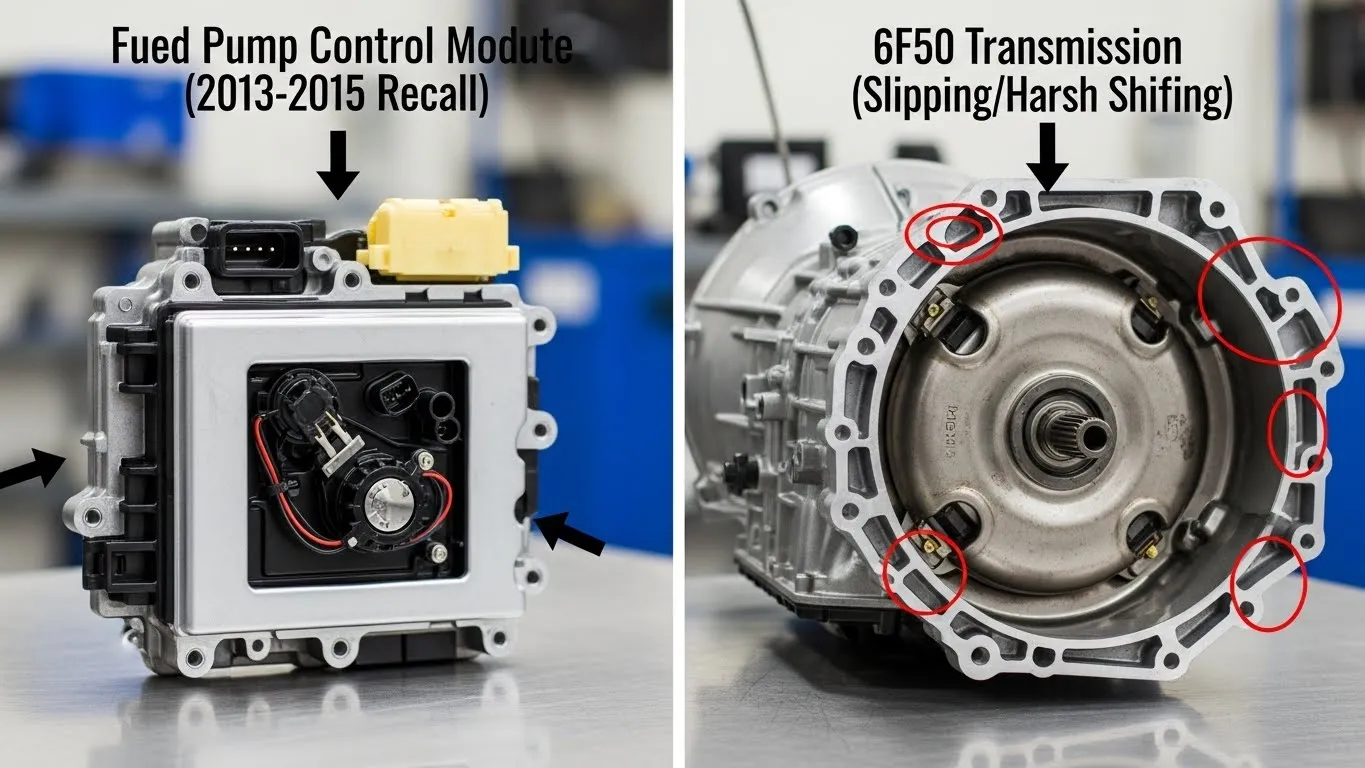
Fuel Pump Control Module Defects (2013-2015 Recall)
The 2013-2015 Ford Flex with 3.5L GTDI EcoBoost engine was recalled for defective fuel pump control modules. When the module fails the engine can stall while driving or the vehicle wont start at all.
What Happens: The fuel pump control module controls the fuel pump. When it fails the fuel pump stops working. Without fuel the engine stalls or wont start.
Symptoms:
- Engine stalls while driving (super dangerous in traffic)
- No-start condition (vehicle wont start at all)
- Engine sputters or runs rough
- Check engine light
Recall Details:
- Affected years: 2013-2015 Ford Flex with 3.5L GTDI EcoBoost
- Problem: Defective fuel pump control module
- Fix: Replace fuel pump control module
- Cost: Free under recall
Repair Costs if Not Covered:
- Fuel pump control module: $800-$1,500
6F50 Transmission Issues
The Ford Flex uses the 6F50 automatic transmission which has several common problems.
Slipping Erratic Shifting or Harsh Engagement: The transmission slips between gears or shifts erraticaly. You might feel harsh jolts when engaging Drive or Reverse. These issues are often caused by design flaws in the 6F50 transmission valve body.
Sluggish Acceleration/Hesitation: Some owners report sluggish acceleration or hesitation during a rolling stop followed by a harsh bump or slip upon takeoff. This is caused by a design flaw in the valve body.
Overheating: The transmission can overheat especialy when towing heavy loads driving in stop-and-go traffic or on mountain roads. Overheating can lead to severe transmission damage if not addressed.
Shift To Park Message: Some vehicles display “Shift To Park” or “Transmission Not In Park” message even when the transmission is in Park. This can prevent the key from being removed and may lead to battery discharge.
Personal Experience: Ive seen probly 8 Flex transmissions with slipping or harsh shifting issues. Most cases required transmission rebuild or replacement which costs 2500 to 4000 bucks.
Repair Costs:
- Transmission fluid change: $200-$400
- Valve body replacement: $800-$1,500
- Transmission rebuild: $2,000-$3,500
- Transmission replacement: $3,000-$5,000
PTU Leaks (AWD Models)
All-wheel-drive Flex models have a Power Transfer Unit (PTU) that can develop oil leaks. If the PTU runs low on oil it can fail completly.
Symptoms:
- Oil puddle under vehicle
- Grinding or whining noise from PTU
- AWD system not working
Repair Costs:
- PTU seal replacement: $400-$800
- PTU replacement: $1,500-$2,500
Electrical & Suspension Recalls
The 2013-2018 Ford Flex had serious safety recalls for rear suspension toe links and various electrical issues.
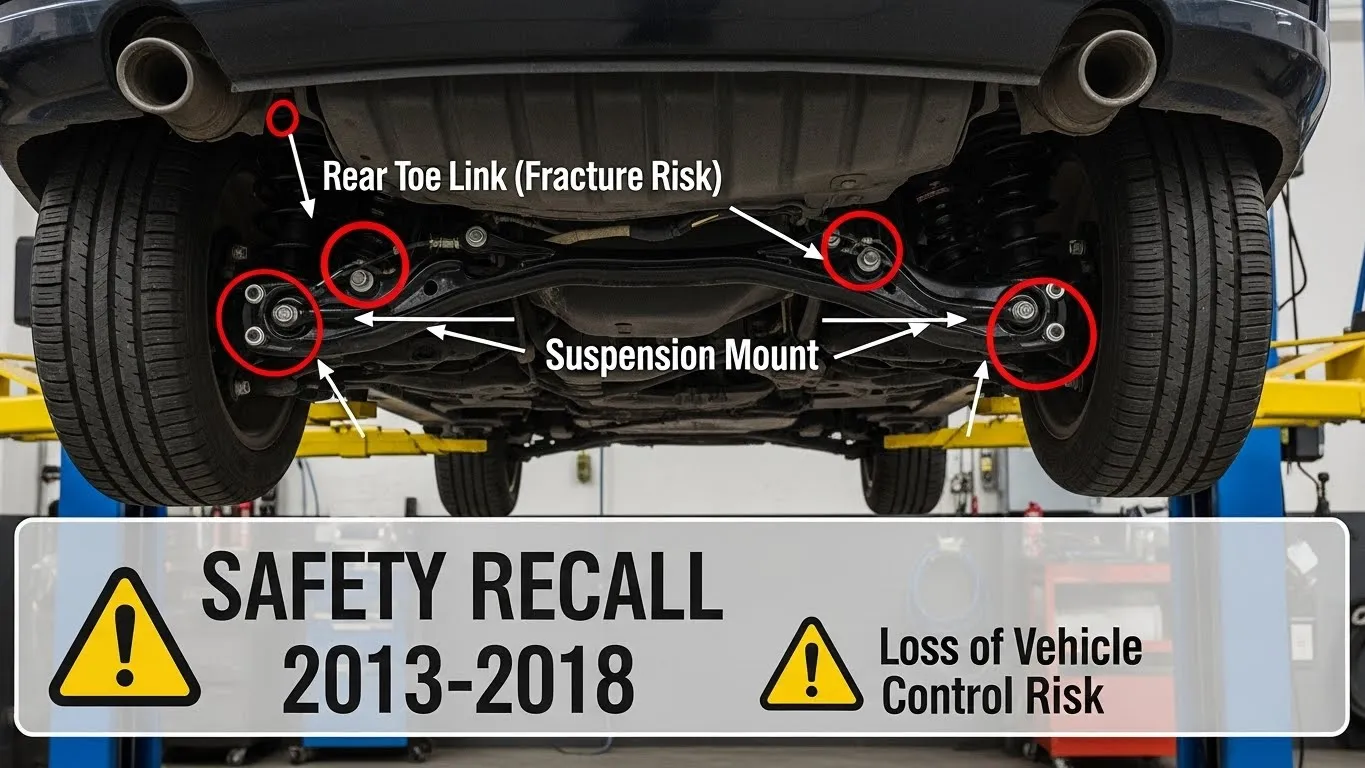
Rear Toe Link Fracture (2013-2018 Recall)
Certain 2013-2018 Flex models were recalled due to fractured rear toe links. The rear toe links can fracture due to excessive movement which causes unpredictable handling and increases the risk of a crash.
What Happens: The rear toe links are part of the rear suspension. They control the alignment of the rear wheels. When a toe link fractures the rear wheel alignment goes out of whack. The vehicle becomes hard to control especialy during turns or lane changes.
Symptoms:
- Vehicle pulls to one side
- Unstable handling
- Unusual tire wear
- Clunking noise from rear suspension
Recall Details:
- Affected years: 2013-2018 Ford Flex
- Problem: Rear toe link fracture
- Fix: Replace rear toe links
- Cost: Free under recall
Repair Costs if Not Covered:
- Rear toe link replacement: $600-$1,200 (both sides)
Door Ajar Light Staying On
Many Flex owners especialy 2013-2015 models report the door ajar light staying on even when all doors are closed. This is caused by faulty door lock sensors or door latch mechanisms.
Symptoms:
- Door ajar warning light stays on
- Interior lights stay on (draining battery)
- Vehicle thinks door is open when its closed
Repair Costs:
- Door lock sensor replacement: $150-$300 per door
- Door latch mechanism: $200-$400 per door
Loss of Power While Driving
Some 2013-2015 Flex owners reported complete loss of power while driving. The engine would die suddenly without warning which is super dangerous especialy on highways.
Causes:
- Fuel pump control module failure
- Electrical system malfunction
- EPAS system failure
This is a major safety issue that was addressed through various recalls.
Swollen Lug Nuts
Ford used a two-piece lug nut design with an aluminum cap over a steel core. These lug nuts are prone to swelling and delaminating which makes them difficult or impossible to remove.
Problem: When you need to change a tire or do brake work the lug nuts are swollen and your lug wrench wont fit. You have to cut or grind off the lug nuts which damages the wheel studs.
Solution: Replace with one-piece steel lug nuts.
Repair Costs:
- One-piece lug nuts: $50-$100 (set of 20)
Alternator/Power Supply Cable Recalls (2018-2019)
The 2018-2019 Flex models were recalled due to loose connections in alternator and power supply cables. These loose connections could cause electrical arcs and increase fire risk.
Recall Details:
- Affected years: 2018-2019 Ford Flex
- Problem: Loose alternator/power supply cables
- Fix: Tighten or replace cables
- Cost: Free under recall
Ford Flex vs Competitors
People always ask me how the Flex compares to other 3-row SUVs so heres what Ive seen from working on all of them.
Flex vs Honda Pilot
Reliability: The Honda Pilot is generaly more reliable than the Ford Flex especialy compared to 2009-2010 and 2013-2015 Flex models. But 2016-2019 Flex models are pretty close to the Pilot in reliability.
Common Problems:
- Pilot: Some transmission issues (2016-2019 models) VCM problems on V6 engine minor electrical issues
- Flex: Internal water pump EPAS failures electrical problems fuel pump issues
Which is Better: If your comparing a 2013-2015 Flex to any Pilot the Pilot wins hands down no question. But if your comparing a 2016-2019 Flex to a Pilot theyre pretty close. The Pilot might have a slight edge in reliability but the Flex has more unique styling and better cargo space.
Personal Recommendation: For used SUVs under 20000 bucks Id go with a 2016-2019 Flex or a 2016-2019 Pilot. Both are solid choices. For maximum reliability the Pilot is safer.
Flex vs Toyota Highlander
Reliability: The Toyota Highlander is one of the most reliable 3-row SUVs ever made. Its way more reliable than the Ford Flex especialy compared to problem years.
Common Problems:
- Highlander: Very few problems some minor oil consumption on older V6 engines boring to drive
- Flex: Internal water pump EPAS failures electrical problems various recalls
Which is Better: The Highlander is more reliable but the Flex is more unique and has better styling. The Highlander is boring but it will last forever with minimal maintenance.
Personal Recommendation: If you want maximum reliability get the Highlander. If you want a unique stylish SUV get a 2016-2019 Flex. For reliability the Highlander wins but for style and features the Flex wins.
Flex vs Dodge Durango
Reliability: The Ford Flex and Dodge Durango are pretty similar in reliability if you avoid the bad Flex years. Both have had their share of problems.
Common Problems:
- Durango: Electrical issues HVAC problems transmission issues on older models
- Flex: Internal water pump EPAS failures electrical problems fuel pump issues
Which is Better: The Durango has more power and better towing capacity. The Flex has more unique styling and better cargo space. Reliability is about the same for newer models.
Personal Recommendation: If you need towing capacity get the Durango. If you want unique styling and cargo space get a 2016-2019 Flex.
Ownership Costs: All three SUVs have similar ownership costs for maintenance and repairs. Parts and labor are about the same price. The Flex might be slightly cheaper for parts cause theyre more common than Durango parts.
Buying a Used Ford Flex – Complete Guide
Alright so if your gonna buy a used Ford Flex heres exactly what I check when customers ask me to do a pre-purchase inspection cause Ive found so many problems that buyers had no idea about.
Pre-Purchase Inspection Checklist
Water Pump Inspection (CRITICAL): This is the most important part. You need to check for any signs of water pump failure cause this can cost thousands to fix.
What to check:
- Check oil dipstick – oil should be clean not milky
- Check coolant level – should be at proper level
- Look for coolant leaks around engine
- Check for sweet smell from exhaust (coolant burning)
- Ask seller if water pump has been replaced
- If water pump hasnt been replaced budget for it
If the oil looks milky or like chocolate milk walk away imediately. The water pump has failed and theres probly engine damage.
EPAS Test (for 2011-2014 models):
- Start the engine and turn the steering wheel
- Make sure power steering assist works properly
- Listen for unusual noises from steering column
- Check for warning lights on dashboard
- Test steering at low speeds in parking lot
- Make sure steering doesnt feel heavy or lock up
If the steering feels heavy or you hear noises the EPAS might be failing.
Electrical System Check:
- Test all power windows and door locks
- Check infotainment system (SYNC)
- Test all lights (headlights taillights brake lights turn signals)
- Check dashboard for warning lights
- Make sure door ajar light isnt staying on
- Test AC and heater
- Check for battery drain
Transmission Test:
- Drive the Flex for at least 20 minutes to warm up transmission
- Pay attention to shifting – should be smooth no harsh jolts
- Try hard acceleration – transmission should shift smoothly
- Coast to a stop – watch for delayed downshifts
- Check for transmission fluid leaks under vehicle
- Any slipping jerking or harsh shifting is a RED FLAG
Fuel Pump Module Check (2013-2015):
- Ask seller if fuel pump control module recall has been completed
- Make sure vehicle starts easily
- Check for any stalling or rough running
Rear Suspension Inspection (2013-2018):
- Ask seller if rear toe link recall has been completed
- Check for unusual tire wear
- Test drive and pay attention to handling
- Listen for clunking noises from rear suspension
Maintenance Records:
- Ask for all maintenance records
- Look for regular oil changes
- Check if water pump has been replaced
- Check if recalls have been completed
- Look for any transmission work
What to Listen For:
- Water pump problems (rough running check engine light)
- EPAS failure (heavy steering noises)
- Transmission problems (slipping harsh shifting)
- Electrical issues (warning lights glitches)
Test Drive Tips
What to Feel For:
- Smooth acceleration no hesitation
- Transmission shifts smoothly no slipping
- Steering feels normal not heavy
- Brakes stop the vehicle quickly
- No vibrations at any speed
Warning Signs:
- Milky oil (water pump failure – major red flag)
- Heavy steering (EPAS failure)
- Transmission slipping or harsh shifting
- Door ajar light staying on
- Any unusual noises
If you notice any of these walk away. Dont buy a vehicle with problems hoping you can fix them cheap cause it never works out that way especialy with water pump or EPAS issues.
Questions to Ask Seller
- Why are you selling it?
- Has the water pump ever been replaced?
- Any EPAS or steering problems?
- Have all recalls been completed?
- Any electrical issues?
- Do you have all maintenance records?
- Has the transmission ever been serviced?
- Any engine problems or check engine lights?
Listen to how they answer. If they hesitate or seem unsure thats a red flag.
Ford Flex Maintenance Tips
If you already own a Ford Flex or your gonna buy one heres how to keep it running as long as possible based on what Ive seen work over the years.
Oil Change Schedule: Change your oil every 5000 miles with synthetic oil. I dont care what the owners manual says about longer intervals. Change it at 5000 and your engine will last way longer. This is especialy important cause of the water pump issue – you want to catch any coolant contamination early.
Water Pump Monitoring (CRITICAL): Check your oil and coolant levels every month. Look at your oil dipstick – if the oil looks milky or like chocolate milk get to a mechanic imediately. Check your coolant reservoir – if the level keeps dropping you might have a leak. This is the most important maintenance for Flex owners.
Transmission Fluid: Change the transmission fluid every 60000 miles. The manual says lifetime fluid but thats not true. Fresh fluid helps the transmission last longer especialy the 6F50 which has problems.
EPAS System Care: If you have a 2011-2014 model pay attention to your steering. If it starts to feel heavy or you hear noises get it checked. EPAS failure can happen suddenly.
Electrical System Maintenance: Keep your battery terminals clean. Check for corrosion. Make sure all electrical connections are tight. This helps prevent electrical problems.
Recall Completion: Make sure all recalls have been completed especialy the EPAS recall (2011-2013) fuel pump control module recall (2013-2015) and rear toe link recall (2013-2018). These are safety issues.
DIY vs Mechanic Work: Some stuff you can do yourself:
- Oil changes (if you have the tools)
- Air filter replacement
- Cabin filter replacement
- Wiper blade replacement
- Check fluid levels
Leave these to a mechanic:
- Water pump replacement (inside engine very complex)
- EPAS system work
- Transmission work
- Electrical system diagnosis
- Engine repairs
Cost-Saving Tips:
- Buy parts online (cheaper than dealer)
- Use independent mechanic instead of dealer
- Do simple maintenance yourself
- Fix small problems before they become big problems
- Keep up with regular maintenance
- Monitor water pump closely
Conclusion
The good news is that if you avoid the problem Ford Flex years especialy 2009-2010 and 2013-2015 you can get a realy solid 3-row SUV especialy the 2016-2019 Flex models that will last with proper maintenance and water pump monitoring.
Frequently Asked Questions
What year Ford Flex to avoid?
Avoid 2009-2010 especialy 2010 which had engine troubles and steering problems. Also avoid 2013 which is the worst year with the most complaints and six recalls including EPAS failures fuel pump issues and electrical problems. Skip 2014-2015 if possible cause they had continued electrical and fuel pump issues. The internal water pump problem affects all years but is most concerning on 2009-2015 models. If you want a Ford Flex get 2016-2019 which are way more reliable. The 2016+ models addressed most earlier issues and have SYNC 3 and better build quality. Non-turbo models are more reliable than EcoBoost.
Is Flex or Pilot more reliable?
The Honda Pilot is generaly more reliable than the Ford Flex especialy compared to 2009-2010 and 2013-2015 Flex models. But 2016-2019 Flex models are pretty close to the Pilot in reliability. The Pilot has fewer major problems overall and better resale value. For used SUVs under 20000 bucks a 2016-2019 Flex is a good alternative to a Pilot if you want unique styling. The Flex has better cargo space and more unique design but the Pilot is safer for reliability. Ive worked on both and the Pilot has way fewer water pump and electrical problems.
How long do Ford Flex last?
A well-maintained Ford Flex can easily hit 160000 to 180000 miles maybe even more if you take care of it especialy 2016-2019 models and non-turbo versions. The 2009-2015 models usualy dont last as long cause of water pump EPAS and electrical problems. The key is regular oil changes every 5000 miles transmission fluid changes every 60000 miles and monitoring the water pump closely for any signs of failure. If you catch water pump problems early and fix them the Flex can last a long time. Ive seen 2017 Flex with 125000 miles stil running strong.
What is the water pump problem?
The water pump problem on Ford Flex is caused by a design flaw where the water pump is located inside the engine driven by the timing chain. When the water pump fails it leaks coolant directly into the engine oil. The coolant mixes with oil creating a chocolate milkshake appearance. This contaminated oil cant lubricate the engine properly which causes catastrophic engine damage or complete engine failure. Repair costs are 3000 to 5000 bucks for water pump replacement plus engine damage. This affects all Flex years with 3.5L and 3.7L V6 engines. Class-action lawsuits were filed and a settlement offers up to 675 reimbursement and 7 years/100000 miles warranty but no official recall in US.
Are 2016+ Flex reliable?
Yes the 2016-2019 Ford Flex models are way more reliable than earlier years. Ford addressed most of the major problems including electrical issues EPAS failures and fuel pump problems. The 2016+ models have SYNC 3 infotainment better build quality modern safety features and very few major complaints. The water pump is stil a concern even on newer models but failures are less common. The 2016-2019 models are the best Flex years to buy. Non-turbo models are especialy reliable. Ive worked on probly 15 of the 2016-2019 models and havent seen any major problems.
Best used Flex to buy?
The best used Ford Flex models are 2016-2019 especialy non-turbo versions with the 3.5L naturally aspirated V6. The 2016-2019 models have improved reliability SYNC 3 and modern safety features. You can find them for 15000 to 28000 bucks depending on mileage and trim. The non-turbo models avoid EcoBoost turbo problems like oil consumption and carbon buildup. Avoid 2009-2010 2013 and 2014-2015 no matter how cheap they are cause the repair costs especialy for water pump and EPAS will be more than you save. Always have a pre-purchase inspection done especialy check the oil for coolant contamination.