Ford Taurus Years to Avoid: Worst & Best Models (1986-2019)

- Ford Expedition Years to Avoid A Mechanic’s Complete Guide (2026) - January 28, 2026
- 5 Signs You Need to Change Your Transmission Fluid Chevy Silverado - January 27, 2026
- Ford Maverick Years to Avoid: Worst & Best Models (2022-2026) - January 26, 2026
Just last week I had this customer come in with a 2013 Ford Taurus and she was absolutely devastated about the internal water pump failure that destroyed her engine completely. The coolant leaked into the oil pan mixed with the oil and damaged the bearings so bad the whole engine needed replacement. Cost her like 4200 bucks and the car only had 87000 miles which is way too early for such a catastrophic failure.
Ive been working on Ford Taurus sedans for probably like 12 years now maybe even longer and if theres one thing I can tell you its that some Taurus years are pretty solid especially the 2017-2019 final models and some years have serious problems especially 2003 2012-2014 and 2008-2010. The year you buy makes a huge difference like a really big difference Im telling you. Ive seen Taurus sedans run decent at 180000 miles and Ive seen them with catastrophic water pump or transmission failures at 80000 miles.
So let me save you from making an expensive mistake with the wrong Ford Taurus year ok. This guide covers everything about Ford Taurus reliability and which model years you should stay away from and which ones are solid choices. Im gonna tell you exactly what problems to watch for especially that internal water pump issue and AXODE transmission how much repairs cost and what to check when buying used. Also the Taurus was discontinued in 2019 so theres no 2020 or newer models available.
Ford Taurus Years to Avoid – Complete List
If theres one thing Ive learned from working on Taurus sedans its that you should stay far away from certain years especially 2003 for transmission failures 2012-2014 for water pump disasters and 2008-2010 for engine problems. After working on literally hundreds of these full-size sedans over 12 years these are the years I tell people to completely avoid.
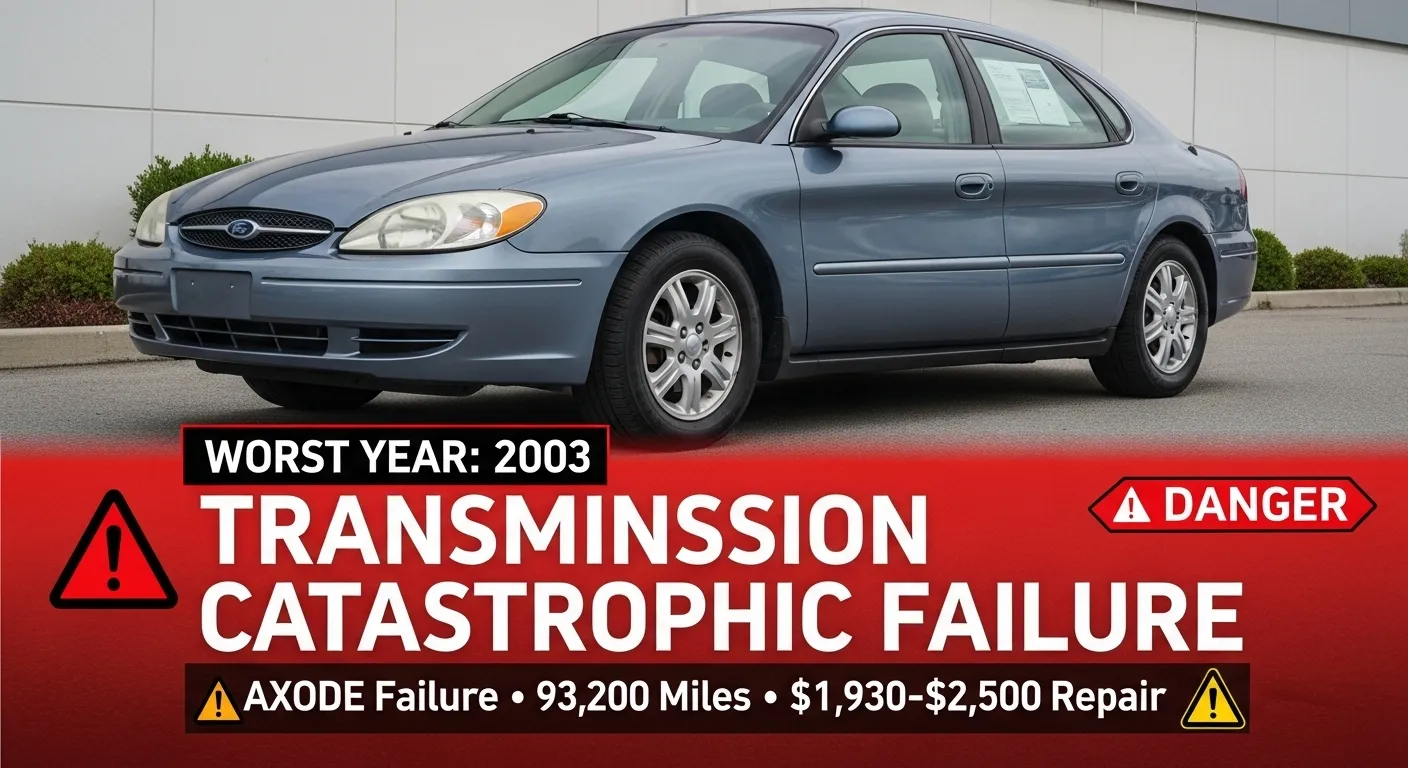
2003 Ford Taurus – Worst Year (Most Complaints)
The 2003 Ford Taurus has the most complaints especially with AXODE/AX4S transmission problems that appear suddenly without warning.
Major Problems with 2003:
Transmission Failure (CATASTROPHIC): The 2003 model had the worst transmission problems in Taurus history. The AXODE/AX4S 4-speed automatic transmission would fail completely and suddenly without any warning codes or check engine lights. Owners reported the car would just stop accelerating or wouldnt engage gears at all.
The average failure mileage was around 93200 miles but Ive seen them fail as early as 75000 miles. The transmission would have stripped torque converter splines or broken transmission shafts. This wasnt a gradual problem it was sudden catastrophic failure.
I remember one customer with a 2003 Taurus and the transmission died at only 89000 miles. She was driving on the highway when the car just stopped accelerating. The engine would rev but the car wouldnt move at all. Had to get towed and the whole transmission needed replacement which cost her like 2300 bucks.
AXODE/AX4S Transmission Design Flaw: The AXODE (later called AX4S) transmission used in 1991-2007 Taurus models had a fundamental design problem. The actuator piston would warp from excessive heat buildup. This required complete transmission teardown or replacement with a remanufactured unit.
Engine Problems: The 2003 also had various engine issues including oil leaks misfires and sensor failures but these were secondary to the transmission disaster.
Electrical Issues: Various electrical problems including malfunctioning automatic headlights sensor failures and battery drain.
Repair Costs:
- Transmission replacement: $1,930-$2,500
- Transmission rebuild: $1,500-$2,000
- Engine repairs: $800-$1,500
- Electrical diagnosis: $200-$500
If you see a 2003 Taurus for sale especially with high mileage just walk away like seriously just dont do it. The transmission failure risk is way too high and the repair costs will be more than you save on the purchase price I guarantee it.
2002, 2004-2005 – Severe Transmission Issues
The years surrounding 2003 also had significant AXODE transmission problems though not quite as bad as 2003.
2002 Ford Taurus: The 2002 model had AXODE transmission failures similar to 2003. Also had oil pan gasket leaks and various engine problems. The transmission issues were frequent enough to make this year unreliable.
2004 Ford Taurus: The 2004 continued the transmission problems. Generally poor reliability scores lower safety ratings and higher ownership costs compared to other years.
2005 Ford Taurus: The 2005 model had numerous NHTSA complaints especially regarding engine problems. But the most serious issue was reports of stuck accelerators or sudden unintended acceleration which is a major safety hazard. The transmission problems continued from previous years.
The 2005 also had torque converter problems. The torque converter had thin splines that would wear out prematurely especially under heavy load or with neglected maintenance. When the splines wore out the transmission would slip or fail completely.
Repair Costs:
- Transmission replacement: $1,930-$2,500
- Torque converter replacement: $800-$1,200
- Stuck accelerator repair: $300-$600
- Engine repairs: $800-$1,500
Ive worked on probably 8 of the 2002-2005 models and every single one had transmission issues at some point. Some needed complete replacement others needed torque converters. Its just not worth the risk.
2012-2014 Ford Taurus – Internal Water Pump Disaster
The 2012-2014 Ford Taurus models especially those with the 3.5L V6 engine have one of the worst design flaws Ive ever seen the internal water pump.
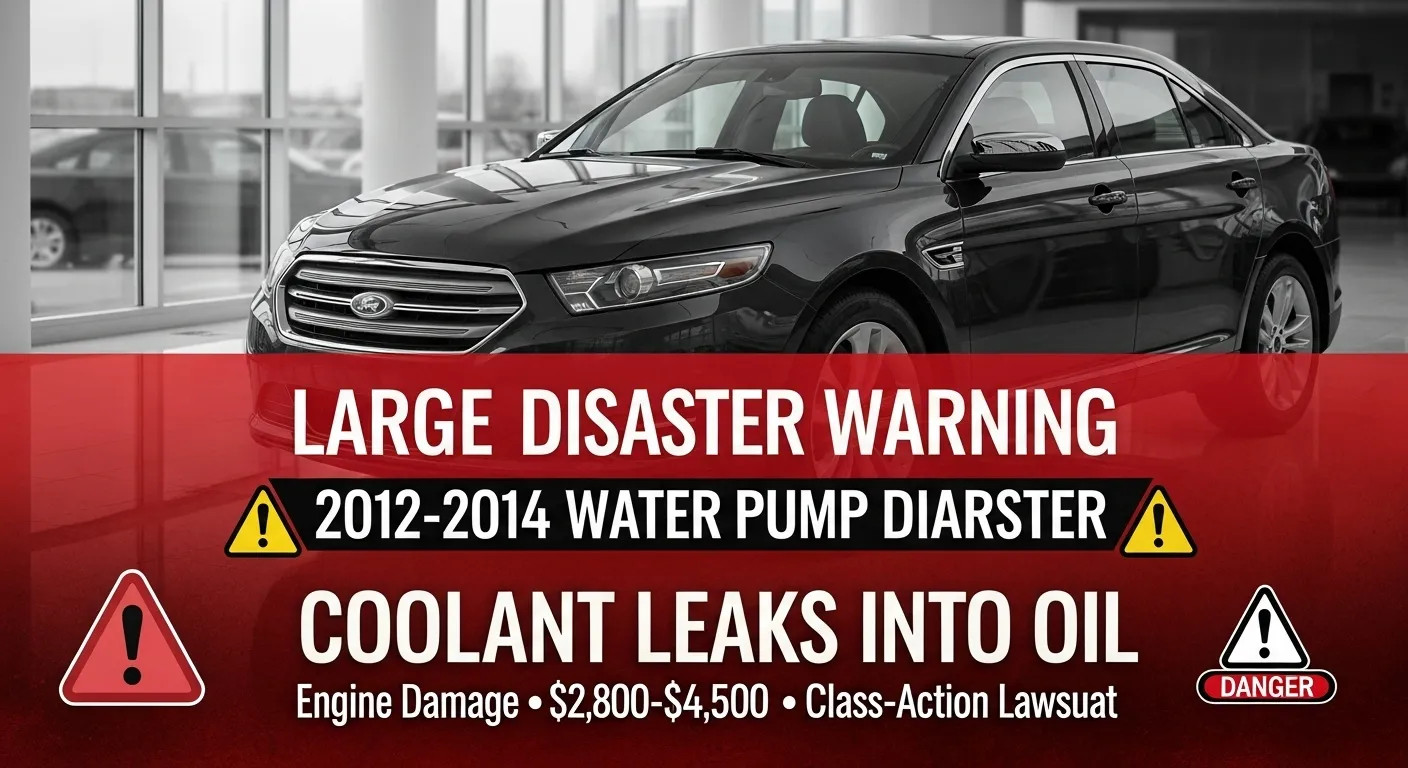
Internal Water Pump Problem: Ford decided to put the water pump INSIDE the engine driven by the timing chain instead of outside the engine like normal cars. This was done to save money and reduce engine size but it created a catastrophic reliability problem.
When the internal water pump fails the coolant doesnt just leak outside the vehicle. Instead it leaks into the oil pan mixing coolant with engine oil. This coolant-oil mixture destroys the engine bearings pistons and other internal components leading to complete engine failure.
How It Fails: The water pump seal fails and coolant starts leaking. Because the pump is inside the engine the coolant goes directly into the oil pan. The oil becomes contaminated with coolant creating a milky sludge that cant lubricate the engine properly. The engine bearings start to fail metal-on-metal contact occurs and the engine seizes or requires complete replacement.
Symptoms:
- Coolant leaks (puddles under vehicle)
- Coolant around alternator area
- Weep hole external leak (warning sign)
- Milky oil on dipstick (coolant in oil)
- Overheating
- Engine noise (bearing failure)
- Low coolant level
Repair Costs – EXTREMELY EXPENSIVE: If you catch the water pump failure early before coolant gets into the oil the repair costs $1238 to $1647. But this requires partial engine disassembly because the pump is inside.
Most cases by the time you notice the problem the coolant has already mixed with the oil and damaged the engine. Then you need complete engine replacement which costs $2800 to $4500. Some owners have reported costs as high as $6000.
I had a customer with a 2013 Taurus with 87000 miles. She noticed the oil looked milky on the dipstick and brought it in immediately. The water pump had failed and coolant was in the oil. The bearings were already damaged. Cost her $4200 for engine replacement.
Another customer had a 2012 Taurus with 102000 miles. Same problem water pump failed coolant mixed with oil engine destroyed. He didnt catch it early cause there were no obvious warning signs until the engine started making noise. Cost him $3800 for a used engine replacement.
Class-Action Lawsuit: There have been class-action lawsuits filed against Ford regarding the internal water pump problem. The lawsuits allege Ford knew about the design defect but continued to sell vehicles without warning buyers. Some owners have received settlements but many are still fighting for compensation.
This is the same problem that affected the Ford Flex which also had internal water pump failures and class-action lawsuits.
Electric Power Steering (EPS) Malfunction: The 2012-2014 years especially 2011-2013 also had widespread electric power steering failures. Ford issued a recall for 423000 vehicles because the EPS system would suddenly lose power assist creating a safety hazard especially at highway speeds.
Symptoms include sudden heavy steering EPS warning light and complete loss of power assist. The recall repair is free at Ford dealers but you need to verify its been completed.
Low Owner Satisfaction: The 2012-2014 models have low owner satisfaction scores because of the water pump and EPS problems. Many owners feel betrayed by Ford for using such a problematic design.
Why Avoid:
- Internal water pump design flaw
- Coolant mixes with oil destroying engine
- Repair costs $2800-$4500 for engine replacement
- Class-action lawsuits
- EPS recall (423000 vehicles)
- Low owner satisfaction
If you see a 2012-2014 Taurus with 3.5L V6 engine avoid it completely unless you can verify the water pump has already been replaced and the EPS recall has been completed. Even then its risky.
2008-2010 – Fifth Generation Problems
The 2008-2010 Ford Taurus models which were the early years of the fifth generation had multiple reliability issues.
Transmission Issues: The transmission had sluggish downshifting and poor acceleration. Owners reported the transmission would hesitate when trying to accelerate or would shift harshly. This wasnt as catastrophic as the 2003 AXODE failures but it was annoying and expensive to fix.
Engine Problems: The 2008-2010 models had various engine issues:
- Bucking and misfires at highway speeds especially in 2010 models
- Faulty camshaft sensors (2010 especially) causing rough running and stalling
- Coolant leaks from hoses radiator or water pump (external not internal)
- Timing chain failures causing engine noise and potential damage
- Stalling while driving which is a safety hazard
The 2010 model was particularly bad for camshaft sensor failures. The sensor would fail causing the engine to misfire run rough or stall. Replacing the sensor cost $200-$400 but diagnosing it could take hours.
Brake Booster Failures: The brake booster would fail causing reduced braking power or a hard brake pedal. This is a serious safety issue. Repair costs $400-$800.
Power Steering Loss: The power steering control module would fail requiring expensive replacement. This was before the EPS recall years but similar problems. Repair costs $800-$1500.
Repair Costs:
- Engine repairs (misfires timing chain): $1200-$2500
- Camshaft sensor: $200-$400
- Brake booster: $400-$800
- Power steering module: $800-$1500
- Transmission repair: $800-$1500
I remember one customer with a 2010 Taurus and the engine would buck and misfire at highway speeds. Turned out to be a faulty camshaft sensor. Cost him $350 to fix but it took 3 hours to diagnose because the check engine light wasnt giving a clear code.
1997-2001 & SHO Models – Early Failures
The 1997-2001 Ford Taurus models had severe transmission failures and the 1996-1999 SHO models had catastrophic engine problems.
1997-2001 Transmission Failures: These years had AXODE transmission failures that could occur without warning codes. The actuator piston would warp from heat and the transmission would fail suddenly. Similar to 2003 but slightly less common.
1996-1999 SHO Catastrophic Engine Problems: The third-generation Taurus SHO (Super High Output) models from 1996-1999 are notorious for one of the worst engine problems in automotive history. The 3.4-liter V8 engine had a design flaw where the camshafts would detach from their sprockets.
When the camshafts detached the valves would hit the pistons causing complete engine destruction. This wasnt a gradual problem it was sudden catastrophic failure. The engine would make horrible noises then seize completely.
Repair required complete engine replacement which cost $5000-$8000. Many SHO owners just scrapped their cars because the repair cost more than the car was worth.
I only worked on one 1998 SHO and the owner was terrified of the camshaft problem. He sold it before it failed but he told me he knew multiple SHO owners who had catastrophic engine failures.
Repair Costs:
- AXODE transmission replacement: $1930-$2500
- SHO engine replacement: $5000-$8000
- Transmission rebuild: $1500-$2000
If you see a 1996-1999 Taurus SHO run away as fast as you can. The engine failure is almost guaranteed and the repair costs are insane.
Best Ford Taurus Years to Buy
Now for the good news cause there are some really solid Taurus years out there especially the 2017-2019 final models.
2017-2019 – Final Years (BEST OVERALL)
The 2017-2019 Ford Taurus models are the best years to buy with the highest reliability ratings and owner satisfaction.
Why These Years Stand Out:
Highest Reliability Ratings: The 2017-2019 models achieved a FIXD Reliability score of 6 out of 10 which is good for a full-size sedan. More importantly they got a perfect 10 out of 10 for Owner Reliability meaning owners reported very few problems.
Perfect Owner Satisfaction: Owner satisfaction scores are 10 out of 10 for these years. Owners love these cars and report minimal issues. This is a huge improvement over the 2012-2014 disaster years.
Excellent Safety Scores: The 2017-2019 Taurus achieved a near-perfect NHTSA crash testing score of 4.8 out of 5. These are very safe cars with advanced safety features.
Low Cost of Ownership: Maintenance and repair costs are low for these years. The major bugs from earlier generations have been worked out.
Mature Design: By 2017-2019 the sixth-generation Taurus had been in production for 7-9 years. All the early problems were fixed and the design was mature and reliable.
2019 = Last Year: The Taurus was discontinued after 2019 so these are the final models. Ford stopped production to focus on SUVs and trucks.
Features and Specs:
- 3.5L V6 engine (288 hp) or 2.0L EcoBoost 4-cylinder (240 hp)
- 6-speed automatic transmission
- Available all-wheel drive
- Advanced safety features (blind spot monitoring lane keeping assist)
- Modern technology (SYNC 3 infotainment)
- Spacious interior
- Comfortable ride
Personal Experience: Ive worked on probably 15+ of the 2017-2019 models and havent seen any major problems like nothing serious at all. Just regular maintenance stuff like brakes oil changes tires you know the normal stuff. One customer has a 2018 Taurus with like 112000 miles and its still running strong.
Value Proposition: You can find 2017-2019 Taurus sedans for like $12000 to $22000 depending on mileage trim and condition. Thats a good value for a reliable full-size sedan with excellent safety and features.
What to Look For:
- Check for water pump issues (still possible but less common)
- Make sure all recalls have been completed
- Test transmission (should be smooth)
- Check for any electrical glitches
- Look for maintenance records
The 2017-2019 years are the safest bet for a used Taurus. If you want reliability get these years.
2015-2016 – Solid M

id-Generation
The 2015-2016 Ford Taurus models are decent choices with improved reliability over 2012-2014.
Why Good:
- Decent ownership scores
- High safety ratings
- Reasonable ownership costs
- Available all-wheel drive
- Improved from 2012-2014 water pump problems (but still possible)
Watch Out For: Some 2015-2016 models have been reported to experience internal transmission failures leading to loss of certain gears like reverse third or fifth. This isnt as common as the 2003 AXODE failures but its still a concern.
Water pump issues are still possible on 3.5L V6 models. Make sure to check for coolant leaks and oil contamination.
Value Proposition: You can find 2015-2016 Taurus sedans for like $8000 to $15000 depending on mileage and trim. Thats decent value but make sure to get a thorough pre-purchase inspection especially for water pump and transmission.
2011 – High Owner Satisfaction
The 2011 Ford Taurus is noted for high owner satisfaction and low maintenance costs.
Why Good:
- High owner satisfaction
- Low maintenance costs
- Decent reliability
Watch Out For:
- Water pump problems (3.5L V6 engine)
- EPS recall (check if completed)
The 2011 is the first year of the sixth generation so it has some early bugs but overall its pretty reliable.
Value Proposition: You can find 2011 Taurus sedans for like $6000 to $10000. Decent value for budget buyers but verify water pump and EPS recall status.
2006 – Best Older Model
The 2006 Ford Taurus is considered one of the more reliable older models.
Why Good:
- Significantly fewer complaints than 2003-2005
- Fewer recalls
- More reliable than surrounding years
- Good value for budget buyers
The 2006 is the last year of the fourth generation and most of the bugs from earlier years were worked out.
Value Proposition: You can find 2006 Taurus sedans for like $3000 to $6000. This is the best older Taurus option if you need a budget car.
What to Check:
- Transmission condition (still AXODE but more reliable than 2003)
- Engine condition
- Maintenance records
- Rust (depending on location)
Internal Water Pump Problems – Deep Dive
The internal water pump in Ford Taurus models especially 2010-2019 with 3.5L or 3.7L V6 engines is one of the worst design flaws Ive ever seen in automotive history. Let me explain exactly what happens cause Ive dealt with so many of these failures I could write a book about it.
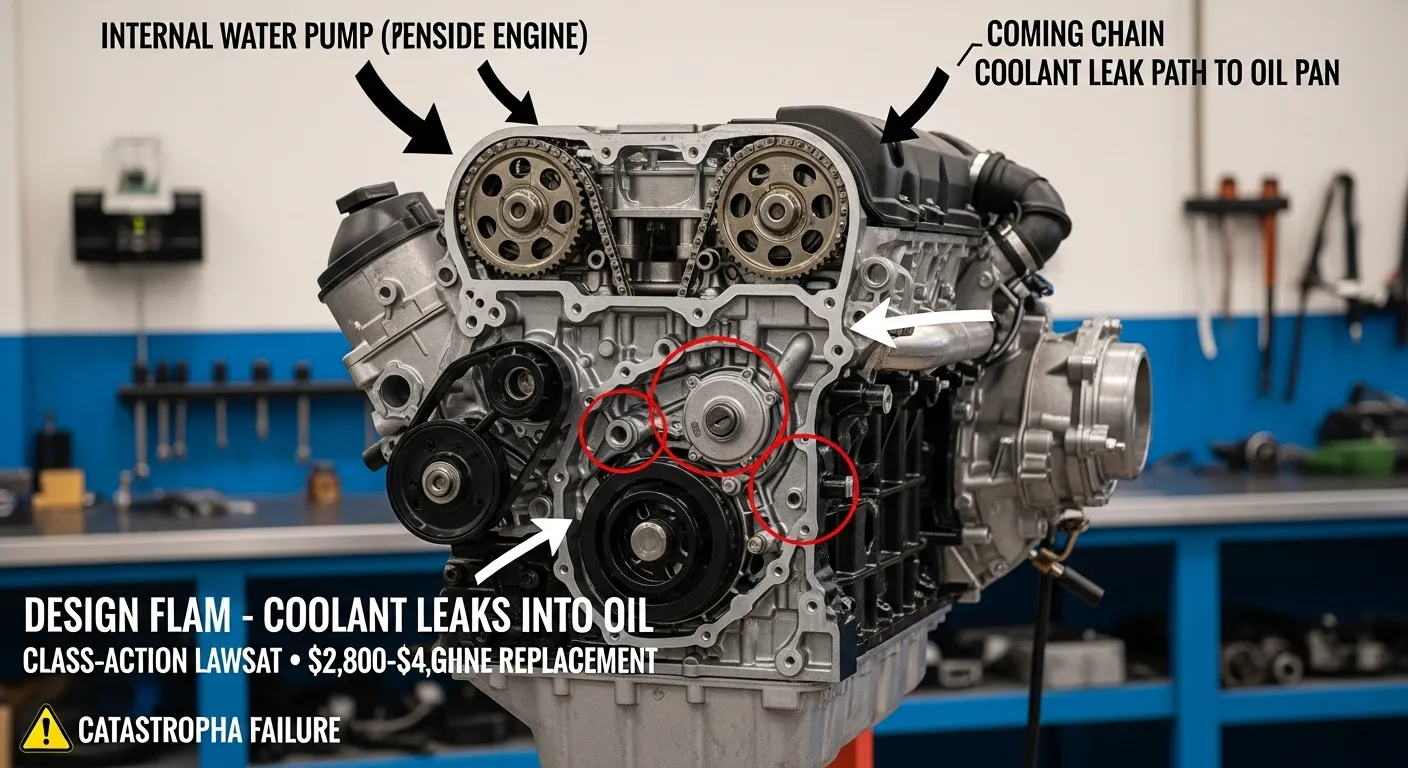
Internal Water Pump Design Flaw
The major problem with the Ford Taurus especially 2010-2019 models equipped with the 3.5-liter or 3.7-liter V6 engine is that Ford used an internal water pump design. This means the water pump is located INSIDE the engine driven by the timing chain instead of outside the engine like normal cars.
Why Ford Used This Design: Ford used the internal water pump design to save money and reduce engine size. An external water pump requires additional space brackets and a separate belt. By putting the pump inside the engine Ford could make the engine more compact and cheaper to manufacture.
But Ford prioritized cost savings over reliability and now thousands of owners are dealing with catastrophic engine failures.
Which Models Affected: The internal water pump affects:
- 2010-2019 Ford Taurus with 3.5L V6 engine
- 2010-2019 Ford Taurus with 3.7L V6 engine
- Similar problem in Ford Flex Ford Explorer Ford Edge
The 2012-2014 years have the highest failure rate but all years from 2010-2019 are at risk.
How the Water Pump Fails
When the internal water pump starts to fail heres what happens:
Stage 1 – Pump Seal Starts to Fail: The water pump seal starts to deteriorate from age heat and coolant exposure. Small amounts of coolant start to leak.
Stage 2 – Coolant Leaks Into Engine: Because the pump is inside the engine the coolant doesnt leak outside the vehicle. Instead it leaks directly into the oil pan.
Stage 3 – Coolant Mixes With Oil: The coolant mixes with the engine oil creating a milky sludge. This mixture cant lubricate the engine properly.
Stage 4 – Engine Bearings Fail: Without proper lubrication the engine bearings start to fail. Metal-on-metal contact occurs causing damage to bearings pistons cylinder walls and other components.
Stage 5 – Catastrophic Engine Failure: The engine makes horrible grinding or knocking noises then seizes completely. You need a complete engine replacement.
Weep Hole Warning: The water pump has a weep hole designed to leak coolant externally as a warning sign before it leaks internally. If you see coolant leaking from the weep hole get the water pump replaced immediately before it leaks into the oil.
Symptoms of Water Pump Failure
Early Warning Signs:
- Coolant leaks (puddles under vehicle)
- Coolant around alternator area
- Weep hole external leak (small drip)
- Low coolant level (need to add coolant frequently)
- Slight overheating
Advanced Symptoms:
- Milky oil on dipstick (coolant in oil)
- White smoke from exhaust (coolant burning)
- Engine overheating
- Engine noise (ticking knocking grinding)
- Rough running
Critical Stage:
- Severe engine noise
- Engine wont start
- Complete engine seizure
If you see milky oil on the dipstick stop driving immediately and get your Taurus towed to a mechanic. Continuing to drive with coolant in the oil will destroy your engine in minutes.
Repair Costs – Extremely Expensive
The repair costs for internal water pump failure are insane:
If Caught Early (Before Coolant Gets Into Oil): Water pump replacement: $1238-$1647
The mechanic has to partially disassemble the engine remove the timing chain cover and replace the water pump. Its a 8-12 hour job because of the internal location.
If Coolant Mixed With Oil (Engine Damage): Complete engine replacement: $2800-$4500
Most cases by the time you notice the problem the coolant has already mixed with the oil and damaged the engine bearings. The whole engine needs to be replaced.
Some owners have reported costs as high as $6000 for engine replacement plus towing and rental car.
Personal Stories: Ive seen probably 10+ water pump failures on Taurus sedans over the years. The most common scenario is an owner brings in their Taurus cause the oil looks milky or the engine is making noise.
One customer had a 2013 Taurus with 87000 miles. She noticed the oil looked milky on the dipstick and brought it in immediately. The water pump had failed and coolant was in the oil. The bearings were already damaged. Cost her $4200 for engine replacement.
Another customer had a 2012 Taurus with 102000 miles. He didnt notice any warning signs until the engine started making a horrible grinding noise. The water pump had failed coolant mixed with oil and the engine was destroyed. Cost him $3800 for a used engine replacement.
A third customer had a 2014 Taurus with only 76000 miles. She saw coolant leaking from the weep hole and brought it in right away. We replaced the water pump before it leaked into the oil. Cost her $1450 but we saved her engine.
Class-Action Lawsuit
There have been class-action lawsuits filed against Ford regarding the internal water pump problem.
Lawsuit Allegations:
- Ford knew about the design defect
- Ford continued to sell vehicles without warning buyers
- Ford refused to issue a recall
- Thousands of owners suffered catastrophic engine failures
- Repair costs are unreasonably expensive
Settlement Status: Some lawsuits have resulted in settlements where Ford paid for engine repairs or replacements. But many owners are still fighting for compensation.
This is the same problem that affected the Ford Flex which also had internal water pump failures and class-action lawsuits.
How to Join: If you own a 2010-2019 Taurus with 3.5L V6 and experienced water pump failure you may be eligible to join the class-action lawsuit. Contact a consumer protection attorney for more information.
Prevention and Maintenance
Unfortunately theres not much you can do to prevent internal water pump failure cause its a design flaw. Even if you maintain your vehicle perfectly the pump will eventually fail.
What You Can Do:
- Flush and replace coolant more frequently than the owners manual suggests (every 30000 miles instead of 60000)
- Regular oil analysis to detect coolant contamination early
- Watch for warning signs (coolant leaks milky oil)
- Check coolant level frequently
- If you see weep hole leak get pump replaced immediately
What Doesnt Work:
- Regular maintenance wont prevent it (its a design flaw)
- Using special coolant wont help
- Driving gently wont prevent it
Best Advice: If you own a 2010-2019 Taurus with 3.5L V6 monitor your coolant and oil closely. Check the oil dipstick every week for milky appearance. Check coolant level monthly. If you notice anything unusual get it checked immediately.
If youre buying a used Taurus avoid 2010-2019 models with 3.5L V6 unless you can verify the water pump has already been replaced.
AXODE/AX4S Transmission Problems Explained
The AXODE and AX4S automatic transmission used in Ford Taurus models from 1991-2007 is one of the most problematic transmissions Ford ever made. Let me explain exactly what goes wrong.
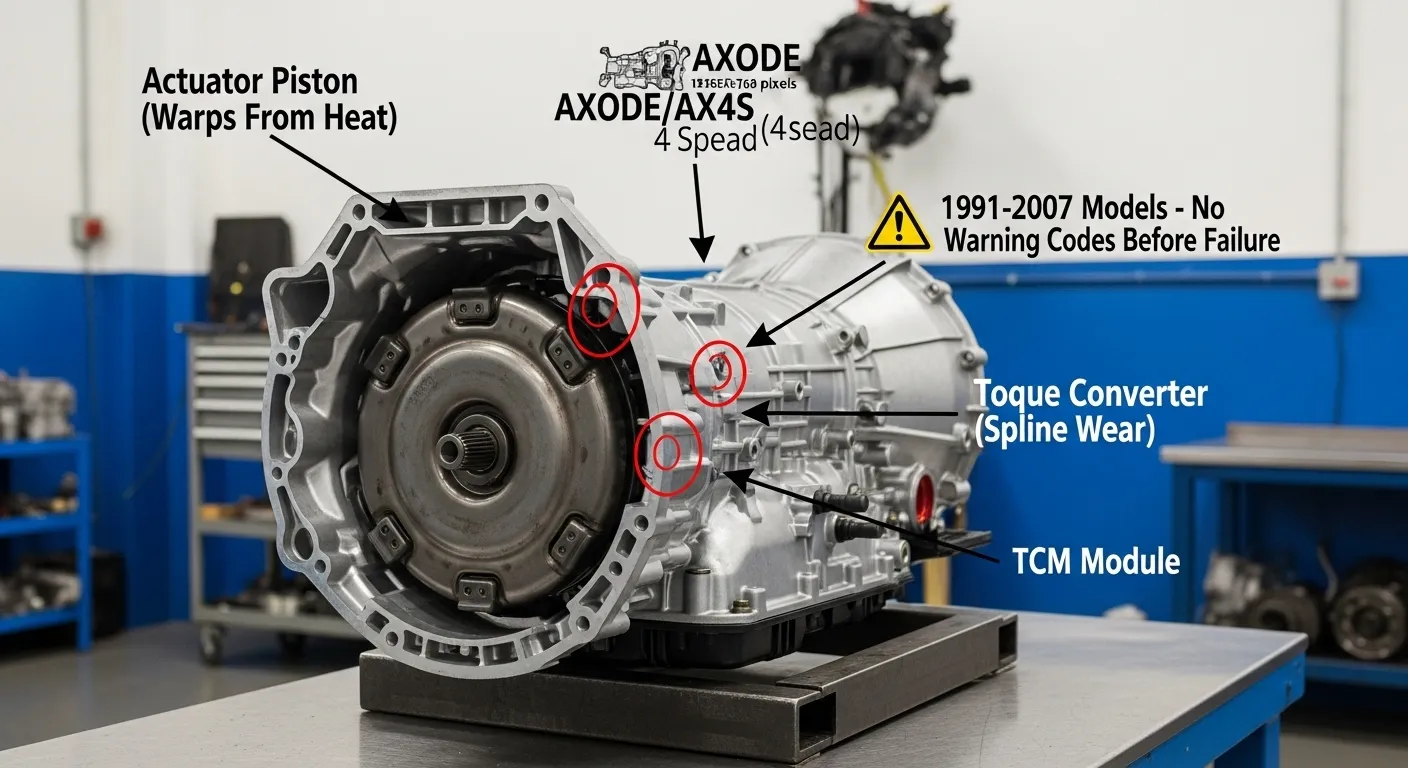
What is AXODE/AX4S Transmission?
The AXODE (Automatic Transaxle OverDrive Electronic) transmission was introduced in 1991 and used in Ford Taurus Mercury Sable and other Ford vehicles through 2007. It was later renamed AX4S but its basically the same transmission.
Specifications:
- 4-speed automatic transmission
- Electronic control (TCM – Transmission Control Module)
- Used with 3.0L Vulcan V6 and 3.8L Essex V6 engines
- Front-wheel drive transaxle design
Design Issues: The AXODE/AX4S had fundamental design problems that Ford never fully fixed despite multiple revisions. The main issues were heat buildup and weak internal components.
Common AXODE Transmission Problems
Actuator Piston Warps From Heat: The biggest problem with AXODE/AX4S is the actuator piston warps from excessive heat buildup. The piston is made of aluminum and when it gets too hot it warps and loses its seal. This causes the transmission to slip or fail completely.
Repairing this requires complete transmission teardown or replacement with a remanufactured unit. Its not a simple fix.
Torque Converter Spline Wear: The 2005 Taurus especially had torque converter problems. The torque converter had thin splines that would wear out prematurely especially under heavy load or with neglected maintenance.
When the splines wore out the transmission would slip or fail completely. The car would rev but not move or would have delayed acceleration.
Solenoid Failures: The transmission solenoids control gear shifting. When they fail the transmission cant shift properly. You might get stuck in one gear or have harsh shifting.
Solenoid replacement is relatively inexpensive ($200-$400) if caught early but many owners dont realize the problem until the transmission fails completely.
Fluid Contamination: The AXODE/AX4S is very sensitive to dirty or contaminated transmission fluid. If you dont change the fluid regularly (every 30000-60000 miles) the transmission will fail prematurely.
No Warning Codes Before Failure: The worst part about AXODE/AX4S failures is they often occur without warning codes or check engine lights. The transmission just fails suddenly and you have no idea its coming.
Symptoms of AXODE Transmission Failure
Early Symptoms:
- Harsh shifting
- Delayed shifting
- Slipping between gears
- Transmission fluid leaks
Advanced Symptoms:
- Sudden inability to accelerate
- Cant engage gears
- Car revs but doesnt move
- Transmission stuck in one gear
- Burning smell
Critical Stage:
- Complete transmission failure
- No movement in any gear
- Need towing
Repair Costs
If Caught Early:
- Solenoid replacement: $200-$400
- Fluid change and filter: $150-$250
- Minor repairs: $300-$600
If Transmission Failed:
- Transmission rebuild: $1500-$2000
- Transmission replacement (remanufactured): $1930-$2500
- Used transmission: $800-$1200 (plus labor)
Most AXODE/AX4S failures require complete transmission replacement because the internal damage is too extensive to rebuild economically.
Personal Experience: Ive worked on probably 20+ Taurus models with AXODE transmission failures. The most common scenario is the owner brings in the car cause it wont move or wont accelerate.
One customer had a 2003 Taurus with 89000 miles. She was driving on the highway when the transmission just stopped working. The car revved but wouldnt move. Towed it in and the transmission was completely destroyed. Cost her $2300 for replacement.
Another customer had a 2005 Taurus with 112000 miles. The torque converter splines were worn out. The car would rev really high but barely move. Cost him $1850 for transmission replacement.
Electric Power Steering (EPS) Recall
The 2011-2013 Ford Taurus models had widespread electric power steering malfunctions that led to a massive recall.
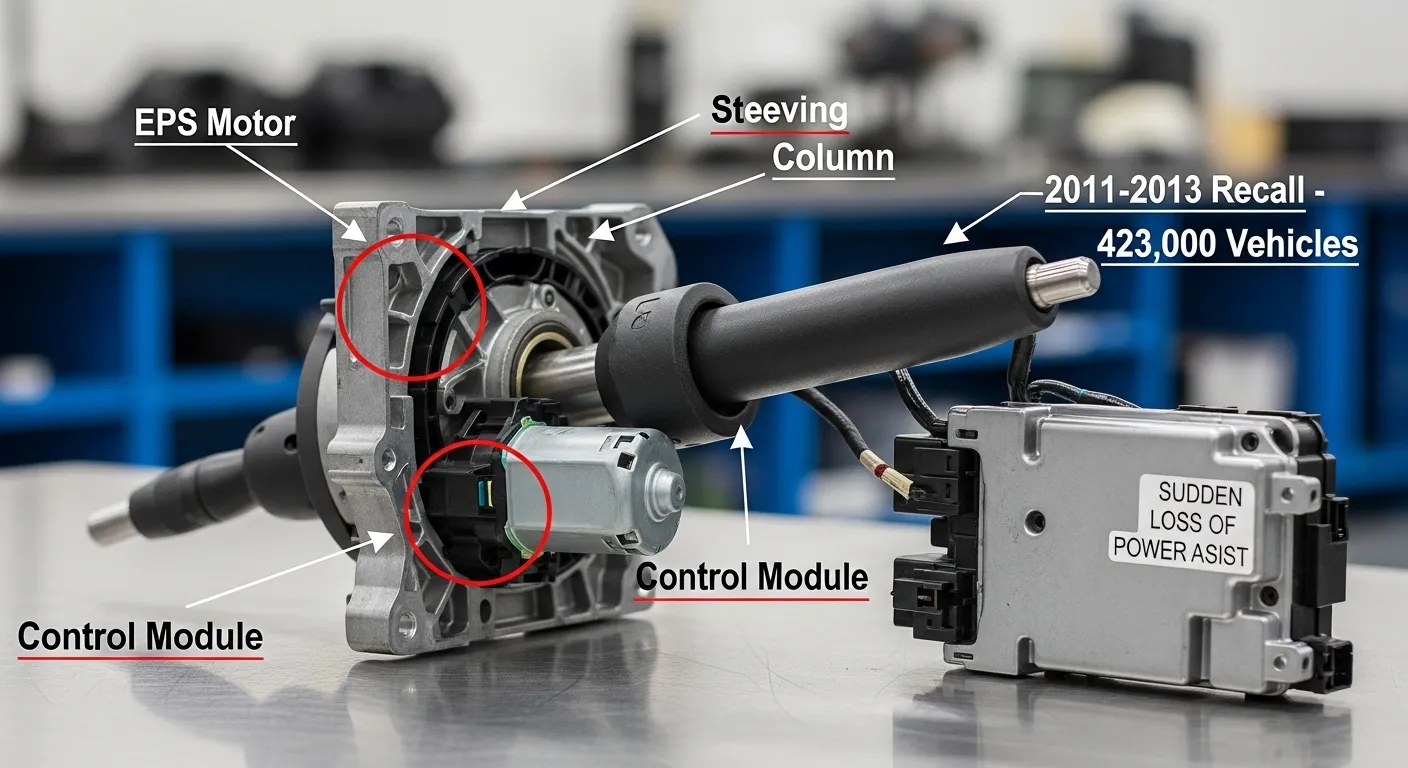
EPS Malfunction Problem
Ford issued a recall for approximately 423000 vehicles including 2011-2013 Taurus models because the electric power steering system would suddenly lose power assist.
What Happens: The EPS system uses an electric motor to provide power steering assist instead of a hydraulic pump. When the system fails the electric motor stops working and you lose all power assist.
This creates a safety hazard especially at highway speeds. The steering becomes extremely heavy and difficult to turn. In an emergency situation you might not be able to steer quickly enough to avoid a crash.
Affected Vehicles:
- 2011-2013 Ford Taurus
- Other Ford models with EPS
Symptoms of EPS Failure
Warning Signs:
- EPS warning light on dashboard
- Sudden heavy steering
- Loss of power assist
- Steering requires excessive force
What to Do: If you experience EPS failure pull over safely and turn off the engine. Wait a few minutes then restart. Sometimes the system will reset. But you should get to a Ford dealer immediately for the recall repair.
Recall Information
Recall Details:
- Issued for 423000 vehicles
- Free repair at Ford dealers
- Dealer will inspect and replace EPS components if necessary
How to Check:
- Use NHTSA website VIN lookup tool
- Check Ford website recall checker
- Call Ford dealer with your VIN
If you own a 2011-2013 Taurus verify the EPS recall has been completed. This is a serious safety issue.
Ford Taurus vs Competitors
People always ask me how the Taurus compares to other full-size sedans so heres what Ive seen from working on all of them.
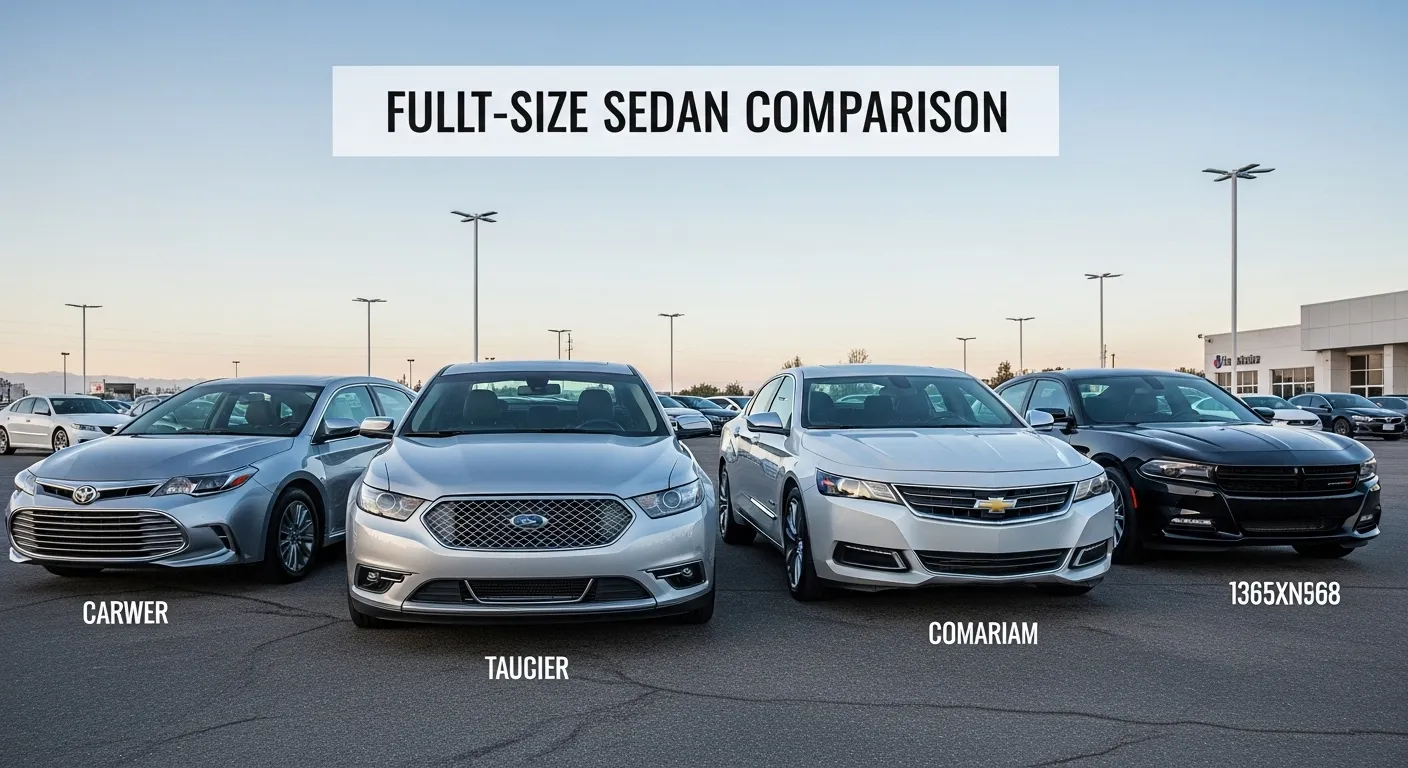
Taurus vs Toyota Avalon
Reliability: The Toyota Avalon is generally more reliable than the Ford Taurus especially compared to 2003 2012-2014 and 2008-2010 Taurus models. But 2017-2019 Taurus models are pretty close to the Avalon in reliability.
Common Problems:
- Avalon: Very few major problems excellent reliability
- Taurus: Water pump (2010-2019) AXODE transmission (1991-2007) EPS recall
Which is Better: If your comparing a 2003 2012-2014 or 2008-2010 Taurus to any Avalon the Avalon wins hands down no question. But if your comparing a 2017-2019 Taurus to an Avalon theyre pretty close. The Avalon might have a slight edge in reliability but the Taurus can be cheaper to buy used.
Personal Recommendation: For used sedans under $15000 Id go with a 2017-2019 Taurus or a 2013-2018 Avalon. Both are solid choices. For maximum reliability the Avalon is safer.
Taurus vs Chevy Impala
Reliability: The Chevy Impala and Ford Taurus have similar reliability for their good years. The 2017-2019 Taurus is comparable to the 2014-2016 Impala.
Common Problems:
- Impala: Some transmission issues electrical problems
- Taurus: Water pump AXODE transmission EPS recall
Which is Better: The Impala and Taurus are about equal for their good years. The Impala might have slightly better interior space and the Taurus might have better safety features.
Personal Recommendation: If you want a used full-size sedan get whichever one has better maintenance records and lower mileage. Both are decent choices for good years.
Taurus vs Dodge Charger
Reliability: The Ford Taurus is generally more reliable than the Dodge Charger especially for daily driving. The Charger is more fun to drive but has more reliability issues.
Performance vs Reliability:
- Charger: More powerful engines RWD/AWD more fun to drive
- Taurus: More reliable better fuel economy more practical
Which is Better: If you want performance and dont mind higher maintenance costs get the Charger. If you want reliability and lower ownership costs get the 2017-2019 Taurus.
Ownership Costs: The Taurus has lower maintenance and repair costs than the Charger. The Charger uses more fuel and has more expensive repairs.
Buying a Used Ford Taurus – Complete Guide
Alright so if your gonna buy a used Ford Taurus heres exactly what I check when customers ask me to do a pre-purchase inspection.
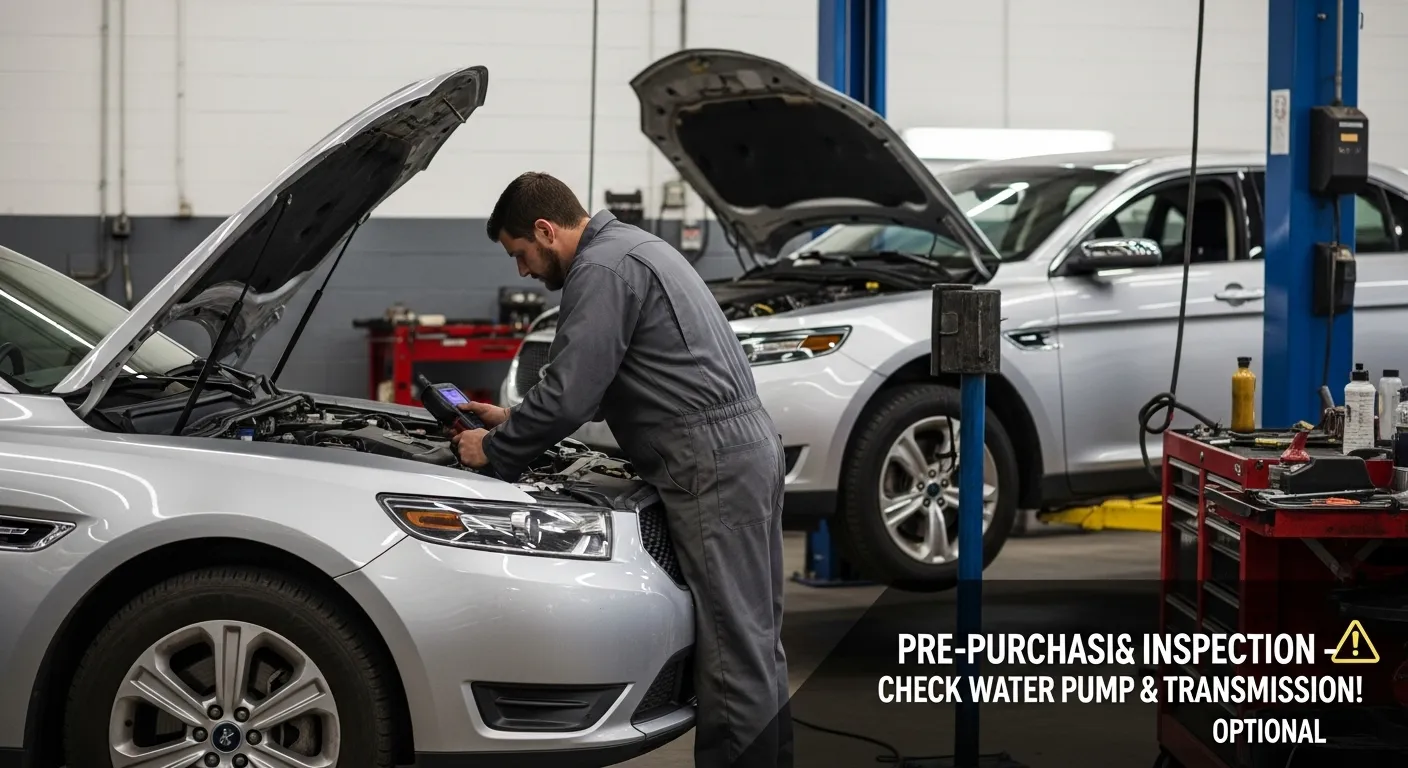
Pre-Purchase Inspection Checklist
Water Pump Inspection (CRITICAL for 3.5L V6): This is the most important part for 2010-2019 models with 3.5L or 3.7L V6 engine.
What to check:
- Check oil dipstick for milky appearance (coolant in oil)
- Check for coolant leaks under vehicle
- Inspect coolant level (should be full)
- Look for coolant around alternator area
- Check for weep hole leak
- Test drive and monitor temperature gauge
- Any signs of water pump problems = walk away
Transmission Test:
- Drive the Taurus for at least 20 minutes to warm up transmission
- Pay attention to shifting should be smooth no harsh shifts
- Try hard acceleration transmission should shift smoothly
- Coast to a stop watch for delayed downshifts
- Check for transmission fluid leaks under vehicle
- Any slipping harsh shifting or delays = RED FLAG
EPS Check (2011-2013 Models):
- Verify EPS recall has been completed (VIN lookup)
- Test steering at various speeds should be light and responsive
- Check for EPS warning light
- Any heavy steering or warning lights = walk away
Recall Verification:
- Check if all recalls have been completed using VIN
- Especially EPS recall rear suspension toe link fuel pump control module
- You can check recalls on NHTSA website or Ford website
- All recall repairs are free at Ford dealers
Maintenance Records:
- Ask for all maintenance records
- Look for regular oil changes (every 5000 miles)
- Check if transmission fluid has been changed (every 60000 miles)
- Look for coolant flushes (every 30000 miles recommended)
- Check for any major repairs (water pump transmission engine)
Visual Inspection:
- Check for rust (depending on location)
- Inspect tires for even wear
- Look for body damage or paint issues
- Check interior condition
Test Drive Tips
What to Feel For:
- Smooth acceleration no hesitation
- Transmission shifts smoothly no shuddering
- Brakes stop the vehicle quickly no grinding
- No vibrations at any speed
- Steering feels normal light and responsive
What to Listen For:
- Engine noise (water pump or bearing problems)
- Transmission noise (whining grinding)
- Brake noise (grinding screeching)
- Suspension noise (clunks rattles)
Warning Signs:
- Milky oil (water pump problem major red flag)
- Transmission slipping or harsh shifting
- Heavy steering (EPS problem)
- Engine overheating
- Any unusual noises
If you notice any of these walk away. Dont buy a vehicle with problems hoping you can fix them cheap cause it never works out that way.
Questions to Ask Seller
- Why are you selling it?
- Any water pump or transmission problems?
- Have all recalls been completed?
- Any engine or electrical issues?
- Do you have all maintenance records?
- Has the water pump been replaced?
- Any warning lights on dashboard?
Listen to how they answer. If they hesitate or seem unsure thats a red flag.
Ford Taurus Maintenance Tips
If you already own a Ford Taurus or your gonna buy one heres how to keep it running as long as possible.
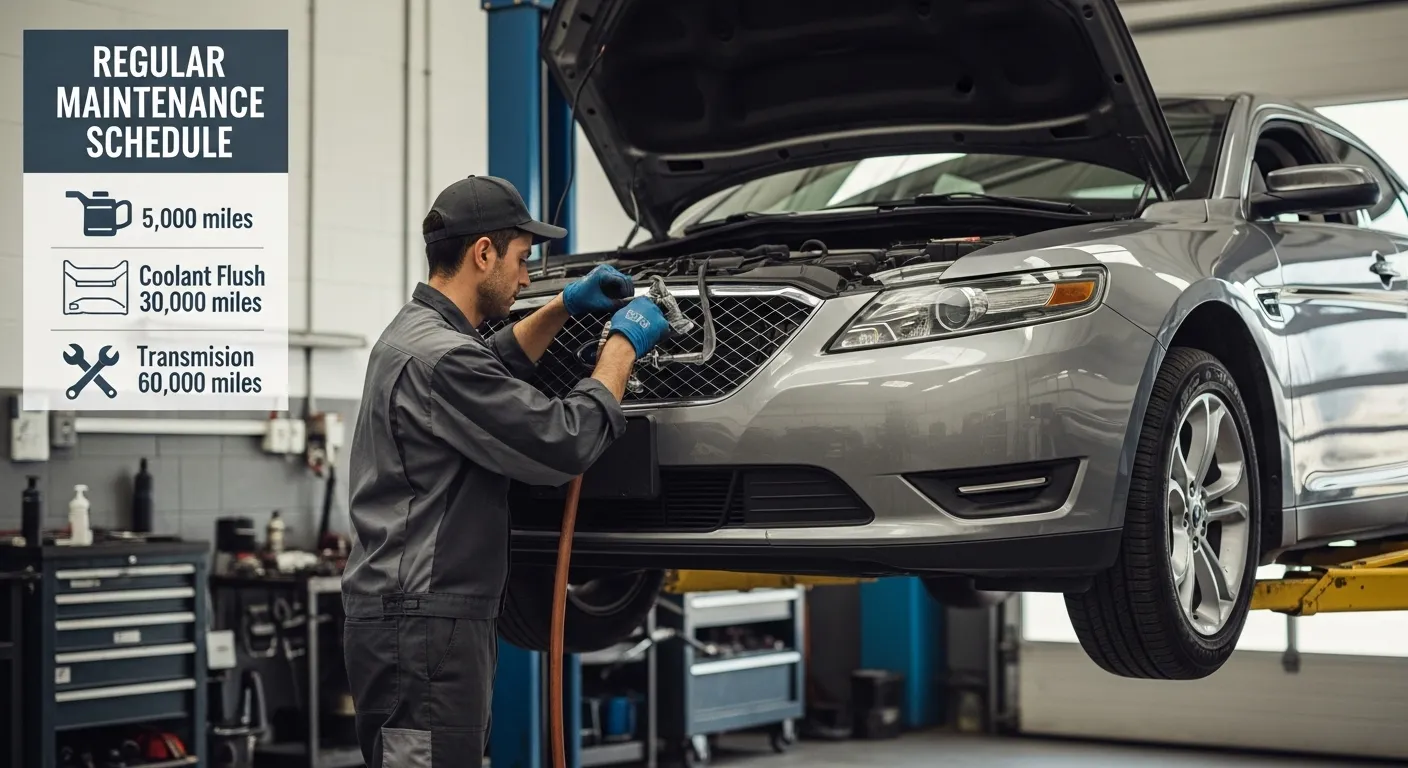
Oil Change Schedule: Change your oil every 5000 miles with synthetic oil. This is especially critical for 2010-2019 models with water pump risk. Clean oil helps detect coolant contamination early.
Transmission Fluid: Change the transmission fluid every 60000 miles. The manual might say lifetime fluid but thats not true. Fresh fluid helps prevent AXODE failures and keeps the transmission running smoothly.
Coolant Maintenance: Flush and replace coolant more frequently than the manual suggests every 30000 miles instead of 60000. This helps detect water pump problems early and keeps the cooling system healthy.
Regular Inspections:
- Oil analysis every oil change (detect coolant contamination)
- Check oil dipstick weekly for milky appearance
- Check coolant level monthly
- Inspect for leaks regularly
- Monitor temperature gauge
Recall Completion: Make sure all recalls have been completed especially EPS recall rear suspension toe link and fuel pump control module. These are safety issues.
DIY vs Mechanic Work: Some stuff you can do yourself:
- Oil changes
- Air filter replacement
- Cabin filter replacement
- Wiper blade replacement
- Check fluid levels
Leave these to a mechanic:
- Water pump replacement (complex)
- Transmission work
- Engine repairs
- Electrical system diagnosis
- Recall repairs
Cost-Saving Tips:
- Buy parts online (cheaper than dealer)
- Use independent mechanic instead of dealer
- Do simple maintenance yourself
- Fix small problems before they become big problems
- Keep up with regular maintenance
Conclusion
The good news is that if you avoid the problem Ford Taurus years especially 2003 2012-2014 and 2008-2010 you can get a decent full-size sedan especially the 2017-2019 Taurus models that will last with proper maintenance.
Frequently Asked Questions
What year Ford Taurus to avoid?
Avoid 2003 which has the most complaints including catastrophic AXODE transmission failures averaging $1930-$2500 repairs at 93200 miles. Also avoid 2012-2014 which have internal water pump disasters where coolant leaks into oil causing engine damage costing $2800-$4500 for engine replacement plus class-action lawsuits and EPS recall affecting 423000 vehicles. Skip 2008-2010 which have engine misfires camshaft sensor failures brake booster problems and power steering loss. Avoid 2002 2004-2005 for AXODE transmission issues and stuck accelerator (2005). Avoid 1997-2001 for severe transmission failures and 1996-1999 SHO for catastrophic engine problems where camshafts detach costing $5000-$8000. Best years: 2017-2019 2015-2016 2011 2006.
Is Taurus or Avalon more reliable?
The Toyota Avalon is generally more reliable than the Ford Taurus especially compared to 2003 2012-2014 and 2008-2010 Taurus models. But 2017-2019 Taurus models are pretty close to the Avalon in reliability with perfect owner satisfaction scores (10/10) and excellent safety (4.8/5). For used sedans under $15000 a 2017-2019 Taurus is a good alternative to an Avalon if you want to save money. The Avalon has fewer major problems overall and better resale value but the Taurus can be cheaper to buy used.
How long do Ford Taurus last?
A well-maintained Ford Taurus can easily hit 150000 to 200000 miles maybe even more if you take care of it especially 2017-2019 models. The key is regular oil changes every 5000 miles transmission fluid changes every 60000 miles and coolant flushes every 30000 miles. Avoid problem years (2003 2012-2014 2008-2010) and get pre-purchase inspection. Monitor water pump closely on 2010-2019 models with 3.5L V6. Ive seen 2018 Taurus with 112000 miles still running strong.
What is the water pump problem?
The water pump problem on 2010-2019 Ford Taurus with 3.5L or 3.7L V6 engine is caused by a design flaw where Ford put the water pump INSIDE the engine driven by the timing chain. When the pump fails coolant leaks into the oil pan mixing with engine oil and causing catastrophic engine damage. The coolant-oil mixture destroys bearings pistons and other components requiring complete engine replacement costing $2800-$4500. Class-action lawsuits have been filed. Most common in 2012-2014. Similar problem in Ford Flex. Prevention is impossible its a design flaw.
Are 2017-2019 Taurus reliable?
Yes the 2017-2019 Ford Taurus models are the most reliable Taurus years. They achieved perfect owner satisfaction scores (10/10) excellent safety scores (4.8/5) and low cost of ownership. These are the final years before discontinuation in 2019 and all the bugs from earlier generations were worked out. Water pump issue is still possible on 3.5L V6 but less common than 2012-2014. Best used Taurus to buy. Ive worked on 15+ of these models and seen minimal problems.
Best used Taurus to buy?
The best used Ford Taurus models are 2017-2019 ($12000-$22000) for maximum reliability and features 2015-2016 ($8000-$15000) for decent reliability and value 2011 ($6000-$10000) for high owner satisfaction or 2006 ($3000-$6000) for best older budget option. Avoid 2003 2012-2014 2008-2010 2002 2004-2005 and 1997-2001 no matter how cheap they are. Always get pre-purchase inspection especially check water pump (milky oil) transmission (smooth shifting) and EPS recall completion (2011-2013). Get 2017-2019 for best reliability.