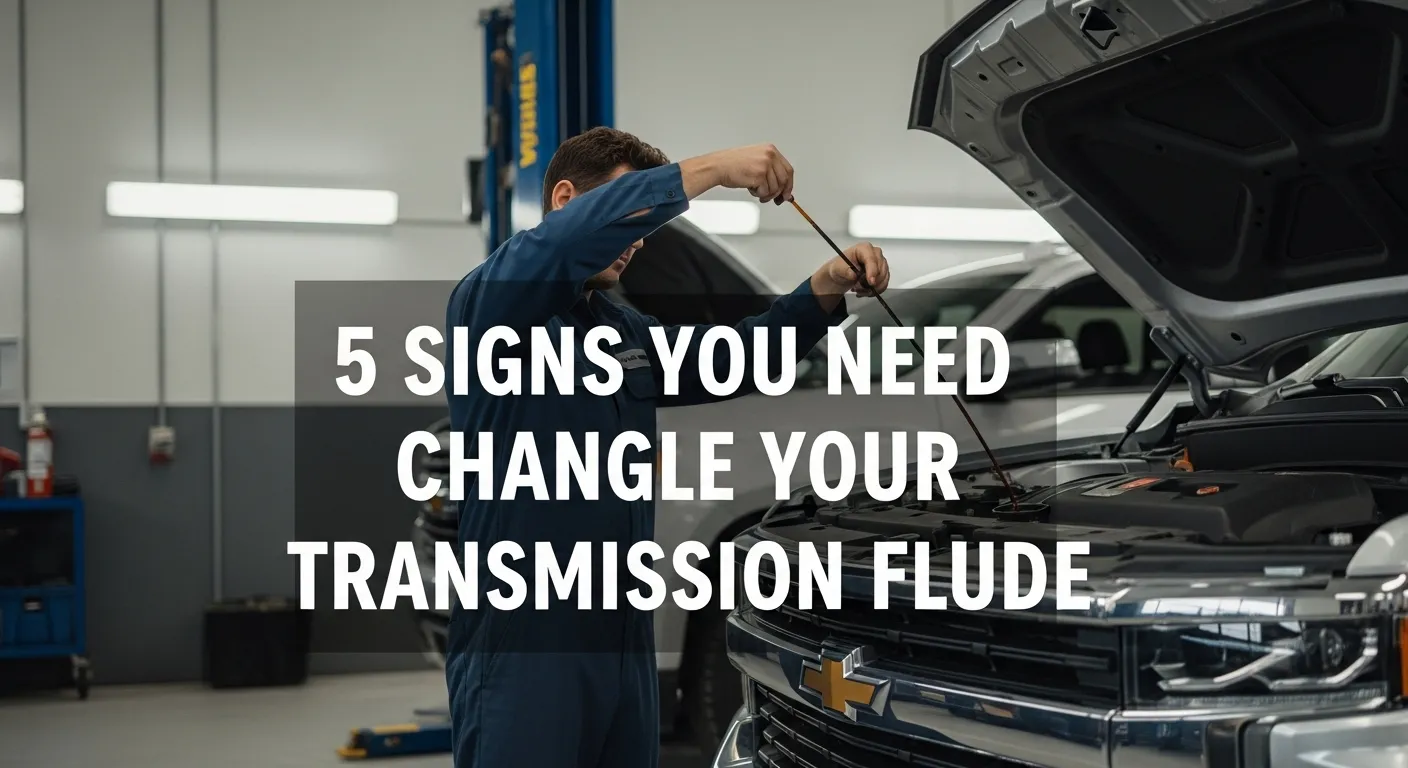
5 Signs You Need to Change Your Transmission Fluid Chevy Silverado

- Ford Expedition Years to Avoid A Mechanic’s Complete Guide (2026) - January 28, 2026
- 5 Signs You Need to Change Your Transmission Fluid Chevy Silverado - January 27, 2026
- Ford Maverick Years to Avoid: Worst & Best Models (2022-2026) - January 26, 2026
Last Thursday a guy came at my shop with a 2020 Silverado 1500. He Said the truck is shifting weird. I pop the hood and check the transmission fluid. It is BLACK. ItSmells like burnt toast.
When had you last change this I ask him. He says never. The truck got 85,000 miles on it. I show him the dipstick. See this Should be bright red. Yours looks like used motor oil.
He wants to know if it is bad. I told him straight up – your transmission is probably got another 5,000 miles before it grenades. Maybe less. I ended up flushing it three times to get all the crud out. Cost him $450. But that’s way cheaper than the $4,200 transmission rebuild I would have quoted him if he’d waited any longer.
I have experience of 14 years as an expert mechanic. Probably worked on 500 of them. The ones that make it past 200,000 miles all have one thing in common. Their owners actually changed the transmission fluid.
The ones that die at 75,000 miles? Neglected maintenance. Every single time. So in this article I am gonna walk you through the 5 signs your Chevy Silverado needs new transmission fluid.
I will tell you exactly what to look for. What it costs. How to check it yourself. And most importantly, how to keep your transmission from turning into a $5,000 paperweight.
Quick Answer
The 5 signs you need to change your Chevy Silverado transmission fluid are difficulty shifting gears, slipping gears or delayed engagement, grinding or whining noises, burning smell from transmission, and dark dirty or leaking fluid.
Change your fluid every 30,000 to 60,000 miles depending on how you drive. If you tow regularly change it at 30K miles. For normal driving I recommend 45K miles. Don’t trust that “lifetime fluid” nonsense GM puts in the manual.
Why Transmission Fluid Actually Matters in Your Silverado
Before we talk about the warning signs let me explain what transmission fluid actually does. A lot of guys don’t really understand this part.
Your transmission has hundreds of moving parts inside. Gears clutch packs bearings solenoids. All spinning at crazy speeds. Some parts are moving at 6,000 RPM while you’re cruising down the highway.
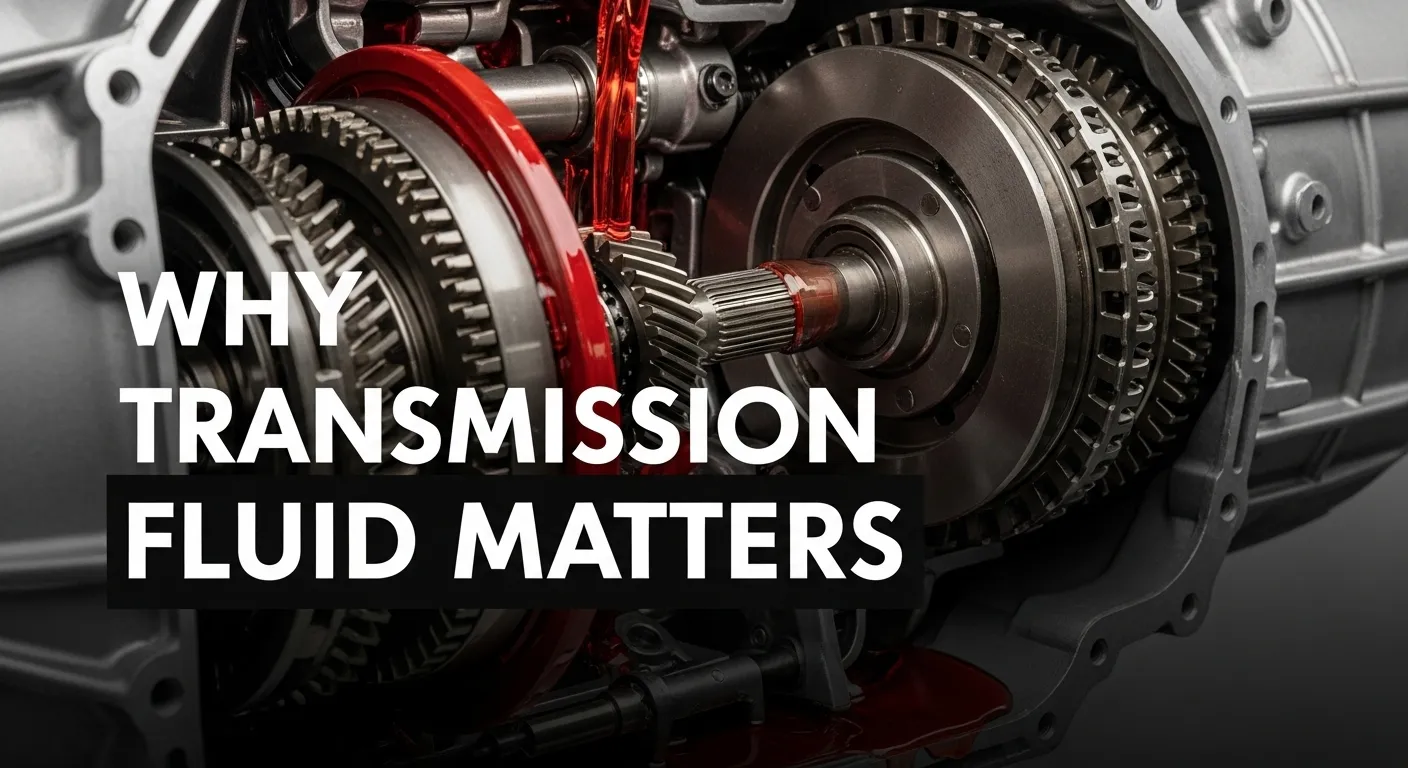
What Transmission Fluid Does
Transmission fluid does four things. First it lubricates everything. Keeps metal from grinding on metal. Without it your transmission would seize up in about 30 seconds.
Second it cools the transmission. All that friction creates heat. Lots of it. The fluid carries that heat away to the transmission cooler. If the fluid’s old and burnt it can’t cool properly anymore.
Third it creates hydraulic pressure. Your transmission uses fluid pressure to engage clutches and shift gears. Low fluid or dirty fluid means low pressure. Low pressure means bad shifts.
Fourth it cleans. The fluid picks up metal shavings and debris and carries it to the filter. Old fluid gets saturated with crud and can’t clean anymore.
Silverado Transmission Types
Now here’s the thing about Silverados specifically. Depending on what year you got you’ve got one of three transmissions. 2014 to 2018 models came with a 6-speed automatic. Pretty reliable. Not too picky about fluid changes.
2019 to 2021 models got the 8-speed automatic. This one’s a bit more finicky. I’ve seen these develop shudder problems if you don’t stay on top of the fluid changes.
2022 and newer have the 10-speed automatic. Newer design. Smoother shifts. But more complex. More things that can go wrong. All three need Dexron VI fluid. Don’t use anything else.
What Happens When Fluid Goes Bad
Here’s what happens when the fluid goes bad. It loses viscosity. Gets thin. Can’t lubricate properly. It gets contaminated with metal shavings from normal wear. Turns dark. Starts to smell burnt.
Eventually it can’t do its job anymore. I had a 2021 Silverado come in last month. Customer complained about harsh shifts. Fluid was only 40,000 miles old but it was already breaking down.
Turns out he towed a camper every weekend. Heavy towing kills fluid fast. We changed it and the harsh shifts went away immediately. Point is transmission fluid isn’t something you can ignore. It’s not like windshield washer fluid. This stuff is critical.
Sign (1) Difficulty Shifting Gears
This is usually the first thing people notice. The truck doesn’t shift like it used to. Here is what it feels like. You’re sitting at a red light. Light turns green. You take your foot off the brake and hit the gas. There is an delay. Maybe a second or two.
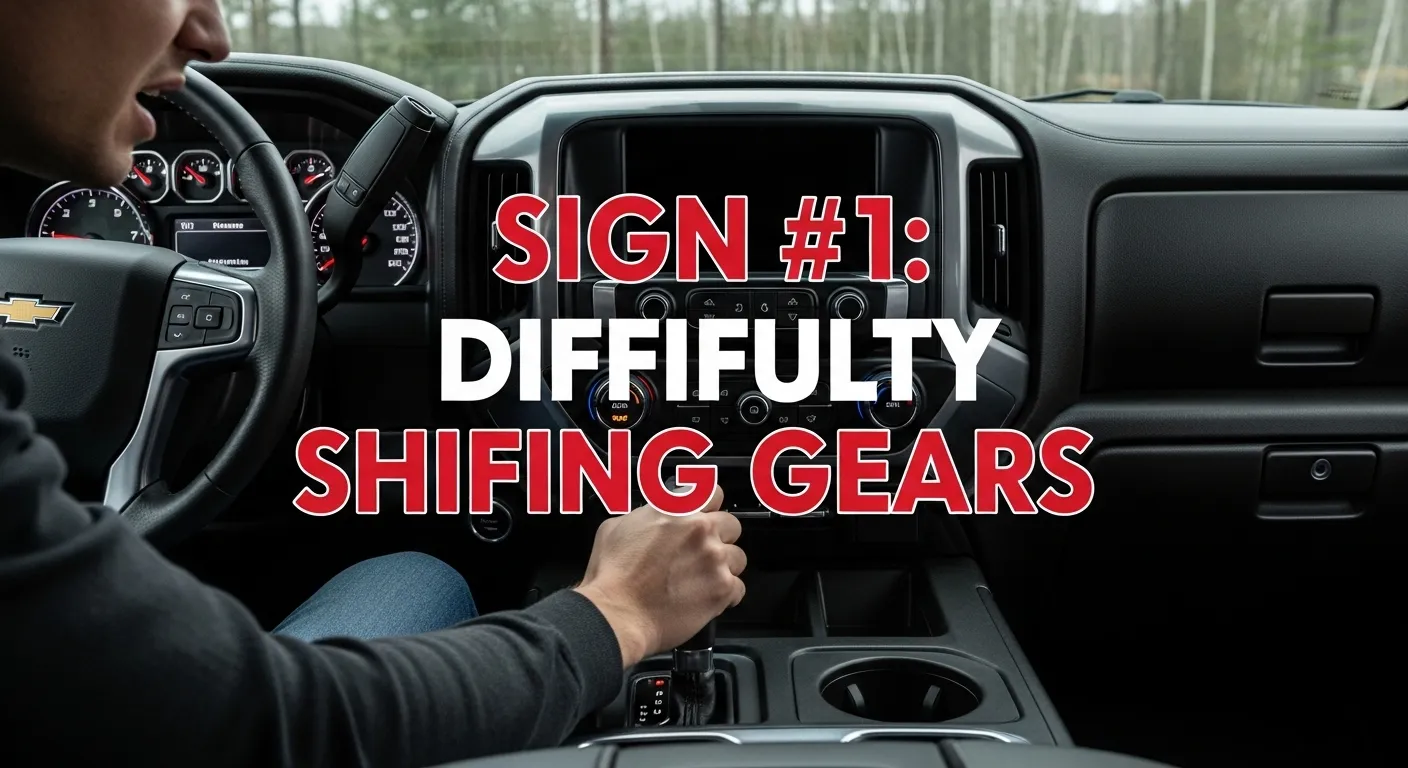
Then CLUNK. The truck drops into Drive and lurches forward. Or maybe you’re cruising down the highway and the transmission won’t downshift when you need to pass someone. You floor it and the engine revs but the truck does not accelerate.
Feels like the transmission is stuck in gear. In an automatic Silverado you might feel the shifter get stiff when you try to move it from Park to Drive. Or it might feel like it’s grinding when it shifts.
Why This Happens
Usually it’s one of three things. Low fluid level. If you’re down a quart or two there’s not enough hydraulic pressure to engage the clutches properly.
The transmission computer is trying to shift but the clutches are slipping because there’s not enough pressure. Dirty fluid clogging the valve body. The valve body is like the brain of your transmission. It’s got all these tiny passages that direct fluid pressure to different clutches.
When the fluid gets dirty those passages get clogged. Fluid can’t flow properly. Shifts get delayed or harsh. Worn clutch packs. Inside your transmission you’ve got clutch packs. They’re like the clutch in a manual transmission but there’s multiple sets of them.
When they wear out they don’t grab like they should. That causes slipping and hard shifts.
Silverado-Specific Issues
The 2019 to 2021 Silverados with the 8-speed are known for this. There’s actually a Technical Service Bulletin TSB 19-NA-206 about harsh shifting.
GM released a software update to fix it. But a lot of times just changing the fluid solves the problem.
The 10-speed in the 2022 plus models can have delayed engagement when cold. Especially in winter. It’ll sit there for 2 to 3 seconds before it drops into gear.
Sometimes that’s normal. Sometimes it means the fluid’s getting old. Also if you’ve got the 6.2L engine instead of the 5.3L the transmission has to work harder. More power means more stress on the transmission. Fluid breaks down faster.
What It Costs to Fix
If it’s just old fluid you’re looking at $150 to $300 for a shop to change it. Or $50 to $100 if you do it yourself. If it’s a bad solenoid that’s $300 to $800 depending on which one and where you go.
If the clutch packs are worn out you’re looking at a transmission rebuild. That’s $3,000 to $5,000. Sometimes more.
Real Story from My Shop
I had a 2020 Silverado 1500 with the 8-speed come in about six months ago. Customer said it felt like the truck was “thinking” before it shifted.
Like there was a delay between when he hit the gas and when the transmission actually shifted. Classic sign of dirty fluid. We pulled the pan. Fluid was brown.
Not black but definitely not red anymore. Had some metal shavings in it but nothing crazy. Just normal wear. Did a complete flush. Put in fresh Dexron VI. Took it for a test drive.
Shifts were smooth as butter. Problem completely solved. Cost him $250. He was happy. I was happy. Truck was happy. If he’d waited another 20,000 miles we’d probably be talking about a transmission rebuild. That would’ve been $4,000.
Sign (2) Slipping Gears or Delayed Engagement
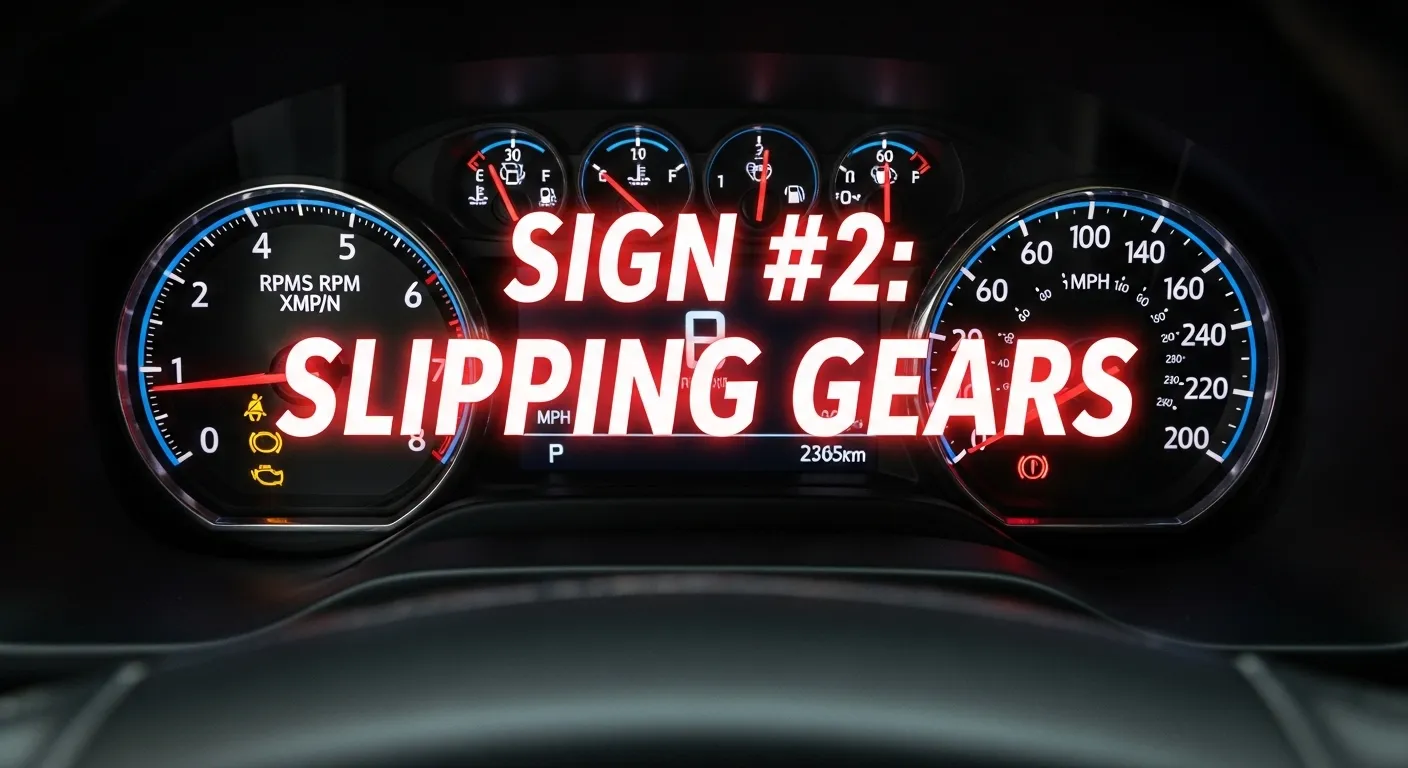
This one is more serious than hard shifts. This is when your transmission actually slips out of gear while you are driving.
- Here is what it feels like. You are accelerating onto the highway. RPMs climb.
- 2,000. 3,000. 4,000. But the truck’s not accelerating like it should.
- Feels like the transmission popped into neutral. Then suddenly it grabs and you lurch forward.
- Or you’re cruising at 65 mph and the transmission randomly drops into a lower gear. RPMs spike. Then it shifts back up.
- Happens for no reason. That’s slipping.
Delayed engagement is a little different. That’s when you shift from Park to Drive and nothing happens for a few seconds. You’re sitting there with your foot on the brake wondering if the truck’s gonna move.
- Then finally it engages and you’re good to go.
- Both of these are bad signs.
What Causes It
Worn clutch plates. This is the most common cause. The clutch plates inside your transmission are friction material. Like brake pads. They wear out over time. When they get too thin they can’t hold the gear anymore.
That’s when you get slipping. Low hydraulic pressure. If your fluid level is low or the pump is weak you don’t have enough pressure to fully engage the clutches. They slip.
Contaminated fluid. When the fluid gets really dirty it can’t create proper hydraulic pressure. It’s too thin.
Can’t do its job. Torque converter failure. The torque converter is what connects your engine to your transmission. If it fails you get symptoms that feel like slipping. But it’s actually the converter not the transmission itself.
10-Speed Silverado Specific Issues
The 2022 and newer Silverados with the 10-speed have had some issues with this. There’s a TSB 21-NA-082 about delayed engagement and harsh shifts. GM released a software update. It helps. But sometimes the problem is actually the fluid.
- Even if it’s not that old.
- I’ve also seen the 10-speed develop a shudder that feels like slipping. It’s not actually slipping. It’s the torque converter lockup clutch chattering.
- Feels like you’re driving over rumble strips. That’s usually a fluid issue too.
The difference between shudder and slipping is this. Shudder happens at a specific speed usually 40 to 50 mph. Slipping can happen at any speed and the RPMs will spike when it happens.
Safety Concerns
Let me be real with you. Slipping gears is dangerous. If your transmission slips while you’re merging onto the highway you could get rear-ended. If it slips while you’re going uphill you could roll backwards.
- I’ve had customers tell me their transmission slipped while they were passing someone on a two-lane road. That’s a good way to end up in a head-on collision.
- So if your Silverado is slipping don’t mess around. Get it looked at ASAP.
- Don’t drive it if it’s severe.
Cost Breakdown
Fluid flush runs $200 to $350. Clutch pack replacement is $1,500 to $2,500 and requires transmission removal.
- Torque converter replacement costs $800 to $1,500. Full transmission rebuild runs $3,500 to $5,500.
- New transmission is $4,500 to $7,000.
Real Story
Had a 2022 Silverado with the 10-speed come in last fall. Customer said it felt like the truck was slipping on ice when he accelerated.
But it was 75 degrees outside. No ice. I took it for a test drive. Sure enough when you gave it gas from a stop the RPMs would climb but the truck barely moved. Then it would grab and take off.
- Classic slipping.
- Checked the fluid. It was actually at the right level. But it was dark.
- Smelled burnt. Only had 52,000 miles on it but the customer towed a boat every weekend.
- We dropped the pan. Metal shavings everywhere. The clutch packs were toast.
- Torque converter was bad too.
- Ended up being a $2,200 repair. New torque converter. New clutch packs.
- Complete fluid flush.
- Customer asked me if it could’ve been prevented. I showed him the old fluid. “If you’d changed this at 30,000 miles probably yeah.”
- He tows heavy now he changes it every 25,000 miles. Hasn’t had a problem since.
Sign (3) Grinding Whining or Unusual Noises
- Transmissions shouldn’t make noise. If yours is making noise something’s wrong.
- Here are the different sounds you might hear and what they mean.
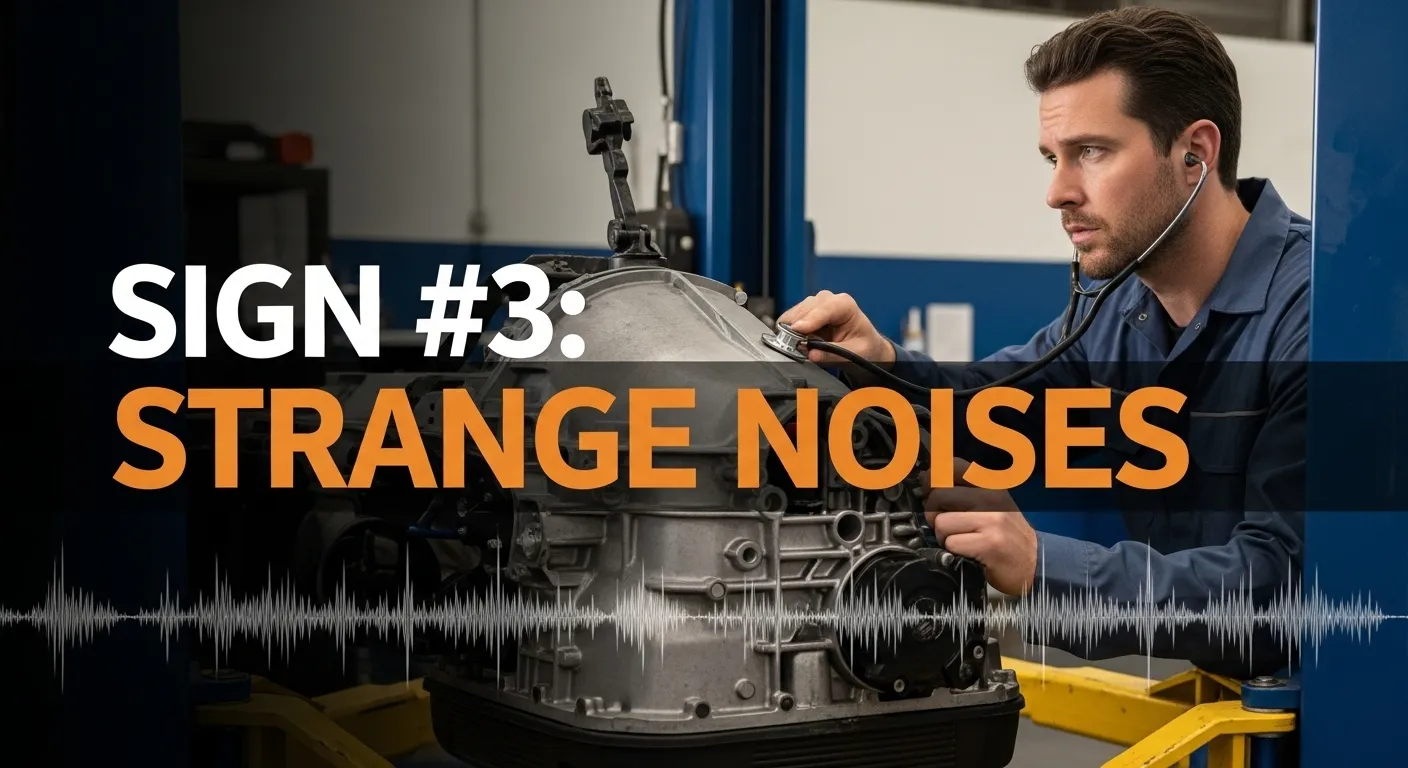
Types of Transmission Noises
Whining sounds like a high-pitched whine that changes with vehicle speed. Usually means the transmission pump is wearing out or the fluid level is low.
- Sometimes it’s just the torque converter.
- Grinding sounds like metal on metal. This is bad. Means gears are wearing or clutches are slipping.
- If you hear grinding stop driving and get it towed.
Humming is a low humming sound. Usually means bearings are wearing out. Not as urgent as grinding but still needs to be fixed.
Clunking is a loud clunk when you shift. Could be worn motor mounts. Could be loose transmission components. Could be the transmission itself. Buzzing is a buzzing sound at certain speeds. Usually the torque converter lockup clutch. Common on the 10-speed Silverados.
What Each Sound Means
Whining usually means low fluid or a failing pump. The pump is what creates hydraulic pressure. When it starts to fail it makes noise.
- Low fluid makes it worse because the pump is sucking air.
- Grinding means metal is touching metal somewhere. Could be worn gears. Could be clutches that are completely gone.
- Either way you’re doing damage every time you drive it.
- Humming is usually bearings. Transmissions have lots of bearings. When they wear out they hum.
- It’ll get louder as it gets worse.
- Clunking is tricky. Sometimes it’s the transmission. Sometimes it’s the motor mounts.
- Sometimes it’s the driveshaft or U-joints. You gotta figure out where it’s coming from.
Buzzing is usually the torque converter. The lockup clutch inside the converter is chattering. It’s annoying but not immediately dangerous. Still needs to be fixed though.
Silverado-Specific Noises
The 8-speed in the 2019 to 2021 Silverados is known for a whining sound at low speeds. Like when you’re in a parking lot.
- GM says it’s normal. I say it’s annoying. Sometimes changing the fluid helps.
- Sometimes it doesn’t.
- The 10-speed can have a clunking sound when it’s cold. Especially in the morning. It’ll clunk when you shift from Park to Drive or Drive to Reverse.
- Usually goes away once it warms up. That’s the clutches engaging hard because the fluid is cold and thick.
- If you’ve got the 6.2L engine it’s louder than the 5.3L. Sometimes that masks transmission noises. So you gotta listen carefully.
Also don’t confuse transmission noise with transfer case noise. If you’ve got 4WD the transfer case can make noise too. The transfer case is behind the transmission. If the noise changes when you shift into 4WD it’s probably the transfer case not the transmission.
When to Worry
- Loud grinding? Stop driving immediately. Get it towed.
- Whining that gets worse over time? Get it checked soon. Like within a week.
- Clunking? Check it ASAP. Could be something simple.
- Could be serious.
- Buzzing? Not urgent but get it looked at. It’ll drive you crazy if you don’t.
Cost to Fix
Fluid change runs $150 to $300. Bearing replacement is $800 to $1,500 and requires transmission removal. Pump replacement costs $1,200 to $2,000. Full transmission rebuild runs $4,000 to $6,000.
Real Story
2019 Silverado came in making a whining noise. Customer said it sounded like a jet engine. Started about a month ago.
- Getting worse.
- I popped the hood. Checked the fluid. Dipstick was bone dry.
- Not a drop.
- Found a leak in one of the cooler lines. Small crack. Fluid had been slowly leaking out for who knows how long.
- Fixed the leak. Added fluid. Took it for a test drive.
- Noise was completely gone.
- Total cost was $350 for the cooler line and fluid. Customer was relieved. He thought he was looking at a $5,000 transmission.
- Nope. Just a $40 cooler line and some fluid.
- That’s why you gotta diagnose these things properly. Don’t just assume the worst.
Sign (4) Burning Smell from Transmission
- If you smell something burning and it’s not your brakes it’s probably your transmission.
- Transmission fluid has a distinct smell when it burns. It’s sweet. Kind of like burnt toast or burnt sugar.
- Different from burning oil which smells more acrid.
- If you smell it that’s bad. That means your transmission is overheating.
Why Transmission Fluid Burns
Overheating from low fluid. If you’re low on fluid there’s not enough to cool the transmission. It overheats. The fluid burns. Excessive friction. If your clutches are slipping they’re creating friction. Friction creates heat.
- Too much heat burns the fluid.
- Towing heavy loads. When you tow your transmission works harder. Creates more heat.
- If you’re towing at or above your truck’s capacity you can overheat the transmission.
- Stop-and-go traffic. City driving is hard on transmissions. Lots of shifting.
- Lots of heat. Not much airflow to cool it down.
- Failed cooling system. Your transmission has a cooler. It’s usually inside the radiator.
- If the cooler fails or gets clogged the transmission overheats.
Silverado Towing and Transmission Heat
Silverado 1500 can tow anywhere from 9,000 to 13,000 pounds depending on the configuration. That’s a lot. When you’re towing that much weight your transmission is working its ass off. Especially if you’re going uphill or in hot weather.
Normal operating temperature for a transmission is 175 to 200 degrees Fahrenheit. When you’re towing it can easily hit 200 to 225 degrees. That’s getting warm but still okay. The danger zone is 240 degrees and above. At that temperature the fluid starts to break down. Fast.
- Every 20 degrees above 240 cuts the fluid life in half.
- So if you hit 260 degrees your fluid is degrading exponentially. It’s getting cooked.
- That’s when you smell it burning.
How to Check for Overheating
If you’ve got a newer Silverado you might have a transmission temp gauge on the dash. Check it. If you don’t you can use an OBD2 scanner. Plug it in. Look for transmission fluid temperature.
- Most scanners will show it.
- You can also carefully touch the transmission pan. If it’s too hot to touch it’s probably over 200 degrees. But be careful.
- Don’t burn yourself.
- If you see steam or smoke coming from under the truck pull over immediately. That’s way too hot.
Prevention
If you tow regularly install an auxiliary transmission cooler. They’re like $200 to $400 installed. They drop transmission temps by 20 to 40 degrees. Totally worth it. Change your fluid more often if you tow. I tell guys who tow every weekend to change it every 30,000 miles. Some guys do it every 25,000.
- Use synthetic fluid. It handles heat better than conventional. Costs a bit more but lasts longer.
- Monitor your temps while towing. If you see it climbing above 220 degrees pull over. Let it cool down.
- Maybe you’re towing too much weight or going too fast uphill.
Cost Implications
- Fluid change runs $150 to $300. Transmission cooler install costs $300 to $600.
- Overheated transmission repair runs $2,000 to $5,000 depending on damage.
Real Story
Customer brought in a 2020 Silverado that smelled like a campfire. I’m not exaggerating. You could smell it from 20 feet away. He’d been towing a 10,000 pound trailer through the mountains. In July. In Arizona.
I checked the transmission temp with my scanner. It had hit 260 degrees at some point. The fluid was COOKED.
- Black as motor oil. Smelled terrible.
- We flushed it three times. Took 18 quarts of fluid to get it clean. Cost him $600.
- I told him he needed to install a bigger cooler. He did. Spent another $400 on that.
- But you know what? He hasn’t had a problem since. Temps stay under 200 degrees even when towing in the summer.
- That $1,000 he spent saved him from a $4,000 transmission rebuild.
Sign (5) Dark Dirty or Leaking Transmission Fluid
This is the easiest one to check. And honestly you should be checking your transmission fluid regularly anyway.
- Here’s what healthy transmission fluid looks like. It’s bright red. Sometimes pink.
- It’s translucent. You can see through it. It’s smooth.
- No grit. And it smells sweet. Not burnt.
- Here’s what bad fluid looks like. It’s dark brown or black. It’s opaque.
- You can’t see through it. It feels gritty if you rub it between your fingers. And it smells burnt.
- If your fluid looks bad it needs to be changed. Period.
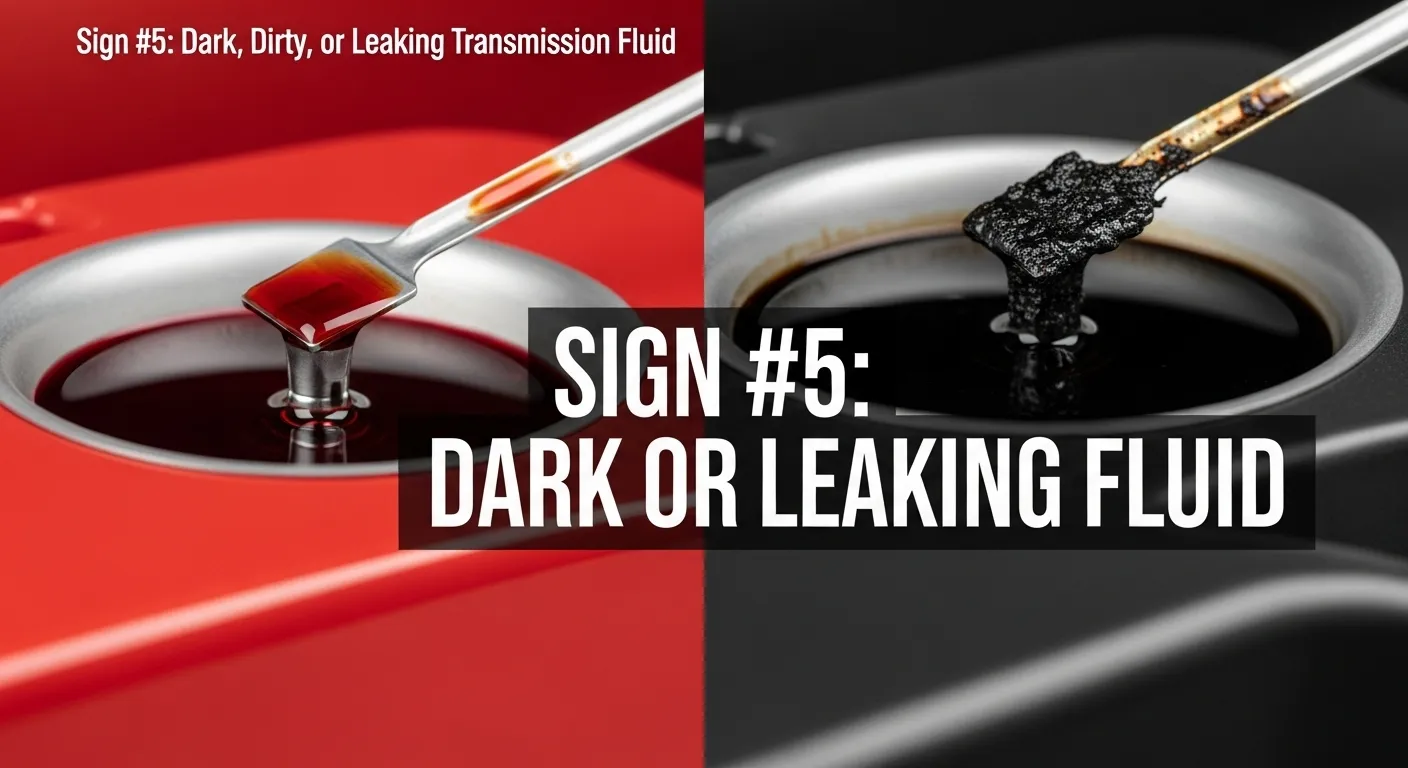
How to Check Silverado Transmission Fluid
- Alright here’s the step-by-step. Park on level ground. This is important.
- If you’re on a slope the reading will be wrong.
- Start the engine. Let it run. Put the transmission in Park.
- Keep your foot on the brake.
Locate the dipstick. On most Silverados it’s towards the back of the engine bay on the passenger side. It usually has a red or yellow handle.
- Says TRANS or has a transmission symbol on it.
- Pull the dipstick out. Wipe it clean with a rag or paper towel.
- Put it back in all the way. Make sure it’s seated properly. Pull it out again.
- Look at the level.
There should be two marks. HOT and COLD. If the engine’s been running check the HOT mark. Fluid should be between the two dots. Look at the color. Smell it. Rub a little between your fingers.
- Check for metal particles.
- If it’s low add fluid through the dipstick tube. Use a funnel. Add a little at a time.
- Check the level frequently. Don’t overfill.
10-Speed Without Dipstick
Now here’s the thing. Some 2022 and newer Silverados with the 10-speed don’t have a dipstick. GM decided to make them sealed for life. Which is stupid in my opinion.
If you’ve got one of those you need to check the fluid from underneath. There’s a fill plug on the side of the transmission. You need the truck on a lift. You need a special tool to check the level. And the transmission has to be at a specific temperature 95 to 105 degrees Fahrenheit.
Honestly if you’ve got a 10-speed without a dipstick just take it to a shop. It’s not worth the hassle to do it yourself.
Common Leak Locations in Silverados
Pan gasket. This is the most common leak. The pan is on the bottom of the transmission. The gasket seals it. Over time the gasket gets hard and brittle. Starts to leak.
You’ll see red fluid on your driveway. Cooler lines. These are the rubber hoses that go from the transmission to the cooler. They can crack or develop leaks at the connections.
Output shaft seal. This is where the driveshaft connects to the transmission. If the seal fails fluid leaks out. You’ll see it on the driveshaft.
Torque converter seal. This is between the transmission and the engine. If it leaks you’ll see fluid on the bellhousing. Radiator. Some Silverados have the transmission cooler inside the radiator. If there’s an internal leak transmission fluid mixes with coolant. You’ll see pink stuff in your coolant reservoir. This is bad. Real bad. Coolant in the transmission will destroy it.
How to Identify Leaks
- Look under your truck. See any red puddles? That’s transmission fluid.
- Check the transmission pan. Is it wet? Leaking?
- Look at the cooler lines. Any cracks? Wet spots?
- Check your coolant. Is it pink or milky? That’s transmission fluid in the coolant.
- Get it fixed immediately.
Cost to Fix Leaks
- Pan gasket runs $150 to $300. Cooler line costs $200 to $400.
- Output shaft seal is $300 to $800. Torque converter seal runs $400 to $900.
- Radiator if there’s an internal leak costs $400 to $1,000.
Real Story
2021 Silverado came in with a puddle of red fluid in the driveway. Customer was panicked. Thought it was going to be $3,000.
- I put it on the lift. Looked underneath. Fluid was dripping from the pan.
- Pulled the pan. Gasket was hard as a rock. Probably original.
- Truck had 68,000 miles on it.
- Replaced the gasket. Used a good quality Fel-Pro gasket. Cost $12.
- Labor was 45 minutes. Total bill was $180.
- Customer was relieved. I was happy. Easy job.
- That’s why you don’t panic when you see a leak. Get it diagnosed first. Could be something simple.
When to Change Transmission Fluid in Your Chevy Silverado
Alright so you know the warning signs. But when should you actually change the fluid? GM’s official recommendation is 60,000 miles for normal driving. Or every 4 years whichever comes first.
- For “severe duty” they say 30,000 miles.
- But here’s what I tell people. Change it at 45,000 miles. Regardless.
- Why? Because I’ve seen too many transmissions fail at 60,000 miles with “lifetime” fluid. The fluid wasn’t lifetime.
- It was dead.
What Severe Duty Means
GM defines severe duty as towing trailers, hauling heavy loads in the bed, off-road driving, stop-and-go traffic, extreme temperatures hot or cold, and police taxi or delivery use.
If you do any of that regularly you’re severe duty. Change your fluid at 30,000 miles.
Mileage-Based Schedule
- Here’s what I recommend. 30,000 miles if you tow regularly or drive in severe conditions.
- 45,000 miles if you occasionally tow or mostly highway driving.
- 60,000 miles if you never tow and drive gently but I still think 45K is better.
- 100,000 miles maximum. Don’t wait this long. Seriously.
Year-Specific Recommendations
- 2014 to 2018 Silverado with the 6-speed. 60,000 miles is probably fine. These are pretty reliable.
- 2019 to 2021 Silverado with the 8-speed. 45,000 miles. These have known shudder issues.
- Don’t push it.
- 2022 plus Silverado with the 10-speed. 50,000 miles. Newer transmission.
- Still figuring out the long-term reliability.
- Diesel models. 30,000 miles. Diesel engines make more torque.
- Harder on the transmission.
My Real-World Advice
- I tell every Silverado owner the same thing. Change it at 45,000 miles. Don’t wait.
- I don’t care what GM says. I don’t care what your buddy says. I’ve been doing this for 14 years.
- I’ve seen what happens when you wait.
- Spend $250 now or $4,000 later. Your choice.
DIY vs Professional Transmission Fluid Change
- Can you change your Silverado’s transmission fluid yourself? Yeah. Should you?
- Depends.
- If you’ve got basic tools and some mechanical knowledge you can do a drain-and-fill. It’s not that hard.
- But if you’ve got a 2022 or newer with the 10-speed and no dipstick I’d take it to a shop. Those are more complicated.
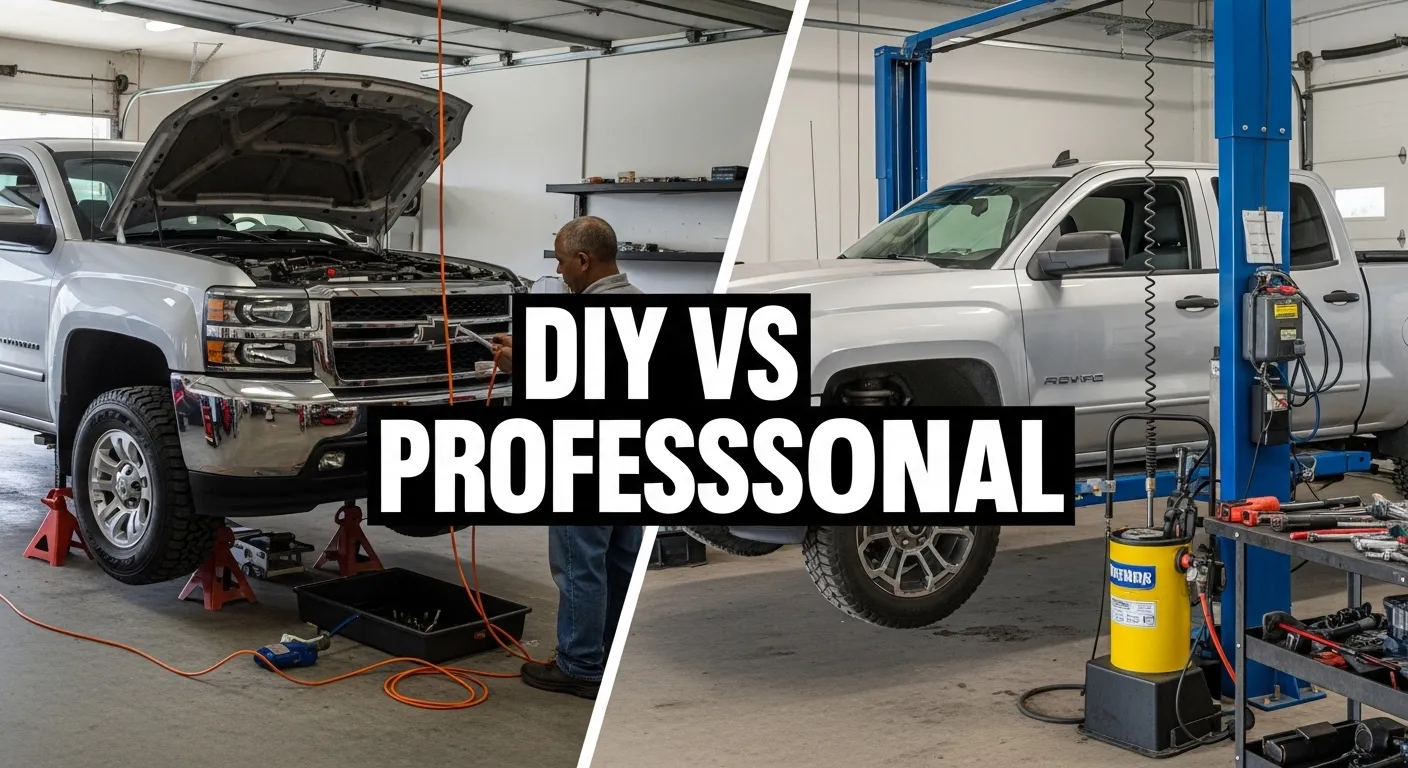
DIY Drain and Fill Process
Here’s what you need. Floor jack and jack stands or ramps. Drain pan big one at least 10 quarts. Socket set. Torque wrench. Funnel. Gloves. 6 to 12 quarts of Dexron VI fluid. New pan gasket if you’re dropping the pan.
- Here’s how you do it. Lift the truck. Make sure it’s secure.
- Don’t get under a truck that’s only on a jack. Use jack stands.
- Put the drain pan under the transmission pan. If your transmission has a drain plug remove it. Let the fluid drain.
- If it doesn’t have a drain plug you gotta remove the pan bolts. Do this carefully. The pan is full of fluid.
- It’ll make a mess.
Once it’s drained reinstall the drain plug if equipped or the pan with a new gasket. Torque the bolts to spec. Usually 12 to 15 foot-pounds for the pan bolts.
- Don’t overtighten.
- Lower the truck. Add new fluid through the dipstick tube. Use a funnel.
- Add about 5 to 6 quarts to start. Check the level. Add more as needed.
- Start the engine. Let it run. Shift through all the gears.
- Park Reverse Neutral Drive. Back to Park.
- Check the level again. Add more fluid if needed. Take it for a test drive.
- Come back. Check the level one more time.
- That’s a drain-and-fill. It’ll replace about 40 to 50 percent of the fluid. The rest stays in the torque converter and cooler lines.
Professional Flush vs DIY Drain-and-Fill
A drain-and-fill removes 40 to 50 percent of the fluid. It’s cheaper. Safer for high-mileage trucks. But it doesn’t get all the old fluid out. A professional flush removes 90 to 95 percent of the fluid. They use a machine that pumps new fluid in while pumping old fluid out. Gets everything clean.
But it’s more expensive. And some people think it’s too aggressive for high-mileage trucks.
I usually recommend a flush if the truck has under 100,000 miles and the fluid’s been changed regularly. If it’s got 150,000 miles and the fluid’s never been changed I do a drain-and-fill. Safer.
Cost Comparison
- DIY costs. Fluid 6 to 12 quarts at $7 per quart runs $40 to $80. Filter if changing costs $20 to $40.
- Gasket is $10 to $20. Total $70 to $140.
- Shop costs. Drain and fill runs $150 to $250. Full flush costs $200 to $350.
- Filter replacement add $50 to $100. Total $200 to $450.
When to Use a Professional
- Use a pro if you’ve got a 10-speed with no dipstick. If the truck’s never had the fluid changed and has over 100K miles.
- If you’re seeing symptoms and need a diagnosis. If you don’t have the tools or space.
- If you want a warranty on the work.
My Recommendation
- If your Silverado has under 60,000 miles and you’re handy with tools DIY is fine. Save yourself $150.
- If it’s got over 100,000 miles and you’ve never changed it take it to a shop. Get a professional flush.
- Don’t risk a $4,000 transmission to save $150.
Best Transmission Fluid for Chevy Silverado
All Silverados require Dexron VI fluid. Don’t use anything else. Dexron VI is backward compatible with Dexron III. So if you’ve got an older truck that called for Dexron III you can use Dexron VI. It’s actually better.
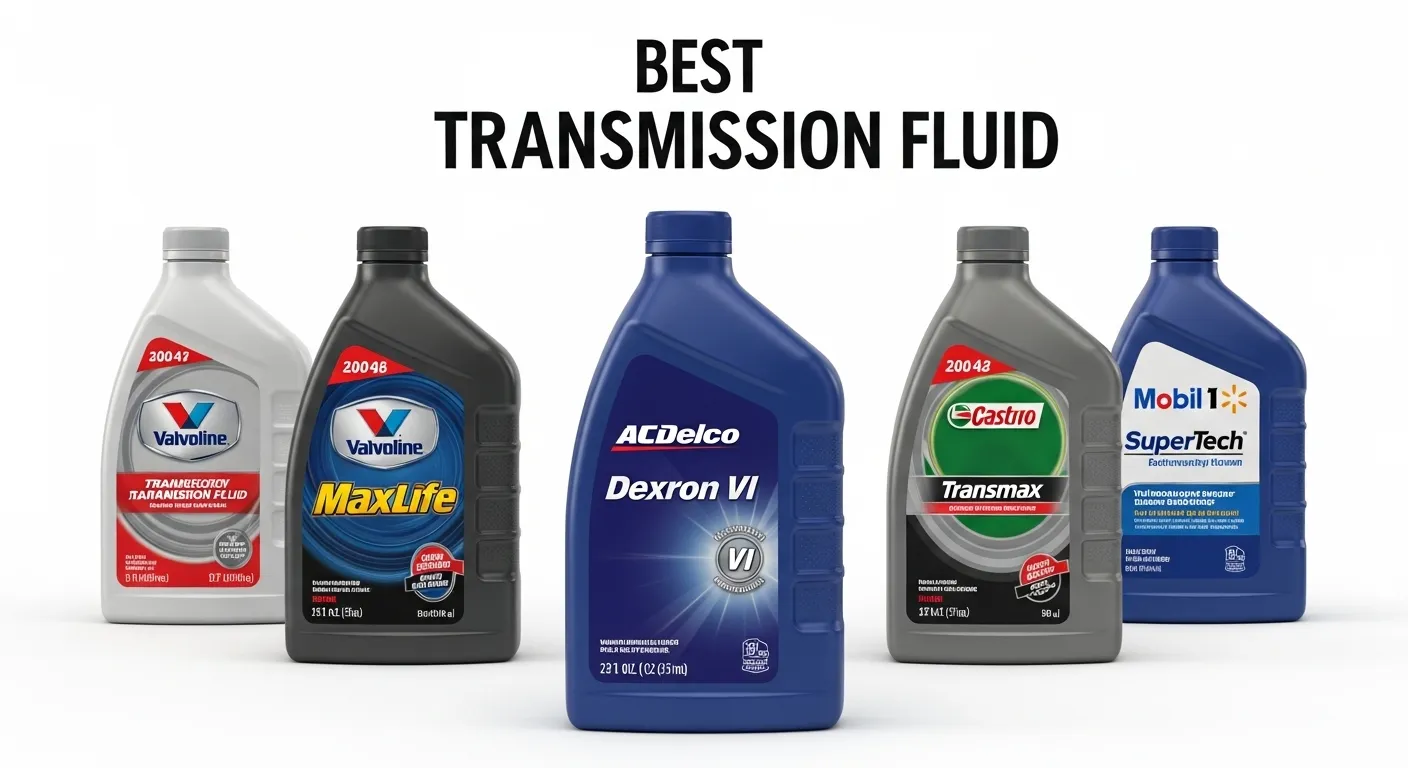
Recommended Brands
OEM best option. ACDelco Dexron VI costs $8 to $10 per quart. GM genuine fluid runs $9 to $12 per quart.
- These are what I use in my shop. GM-approved. Never had a problem.
- Aftermarket good options. Valvoline MaxLife Dexron VI costs $6 to $8 per quart. Castrol Transmax Dexron VI runs $7 to $9 per quart.
- Mobil 1 Synthetic ATF is $10 to $12 per quart.
- All good options. I’ve used all of them. No issues.
- Budget acceptable options. Walmart SuperTech Dexron VI costs $4 to $6 per quart. Advance Auto Parts brand runs $5 to $7 per quart.
- These work. They meet the Dexron VI spec. But I prefer the name brands.
Synthetic vs Conventional
- All Dexron VI is a synthetic blend. It’s not fully synthetic but it’s not conventional either.
- You can get full synthetic Mobil 1 or Amsoil. It lasts longer. Handles heat better.
- Better for towing.
- But it costs about 50 percent more. Is it worth it? If you tow regularly yeah.
- If you don’t the regular Dexron VI is fine.
How Much Fluid You Need
- 6-speed needs 11 to 12 quarts for a full flush. 8-speed needs 10 to 11 quarts.
- 10-speed needs 12 to 13 quarts. Drain-and-fill needs 5 to 6 quarts.
- Always buy an extra quart. Better to have too much than not enough.
Where to Buy
- AutoZone O’Reilly Advance Auto. They all carry it.
- Walmart is usually the cheapest.
- Amazon is convenient if you don’t mind waiting.
- Dealership is the most expensive but you know you’re getting the right stuff.
My Pick
- I use ACDelco Dexron VI in every Silverado I service. It’s GM-approved. Reasonably priced.
- Never had a problem with it.
- Don’t cheap out on transmission fluid. It’s not worth saving $20 to risk a $4,000 transmission.
Cost of Ignoring Bad Transmission Fluid
- Let me paint you a picture of what happens if you ignore bad transmission fluid.
- 0 to 10,000 miles overdue. Fluid starts breaking down. Shifts get a little rougher.
- No major damage yet. Still reversible.
- 10,000 to 30,000 miles overdue. Clutch packs start wearing. Solenoids get clogged.
- You notice shifting problems. Partial damage. Might need some repairs.
- 30,000 plus miles overdue. Severe clutch wear. Valve body damage.
- Bearing failure. Transmission rebuild needed. You’re looking at $3,000 to $5,000.
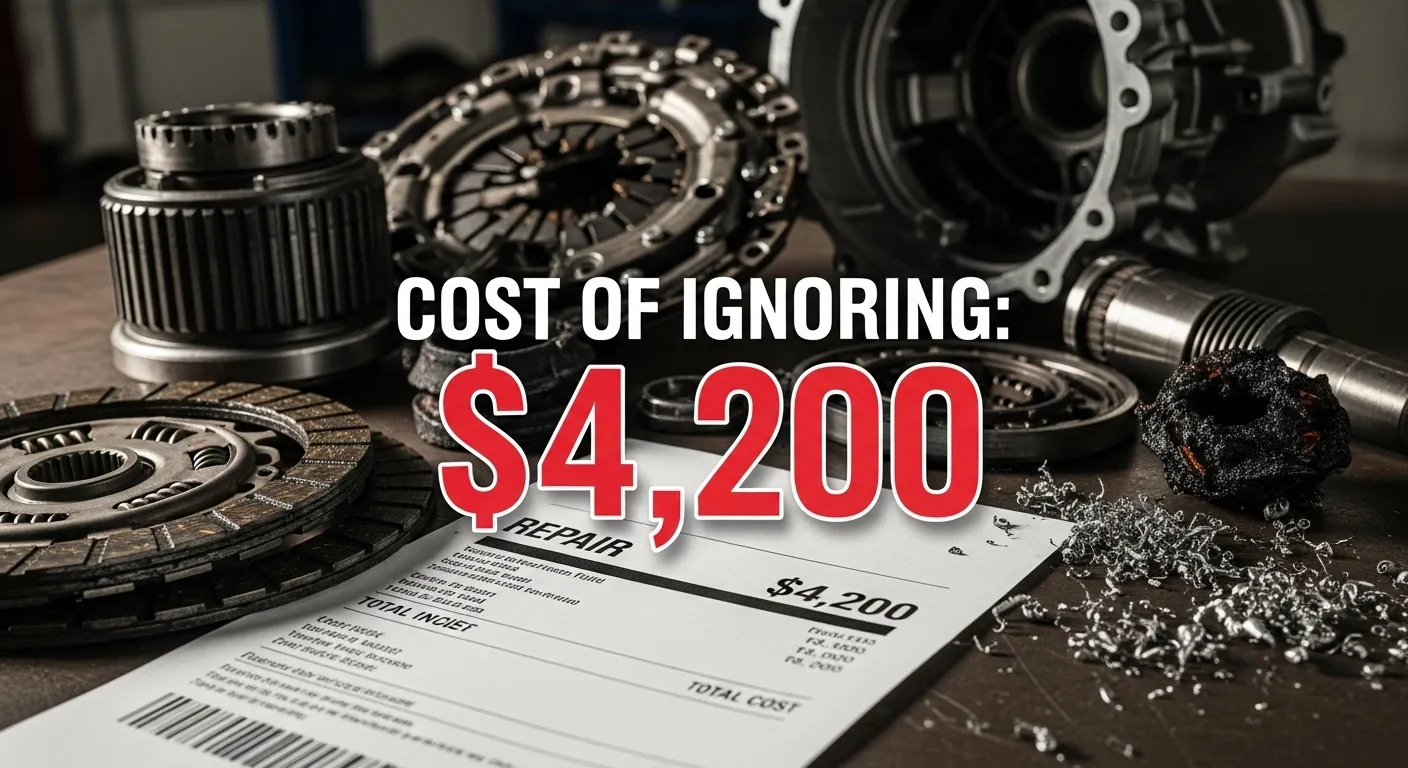
Real Repair Costs
- Minor repairs. Fluid flush runs $200 to $350. Solenoid replacement costs $300 to $800.
- Pan gasket is $150 to $300.
- Major repairs. Torque converter runs $800 to $1,500. Valve body costs $600 to $1,200.
- Clutch pack is $1,500 to $2,500.
- Catastrophic failure. Transmission rebuild runs $3,000 to $5,000. Remanufactured transmission costs $2,500 to $4,000.
- New transmission is $4,500 to $7,000. Labor runs $800 to $1,500.
Insurance Doesn’t Cover This
- Your insurance doesn’t cover wear and tear. They don’t cover maintenance neglect.
- If your transmission fails because you didn’t change the fluid you’re paying out of pocket.
- No warranty. No coverage. Just you and a $5,000 bill.
Resale Value Impact
- A bad transmission kills your resale value.
- If you’re trying to sell a Silverado with transmission problems buyers will lowball you. Hard.
- And if you’ve had transmission work done it shows up on CarFax. That scares buyers.
- You could lose $3,000 to $5,000 in resale value. Maybe more.
Real Example
I had a customer who ignored shifting problems for two years. Kept driving it. Kept putting it off. Transmission finally died at 95,000 miles. Completely done. Wouldn’t move.
- Rebuild quote was $4,200.
- He asked me if changing the fluid would’ve helped. I showed him the old fluid. It was black.
- Thick. Full of metal shavings.
- “This should be red” I told him. “You spent $4,200 to learn a $250 lesson.”
- He wasn’t happy. But what could I do? I warned him six months earlier when he brought it in for an oil change.
- He didn’t listen.
- Don’t be that guy.
How to Prevent Transmission Problems in Your Silverado
Prevention is way cheaper than repair. Here’s what you need to do.
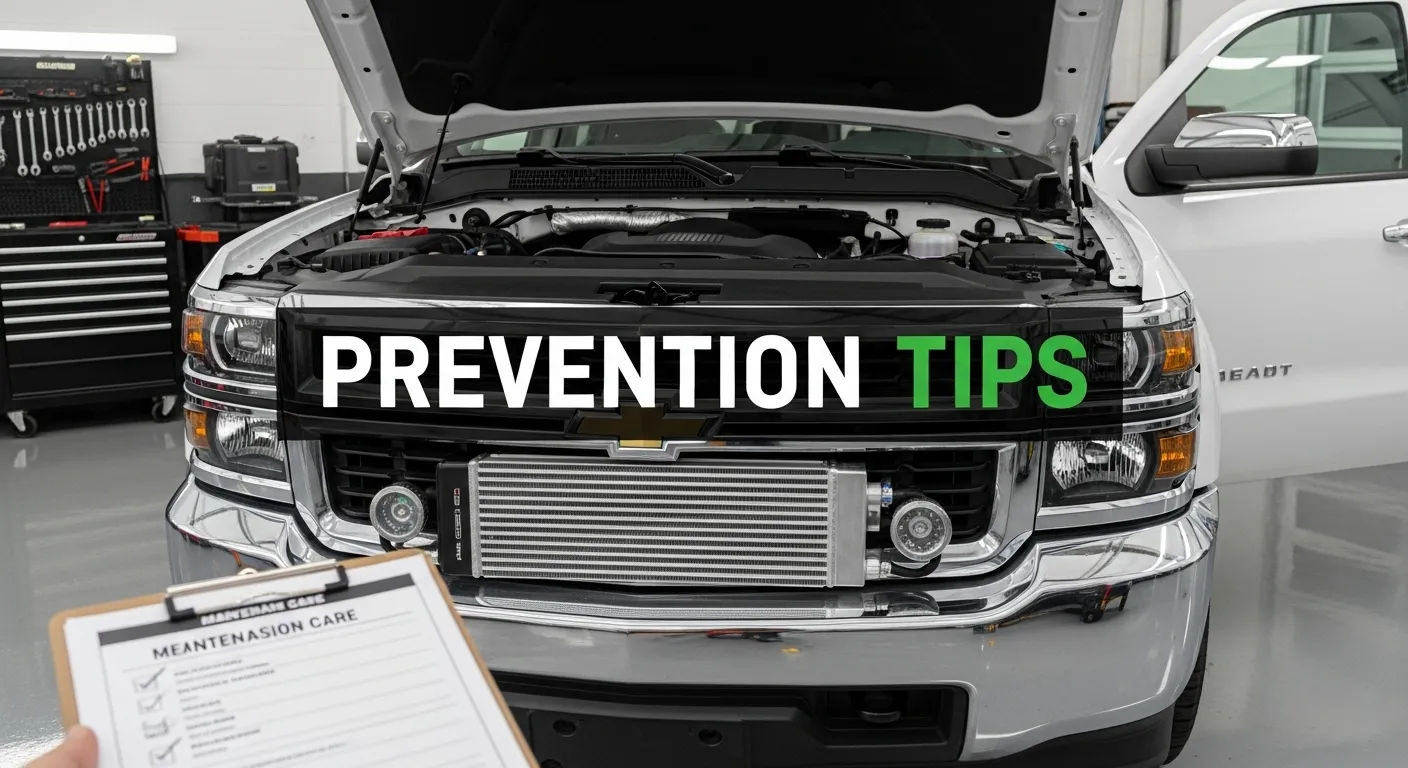
Regular Maintenance Schedule
- Change fluid every 45,000 miles. Inspect for leaks annually.
- Check fluid level monthly. Watch for warning signs. Keep records of all maintenance.
Driving Habits That Extend Transmission Life
- Don’t shift into Drive while you’re still rolling backward. Come to a complete stop first.
- Let the transmission warm up in cold weather. Don’t hammer on it when it’s cold.
- Use tow haul mode when towing. That’s what it’s there for.
- Avoid sudden acceleration. Ease into it.
- Don’t neutral coast downhill. Keep it in Drive. Let the engine brake.
Towing Best Practices
- Stay within your tow rating. Don’t exceed it.
- Use a weight distribution hitch if you’re towing over 5,000 pounds.
- Install an auxiliary transmission cooler. Seriously. Do it.
- Use tow haul mode. It changes the shift points and keeps the transmission cooler.
- Monitor your transmission temp. If it gets above 220 degrees pull over and let it cool.
- Change your fluid more often. Every 30,000 miles if you tow regularly.
Upgrades Worth Considering
Auxiliary transmission cooler costs $200 to $400 installed. Drops temps 20 to 40 degrees. Essential if you tow over 5,000 pounds.
- Extends fluid life by 2x.
- Transmission temp gauge costs $50 to $150. Lets you monitor temps in real-time. Prevents overheating.
- Peace of mind.
- Synthetic fluid costs plus $50 per change. Lasts longer. Better heat resistance.
- Worth it if you tow.
Warning Signs to Never Ignore
- Check Engine Light with transmission codes. Burning smell.
- Leaking fluid. Harsh shifting. Slipping gears.
- Any of the 5 signs I mentioned.
My Prevention Tips
- Three things will save your Silverado’s transmission. Change fluid at 45,000 miles.
- Install a trans cooler if you tow. Don’t ignore warning signs.
- Do these three things and your transmission will last 200,000 plus miles.
- I’ve seen it happen. I’ve got customers with 250,000 miles on the original transmission. They all changed their fluid regularly.
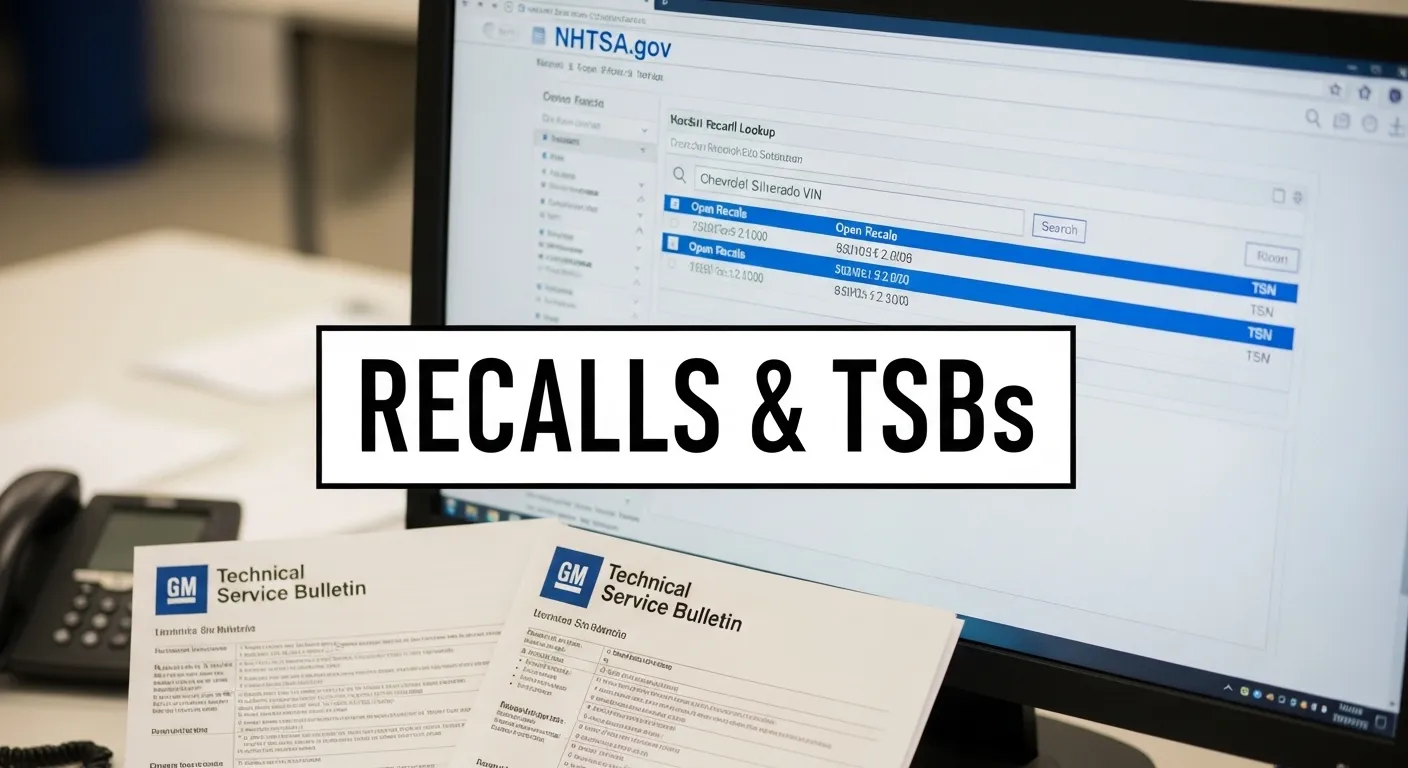
Silverado Transmission Recalls and TSBs
GM has issued several Technical Service Bulletins for Silverado transmissions. Here are the important ones.
2019 to 2021 Silverado 1500 8-Speed
TSB 19-NA-206 for harsh shifting. GM released a software update. Free if you’re under warranty. TSB 20-NA-355 for shudder or vibration. Usually a torque converter issue. Sometimes a fluid change fixes it. Sometimes you need a new converter.
2022 Plus Silverado 1500 10-Speed
- TSB 21-NA-082 for delayed engagement. Software calibration update available.
- TSB 22-NA-124 for clunking noise when shifting. Software update helps.
How to Check for Recalls
- Go to NHTSA.gov. Enter your VIN. It’ll show any open recalls.
- You can also check GM’s website or call your dealership.
- Recall repairs are free. Always. Even if you’re out of warranty.
What TSBs Mean
A Technical Service Bulletin is not a recall. It is GM telling dealerships hey we’ve seen this problem here’s how to fix it.TSB repairs might be free if you’re under warranty. Might not be if you’re out of warranty. Depends on the dealership and the problem.
Getting Warranty Coverage
Silverado powertrain warranty is 5 years or 60,000 miles. But you gotta have maintenance records. If you can’t prove you changed the fluid they might deny your claim.
- That’s why you keep receipts. Every oil change. Every fluid change.
- Everything.
- If your transmission fails at 55,000 miles and you’ve got records showing you maintained it properly GM will probably cover it.
- If you’ve got no records they’ll say you neglected it. Claim denied.
My Advice
If your Silverado is having transmission issues and it’s under 60,000 miles take it to the dealer first. Don’t pay out of pocket if GM will fix it for free. I’ve seen customers pay $1,500 for repairs that were covered under warranty. Don’t be that guy.
FAQs
How often should I change transmission fluid in my Chevy Silverado?
Every 45,000 miles for normal driving. Every 30,000 miles if you tow regularly. GM says 60,000 but I’ve seen too many failures at that mileage. Don’t risk it.
Can I use any Dexron VI fluid in my Silverado?
Yes. Any fluid that meets the Dexron VI specification will work. I recommend ACDelco or GM genuine fluid but Valvoline and Castrol are fine too.
Does my 2022 Silverado have a transmission dipstick?
Most 10-speed Silverados don’t have a dipstick. GM made them “sealed for life.” You need to check the fluid from underneath with special tools. Take it to a shop.
How much does a transmission fluid change cost for a Silverado?
DIY drain-and-fill is $70 to $140. Shop drain-and-fill is $150 to $250. Full flush is $200 to $350. Depends on where you go and what they charge for labor.
What color should Silverado transmission fluid be?
Bright red or pink when new. Light brown is okay. Dark brown or black means it’s overdue for a change.
Can I change transmission fluid myself on a Silverado?
Yes if you’ve got basic tools and a way to lift the truck. 2019 plus models are more complex. 10-speed without a dipstick is best left to professionals.
Will changing old transmission fluid cause problems?
If the fluid’s never been changed and the truck has over 100,000 miles consult a professional first. Sudden fluid change can dislodge debris and cause issues. But usually it’s fine.
How do I know if my Silverado transmission is failing?
The 5 signs I mentioned. Difficulty shifting slipping gears strange noises burning smell and dark or leaking fluid. Any of these means get it checked ASAP.
Is a transmission flush or drain-and-fill better for Silverado?
Flush removes more old fluid 90 percent versus 50 percent but can be risky on high-mileage trucks. Drain-and-fill is safer for trucks over 100,000 miles.
What’s the difference between 8-speed and 10-speed Silverado transmissions?
8-speed 2019 to 2021 has known shudder issues. 10-speed 2022 plus is newer and smoother but more complex. Both require Dexron VI fluid.
My Final Thoughts on Silverado Transmission Maintenance
Look I’ve been wrenching on Silverados for 14 years. I’ve probably worked on 500 of them. Maybe more. And I can tell you this. The transmission is the most expensive thing to fix on your truck. More than the engine. More than anything else.
But it’s also the easiest thing to prevent. $250 every 45,000 miles. That’s it. That’s all it takes. Compare that to $4,000 for a rebuild. The math is simple. I’ve seen guys ignore their transmission fluid for years. Then act surprised when it fails. “I didn’t know” they say.
Well now you know. If you take nothing else from this article remember this. Change your transmission fluid at 45,000 miles. Don’t wait for 60,000. Don’t wait for problems to show up. Just do it. And if you tow install a transmission cooler. It’s $400. It’ll save you thousands.
The Silverados that make it to 200,000 miles all have one thing in common. Their owners changed the damn fluid. The ones that die at 75,000 miles? Neglected maintenance. Every time. So check your fluid this weekend. Look at the color. Smell it.
If it’s dark or smells burnt change it. Don’t wait. Don’t put it off. Don’t think “I’ll do it next month.” Do it now. Your transmission will thank you. Your wallet will thank you. And you won’t be the guy in my shop with a $4,200 repair bill wishing he’d spent $250 two years ago. Trust me on this one.