How Much Does a 2006 Chevy Silverado Weigh? (Curb & GVWR)

- Ford Expedition Years to Avoid A Mechanic’s Complete Guide (2026) - January 28, 2026
- 5 Signs You Need to Change Your Transmission Fluid Chevy Silverado - January 27, 2026
- Ford Maverick Years to Avoid: Worst & Best Models (2022-2026) - January 26, 2026
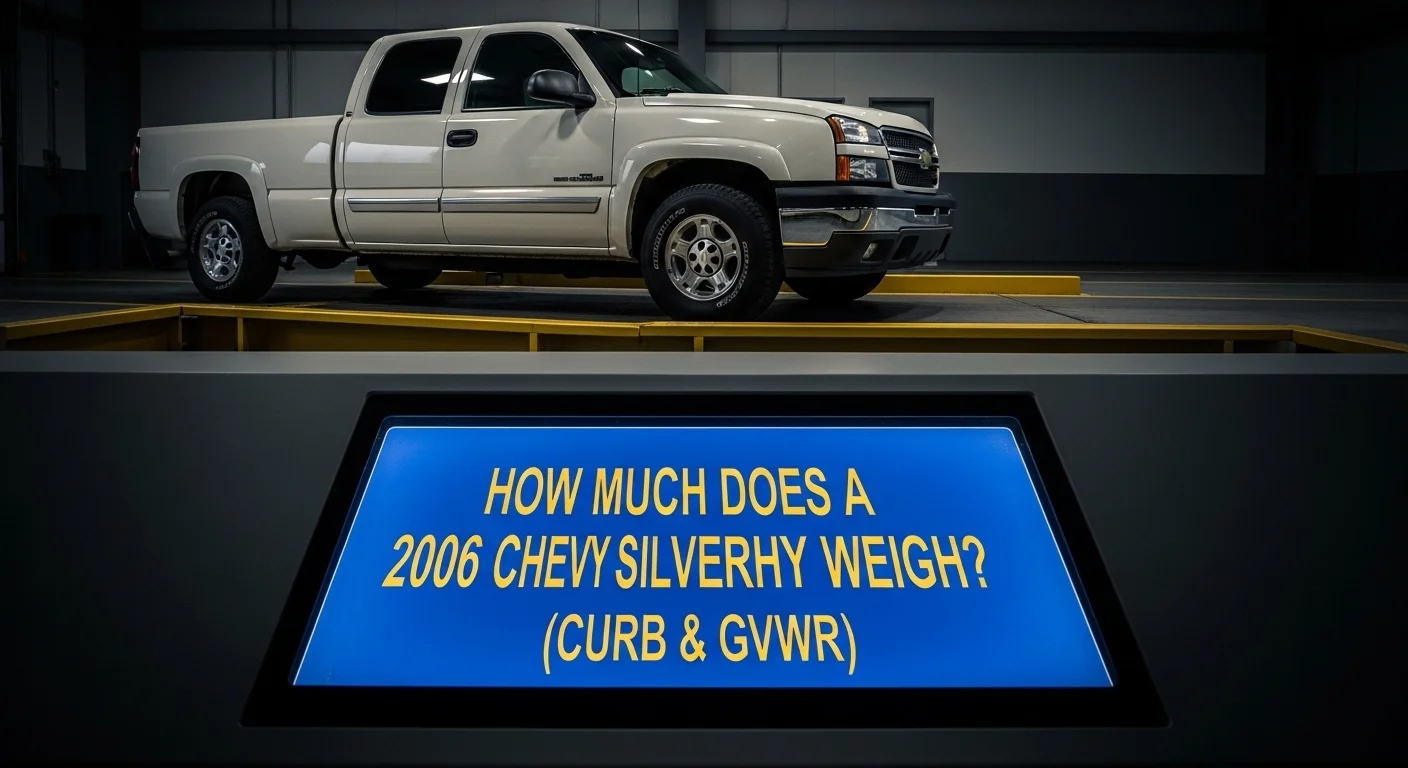
The 2006 Chevy Silverado currb weight and 2006 Chevrolet Silverrado GVWR are two key number every truk ownner should know. Whethar haulling heavy loads or puling a trailler these figures determin how much weight your truck can handdle safely. Understandinng the Gross Vehicl Weight Rate Silverado 2006 is vital to prevent overloading, which can impact performance, braking and longevity. This detailed guide breaks down Silverado 1500 weight specs highlights the weight difference bettween trims and explains payload and towing limits in simple terms. From Regullar Cab to Crew Cab you’ll get accurrate easyto read specs to help you make smart decisions when buying or using your Silverado.
2006 Chevrolet Silverado 1500 – Complete Specs Features And Buying Guide
These trucks varied a lot based on what you ordered back in 2006. Regular Cab versus Crew Cab makes a huge difference. So does two-wheel drive versus four-wheel drive. Bed length matters too.
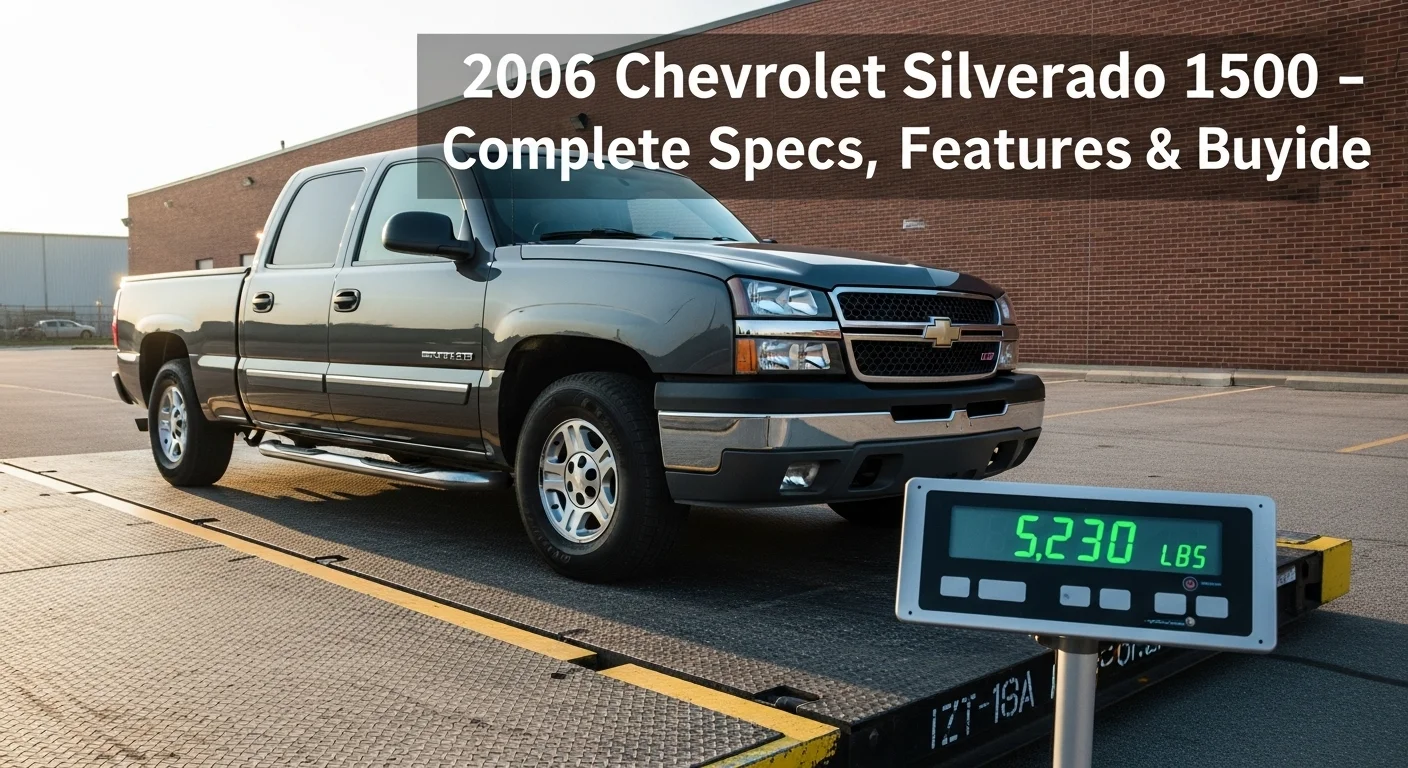
This was the first generation Silverado body style. Started in 1999 and ran through 2006. By 2006 they had most of the bugs worked out. Strong frame. Reliable engines. Interior that didn’t fall apart after five years.
You could get three different cab styles. Regular Cab was just two doors and a bench seat. Extended Cab had those little suicide doors in back for extra storage or occasional passengers. Crew Cab had four full doors and an actual back seat.
Bed lengths came in three sizes. Short bed at five foot eight inches. Standard bed at six foot six inches. Long bed at eight feet. Longer beds meant more weight but also way more room for hauling plywood or lumber.
These got called half-ton trucks even though they could actually haul more than a thousand pounds in most configs. That half-ton thing is just an old classification that stuck around. Reality is most could handle 1,500 to 1,800 pounds depending on how they were set up.
Overview of the 2006 Chevrolet Silverado 1500
Chevy gave these trucks a pretty aggressive look back then. Big square front end. Bold grille. Lots of chrome if you got the higher trims.
Body sat on a fully boxed hydroformed frame. Basically means the frame was super stiff and didn’t flex when you loaded it down. Made the truck stronger without piling on unnecessary weight.
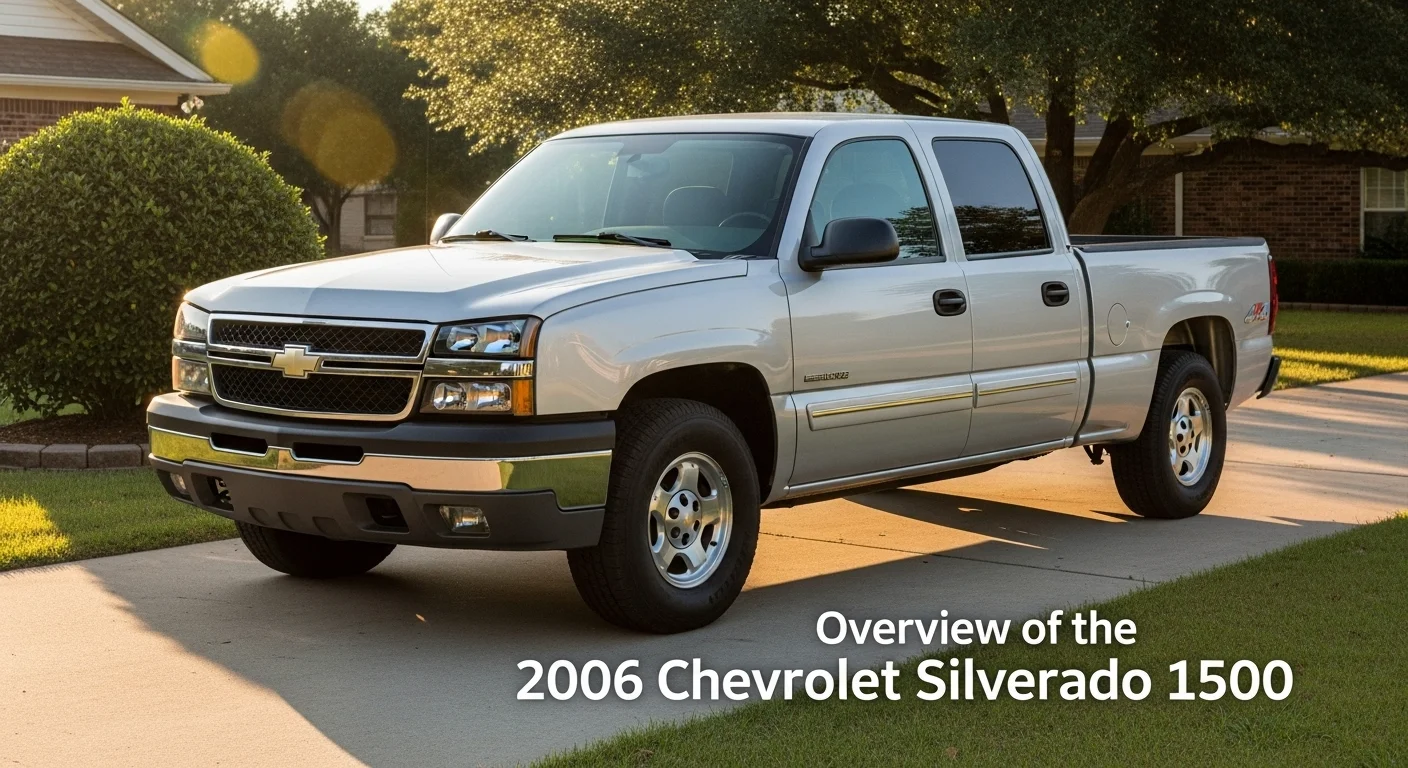
A base Regular Cab with two-wheel drive weighed just over 4,500 pounds empty. Load it up with Crew Cab, four-wheel drive, bigger engine, leather seats and all the options? You’re looking at 5,200 pounds or more before you put anything in the bed.
That 700 pound difference is huge. Heavier truck means less payload capacity. Also means worse fuel economy and more wear on your brakes and suspension. But here’s what I actually liked about these.
They rode pretty decent for a full-size pickup. Independent front suspension helped with that. Rear leaf springs were tuned well enough that you didn’t feel like you were driving a dump truck on the highway.
Inside wasn’t fancy but it worked. Seats were comfortable enough for long drives. Controls were straightforward. Storage was adequate. Even base models had enough cupholders and power outlets to be useful.
For contractors or farmers or just regular guys who needed a truck, these were perfect. Heavy enough to feel stable with a load in the bed. Light enough to not kill your gas mileage when empty. Strong enough to tow a decent trailer.
I’ve personally seen these hit 250,000 miles with nothing but oil changes and brake pads. Frame holds up. Engine runs forever. Transmission is pretty bulletproof if you don’t beat on it.
Engine Options Performance And MPG
The 2006 Silverado came with four engine choices. Base was a 4.3 liter V6. Made about 195 horsepower. Fine for driving around town but nothing special. Most people skipped it entirely. Next up was a 4.8 liter V8. Around 295 horsepower. This was the sweet spot for guys who wanted V8 power without spending a fortune on gas.
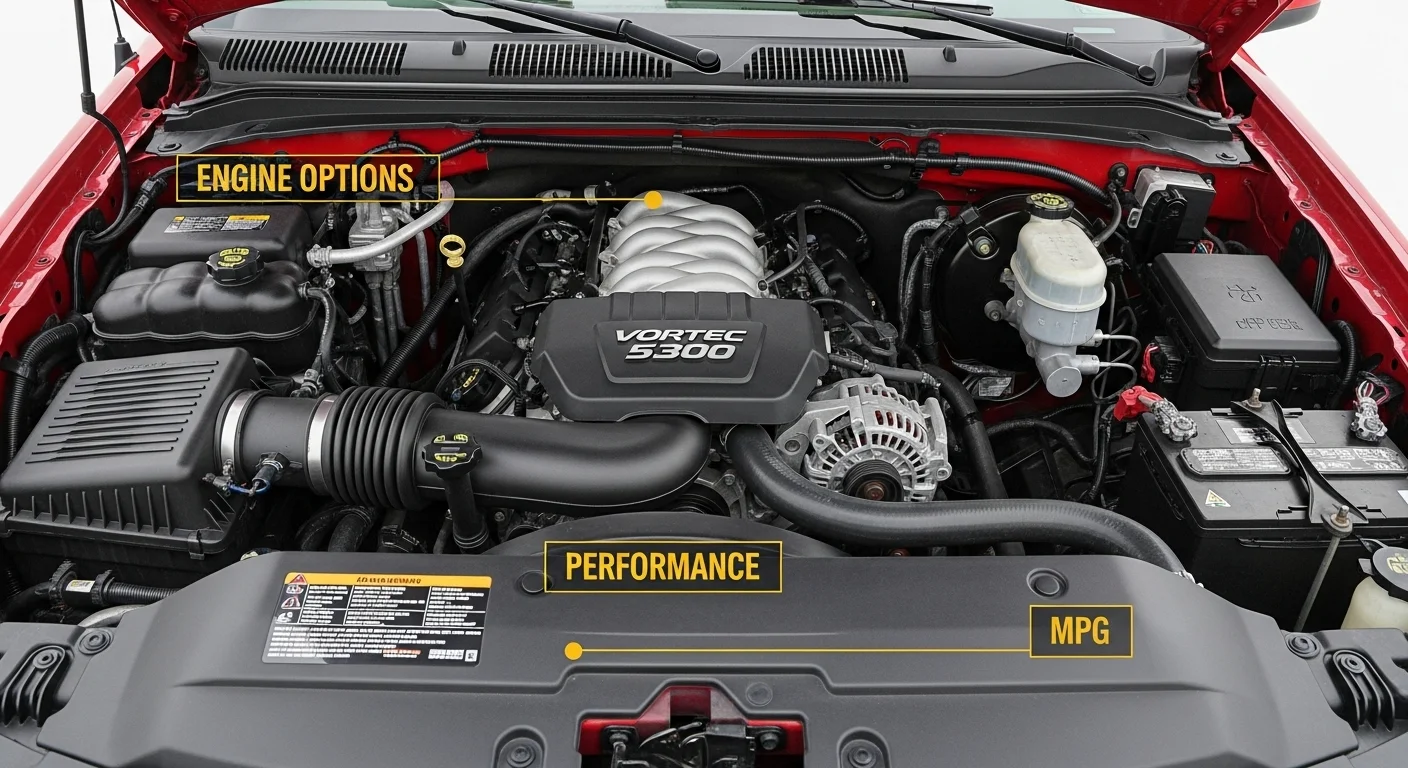
Then you had the 5.3 liter V8. About 315 horsepower. Most popular by far. Good power. Decent fuel economy for a V8. Could tow over 8,000 pounds with the right gearing. Top of the line was the 6.0 liter V8 in SS models. Close to 350 horsepower. Mostly showed up in heavy duty trucks or the performance trims.
Bigger engines weighed more. A truck with the 6.0 under the hood weighed noticeably more than the same truck with a 4.8. Fuel economy wasn’t great. The 4.8 might get 16 around town and 21 on the highway if you drove gently. The 5.3 was more like 15 and 19. The 6.0 was lucky to see 14 and 18.
But for 2006 that was normal. Nobody bought a full-size truck expecting good gas mileage. Power delivery was smooth though. These engines didn’t make a ton of low-end grunt but they pulled strong from about 2,500 RPM all the way up. Throttle response was decent. Transmission shifted smoothly most of the time.
Towing Hauling And Payload Capacity
This is where people get really confused. Towing capacity and payload capacity are two completely different things. Towing capacity is how much trailer weight you can pull behind the truck. For a 2006 Silverado 1500 with the 5.3 liter and the right rear axle ratio, that was around 8400 pounds max. Smaller engines towed less. The 4.8 was rated for maybe 7200 pounds. The V6 was down around 5500.
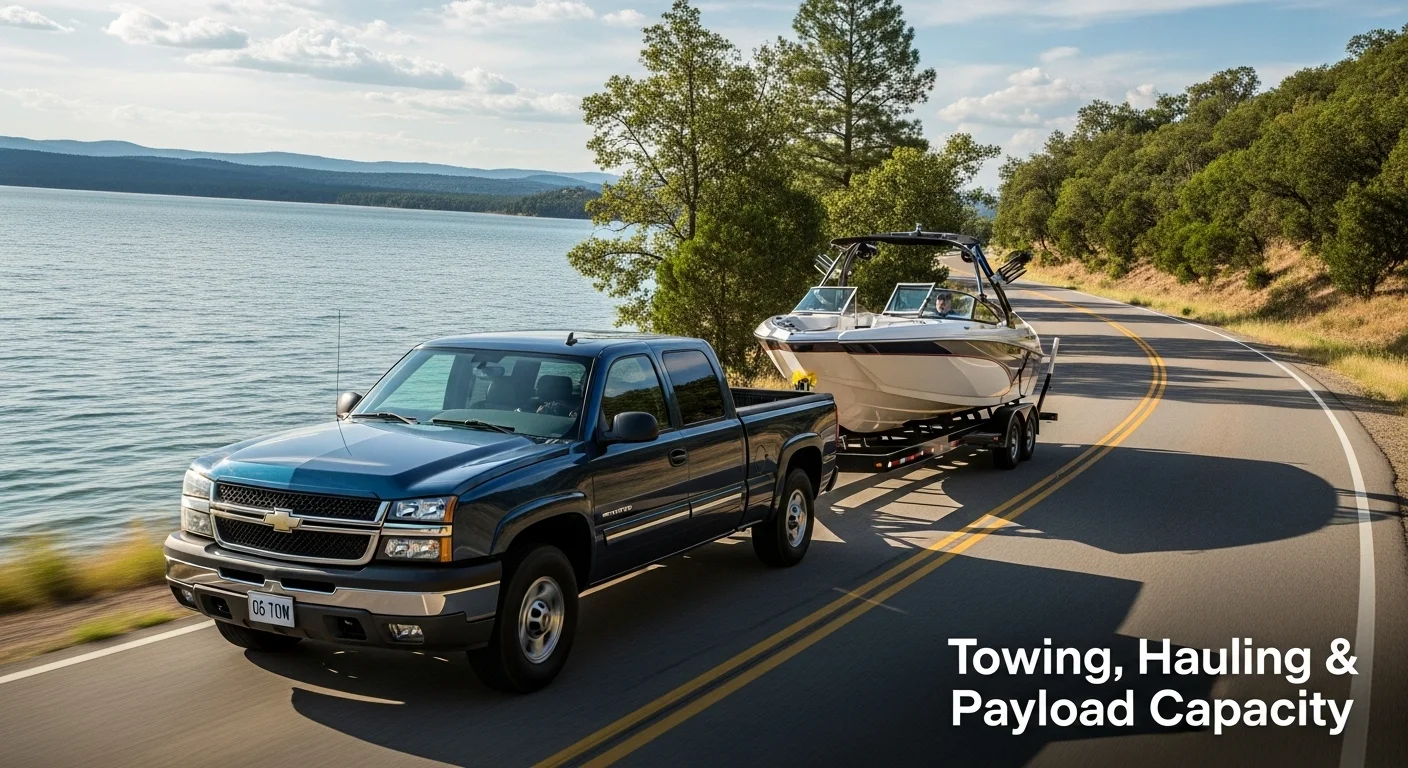
But here’s what trips people up. That towing number assumes you’re not carrying much weight in the truck itself. Every 100 pounds of cargo or passengers reduces how much you can safely tow. Payload is different. That’s how much weight you can put in the actual truck. People. Cargo in the bed. Tools. Whatever. Also includes the tongue weight from your trailer.
Most 2006 Silverado 1500 models had payload ratings between 1,300 and 1,800 pounds. Regular Cab trucks with the long bed and two-wheel drive usually had the highest numbers because they weighed the least. Crew Cab four-wheel drive trucks had the lowest payload because they were heaviest to start with. Might only have 1,400 pounds of capacity. And that payload number includes absolutely everything. You. Your passenger. Your toolbox. Your lumber. And 10 to 15 percent of whatever your trailer weighs. It adds up crazy fast.
I’ve watched guys load their truck bed with a thousand pounds of equipment. Then hook up a 7,000 pound trailer. Trailer tongue weight is maybe 700 pounds. Now they’re at 1,700 pounds just from cargo and tongue weight. Add two people in the cab and you’re over the limit before you even pull out of the driveway. Suspension squats. Brakes don’t work right. Steering feels sloppy. Engine has to work way harder than it should. You’re asking for major problems.
Dimensions Weight And Bed Sizes
Bed size made a big difference in weight and handling. Short bed was five foot eight inches. Only came on Crew Cab models. Made the truck easier to park but limited what you could haul. Standard bed was six foot six inches. Most common setup. Good balance between cargo space and overall truck length.
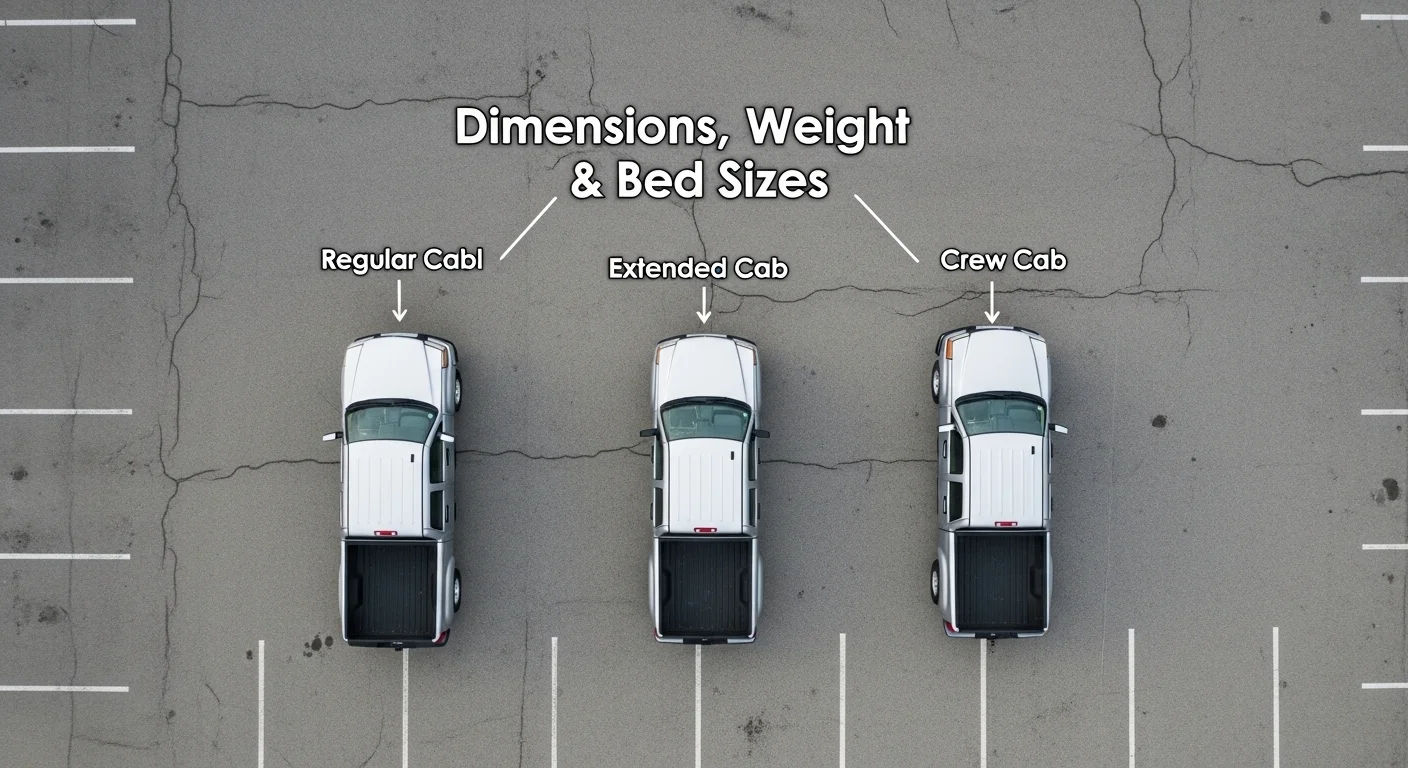
Long bed was eight feet. Usually came with Regular Cab or Extended Cab. Perfect for hauling full sheets of plywood but made the truck a pain to park in tight spots. Longer bed meant more steel. More weight. A Regular Cab with an eight foot bed weighed about 100 to 150 pounds more than the same truck with a six and a half foot bed.
Cab style mattered even more though. Regular Cab was smallest and lightest. Extended Cab added those little rear doors and some interior room. Crew Cab had four full doors and a real back seat. Going from Regular to Crew Cab added 400 to 500 pounds depending on what else was on the truck. That’s a lot of extra weight just for more seating.
Here’s what the weights looked like. Regular Cab with six and a half foot bed in two-wheel drive weighed about 4,524 pounds empty. GVWR was 6,100 pounds. Payload rating came out to 1,576 pounds. Same truck with an eight foot bed weighed 4,637 pounds. GVWR bumped to 6,400 pounds. Payload went up to 1,763 pounds because of the higher weight rating.
Add four-wheel drive to the Regular Cab with six and a half foot bed and weight jumped to 4,784 pounds. GVWR was 6,200 pounds. Payload dropped to 1,416 pounds because the heavier drivetrain ate into capacity. Extended Cab with six and a half foot bed in two-wheel drive came in at 4,784 pounds. GVWR was 6,400 pounds. Payload was 1,616 pounds. Extended Cab with eight foot bed in two-wheel drive weighed 4,892 pounds. GVWR was 6,600 pounds. Payload was 1,708 pounds.
Crew Cab with five foot eight inch bed in two-wheel drive weighed 5,002 pounds. GVWR was 6,800 pounds. Payload hit 1,798 pounds. Same Crew Cab with four-wheel drive weighed 5,202 pounds. GVWR stayed at 7,000 pounds. Payload was still 1,798 pounds. Those numbers tell you everything about what your specific truck can actually handle. Want maximum payload? Get a Regular Cab long bed with two-wheel drive. Want maximum comfort? Get a Crew Cab and live with the lower payload.
Interior Features And Comfort
Inside wasn’t fancy but it got the job done. Base models had cloth seats. Manual everything. Crank windows in some cases. Basic radio. Nothing special but nothing that broke constantly either. Higher trims got nicer seats with better support. Power adjustments. Leather if you paid extra. Better sound systems with more speakers. Steering wheel controls for the radio.
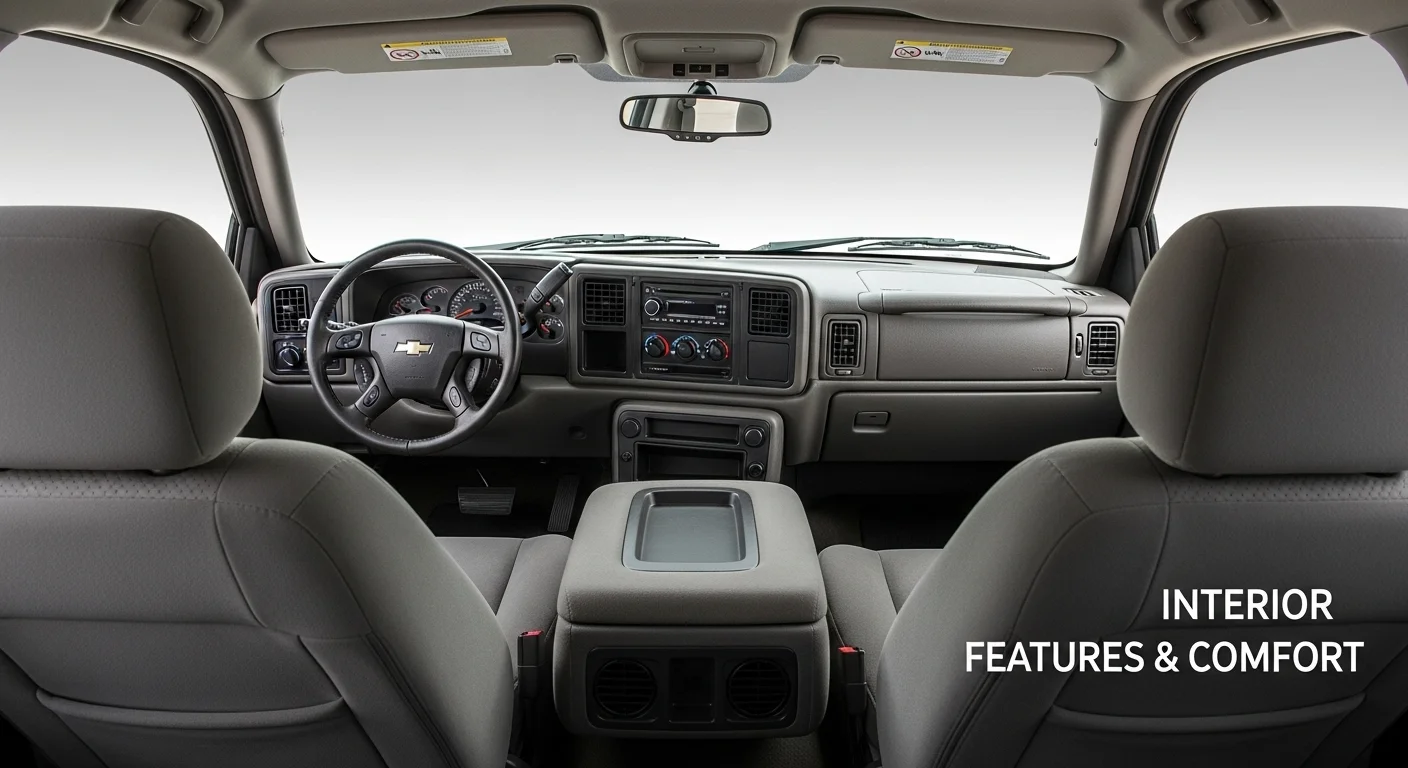
Sound insulation was decent for a truck from that era. Wind noise at highway speeds was there but not terrible. Road noise depended mostly on what tires you had. Storage was adequate. Center console could hold some tools or paperwork. Door pockets were big enough to actually use. Crew Cab had decent space under the rear seats for smaller items.
Back seat in the Crew Cab was comfortable enough for adults on shorter trips. Extended Cab rear seats were fine for kids or extra cargo but way too cramped for full-size passengers on long drives. Adding all those interior upgrades increased weight a bit. A loaded Crew Cab with leather and everything weighed maybe 50 to 100 pounds more than a stripped version. Not huge but it added up if you were trying to max out payload.
Technology Entertainment And Power Features
Technology in 2006 was pretty basic compared to trucks now. Base models got an AM FM radio with maybe a CD player. That was literally it. No Bluetooth. No touchscreen. No navigation system. Higher trims offered better audio. Maybe a six disc CD changer. Premium speakers. Steering wheel controls so you didn’t have to reach for the head unit while driving.
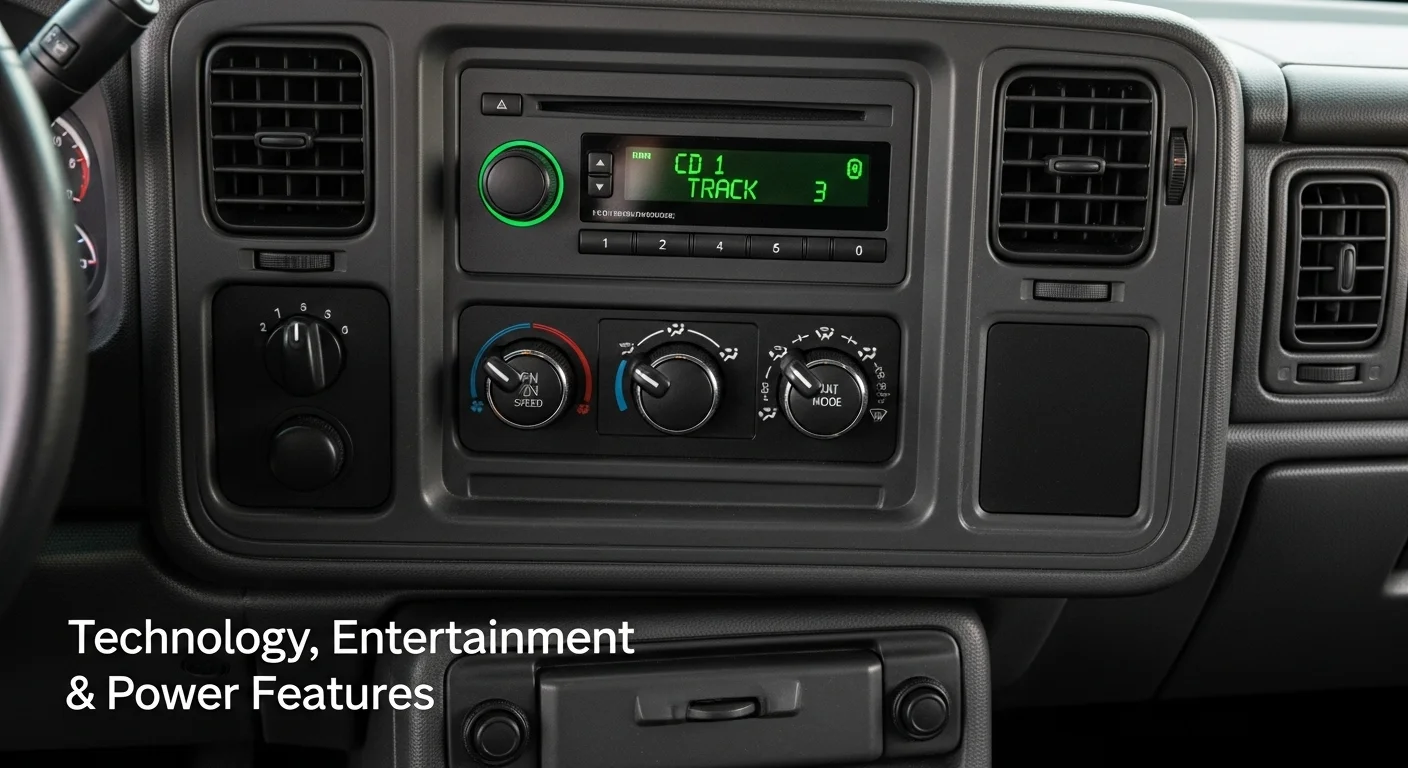
Some trucks had power windows and locks. Others made you crank the windows by hand and use an actual key. Remote keyless entry was an option on nicer trims. Crew Cab models with all the electronics and upgraded audio weighed a bit more than basic trucks. Maybe 30 to 50 pounds extra. Not enough to make a massive difference but it counted when you started stacking options. Most guys didn’t buy these for the tech anyway. They bought them to haul stuff and tow trailers. If the radio worked and the AC blew cold, that was plenty good enough.
Safety Features And Ratings
Safety equipment was pretty standard for mid 2000s trucks. Every model got dual front airbags. Four-wheel ABS was standard too. That was about it for base models. Higher trims and certain packages offered stability control. Helped keep the truck under control if you hit ice or took a corner too fast. Made a real difference when towing or hauling heavy loads.
Side curtain airbags were available on some Crew Cab models. Not standard but you could get them as an option. Crash test ratings were decent for the class. Not amazing by today’s standards but competitive with other full-size trucks back then. The GVWR wasn’t just about cargo numbers either. It also showed how strong the frame and suspension were built to be. A truck rated for 7,000 pounds GVWR had to be engineered tough enough to handle that weight safely. Stronger frame rails. Beefier suspension parts. Better brakes.
Tires Wheels And Suspension
Tire and wheel size changed depending on trim and options. Base trucks came with 16 inch steel wheels. Nothing fancy. Usually had all-season tires sized around 245/75R16 or similar. Mid level trims offered 17 inch alloy wheels. Looked better. Same basic tire sizes.
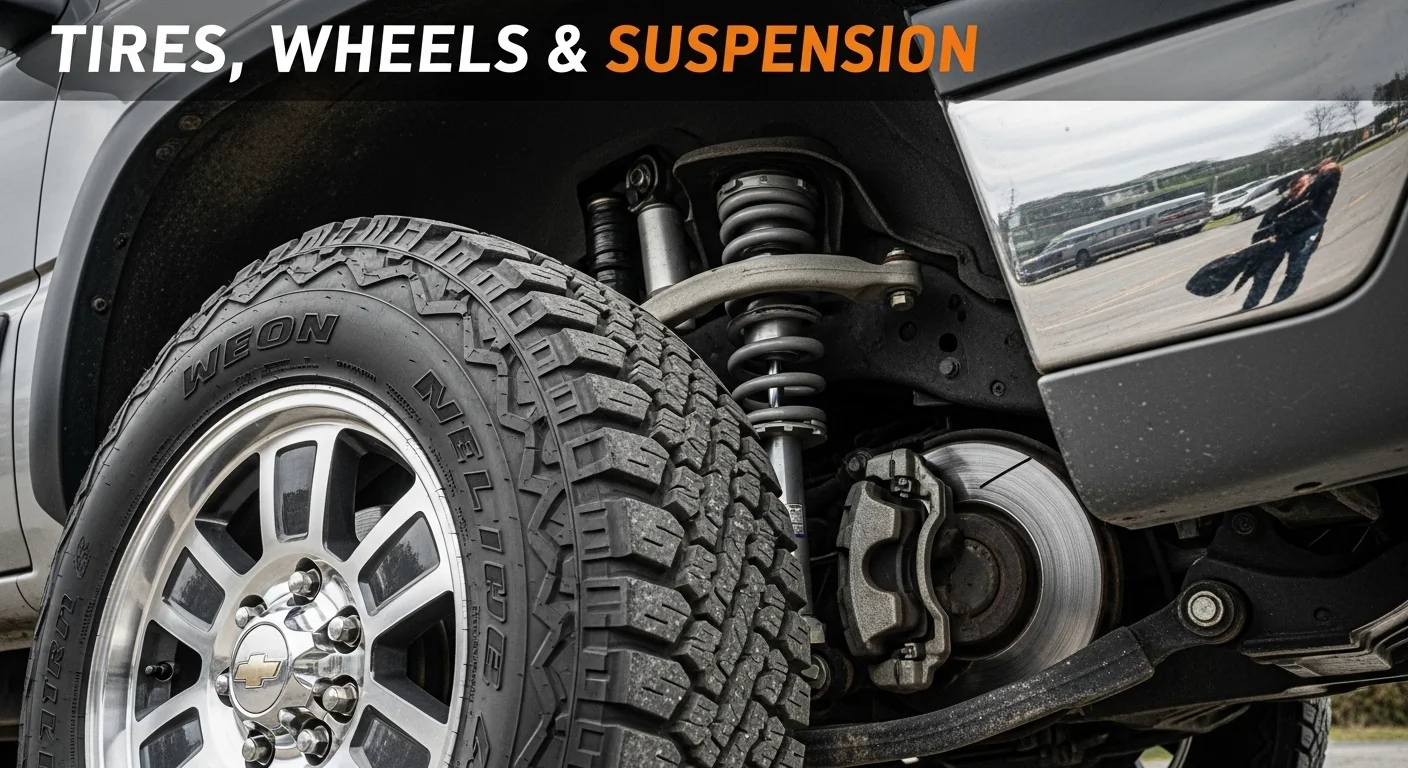
Higher trims and special editions got 18 or even 20 inch wheels. Mostly for looks. Didn’t really improve performance much. Suspension setup was different between two-wheel drive and four-wheel drive. Two-wheel drive trucks used a simpler front suspension. Four-wheel drive added CV joints and a front differential. That extra hardware added weight and slightly changed how the truck handled.
Rear suspension was leaf springs on everything. Simple. Effective. Easy to work on if something broke. When you loaded the bed the springs compressed. Empty they sat higher. Heavier wheels and tires increased weight slightly. A truck with 20 inch wheels weighed maybe 40 or 50 pounds more than one with basic 16 inch steelies. Not huge but you could measure it.
Trim Levels And Special Editions
Trim choices ranged from super basic to pretty loaded. WT was work truck. Base model. Vinyl seats. Crank windows. AM FM radio. Built for fleet buyers and contractors who didn’t care about comfort. LS was the volume seller. Added nicer interior, power stuff, better radio. Still work focused but way more comfortable for daily driving.
LT was the luxury trim. Leather seats. Premium audio. Alloy wheels. All the options you’d want if the truck was also your family vehicle. SS was the performance model. Got the 6.0 liter V8. Sport suspension. Unique wheels and body kit. More show truck than work truck but still capable enough.
Special editions like the Intimidator SS had extra styling and performance parts. Looked cool. Cost more. Weighed about the same as a regular truck with similar equipment. Weight difference between trims mostly came from drivetrain choice and equipment. An LT wasn’t really heavier than an LS unless you added four-wheel drive or a bigger engine.
Current Market Value And Buying Tips
These trucks are almost 20 years old now. Still tons of them on the road though. A clean 2006 Silverado with reasonable miles might sell anywhere from 8,000 to 18,000 bucks depending on condition, mileage and where you live. Crew Cab four-wheel drive with the 5.3 liter brings top dollar. Regular Cab two-wheel drive work trucks sell for less.
If you’re buying one check the frame for rust. These came from an era before GM improved their frame coating. Rust is super common in states that salt the roads. Look at service records if the seller has them. If the truck was used for heavy towing or hauling, check suspension parts carefully. Worn leaf springs and dead shocks are common issues.
Make sure the payload rating matches what you actually need. Planning to haul a ton of weight regularly? Get a Regular Cab long bed. Need passenger space? Get a Crew Cab but accept the lower payload. Check the door jamb sticker for exact GVWR and curb weight. Those numbers tell you precisely what your specific truck can handle. Don’t guess. Test drive it with weight if you can. Throw some stuff in the bed and see how it rides. A worn out truck will squat too much and feel loose in the rear.
Understanding Curb Weight vs GVWR for the 2006 Silverado
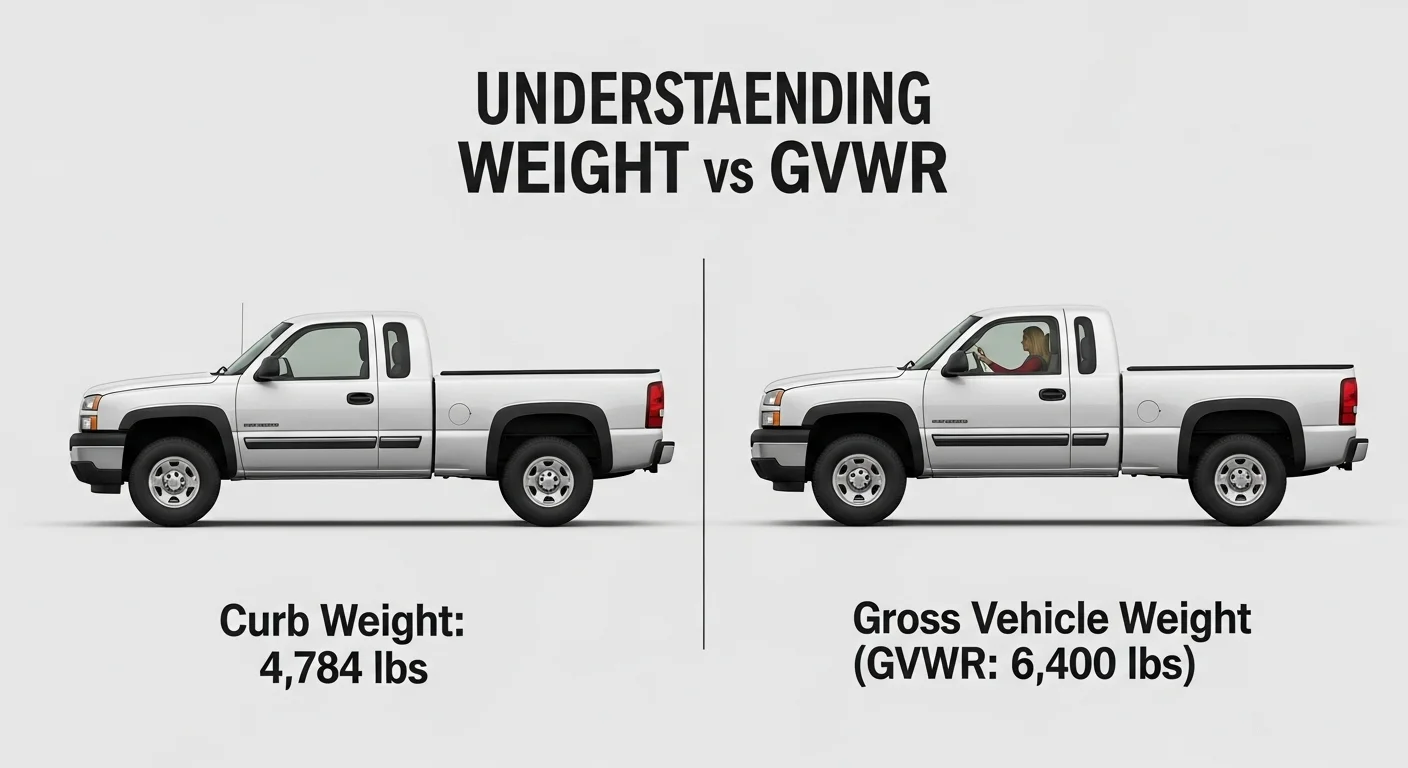
Lot of guys get these terms mixed up. They’re definitely not the same thing. Curb weight is what the truck weighs by itself. Full tank of gas. All fluids topped off. Standard equipment. No people. No cargo. Just the truck sitting on a scale.
A Regular Cab two-wheel drive might have a curb weight around 4,500 pounds. A loaded Crew Cab four-wheel drive might be 5,200 pounds or more. That difference comes from the bigger cab, heavier drivetrain and more equipment.
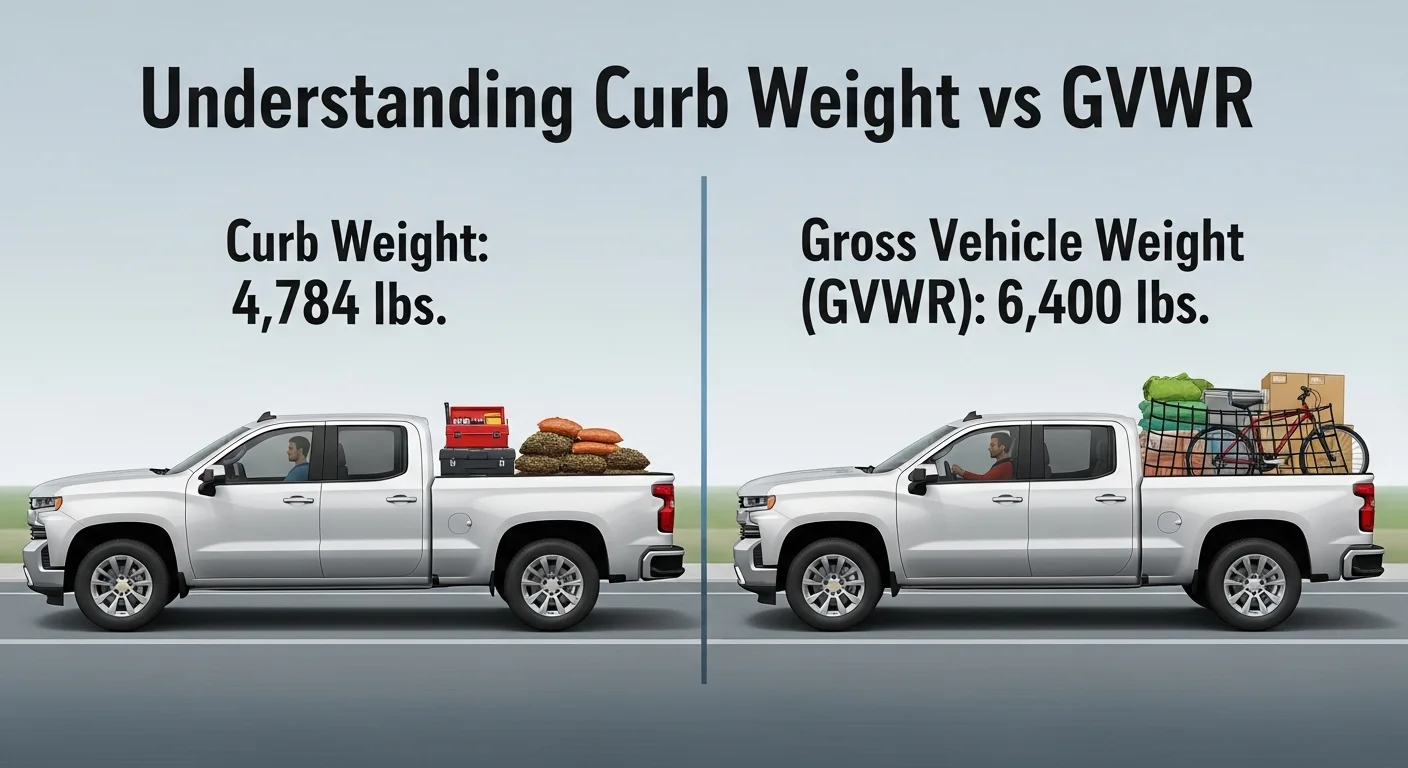
GVWR stands for Gross Vehicle Weight Rating. That’s the absolute maximum the truck can weigh when it’s fully loaded. Includes the truck itself plus driver, passengers, cargo, fuel and tongue weight from any trailer you’re pulling. The manufacturer sets GVWR based on testing. Frame strength. Suspension capacity. Brake performance. Tire ratings. Everything has to work together safely at that weight.
For the 2006 Silverado 1500, GVWR ranged from 6,100 pounds on light Regular Cab models up to 7,000 pounds or more on Crew Cab setups. To find your payload capacity you subtract curb weight from GVWR. If your truck has a GVWR of 6,400 pounds and weighs 4,800 pounds empty, you can legally carry 1,600 pounds of payload. That 1,600 pounds includes absolutely everything though. You weigh 200 pounds. Your passenger weighs 180. That’s 380 pounds right there. Now you’ve got 1,220 pounds left for cargo and trailer tongue weight.
Load 800 pounds of tools in the bed. Down to 420 pounds remaining. Hook up a 6,000 pound trailer. Tongue weight is roughly 10 to 15 percent of trailer weight. That’s 600 to 900 pounds sitting on your hitch. Now you’re way overloaded. Truck’s suspension is maxed out. Brakes are working harder than they were designed for. Tires might be over their load rating. Frame is under more stress than it should handle.
This is exactly how people break their trucks. They don’t bother checking the numbers. Just load everything up and hit the road. Then six months later they wonder why the suspension failed or the brakes don’t work right. When towing remember that payload and towing capacity aren’t separate numbers. They affect each other directly. The more stuff you carry in the truck, the less you can safely tow.
Maximum towing capacity assumes you have minimal payload. If you want to tow the full 8,400 pounds you better not have much weight in the truck itself. Most guys end up finding a balance. Maybe you tow 6,000 pounds and carry 800 pounds of payload. That keeps you safely under limits and doesn’t stress the truck unnecessarily.
FAQ
How much does my 2006 Chevy Silverado 1500 weigh?
Depends completely on your configuration. Regular Cab two-wheel drive starts around 4,500 pounds. Crew Cab four-wheel drive can hit 5,200 pounds or even more. Check your door jamb sticker for the exact curb weight of your specific truck.
What is the curb weight of a 5.3 Silverado?
A 2006 Silverado with the 5.3 liter V8 weighs somewhere between 4,800 and 5,100 pounds depending on cab style, bed length and whether it’s got two-wheel or four-wheel drive.
How much does a 2006 Chevy 6.0 weigh?
The 6.0 liter V8 mostly showed up in heavy duty trims and performance models like the SS. Those trucks usually weigh around 5,600 to 6,000 pounds or more depending on exact configuration.
What is the GVWR of a Chevy Silverado?
For 2006 Silverado 1500 models, GVWR ranges from 6,100 pounds up to 7,000 pounds depending on cab style, bed length, drivetrain and options. Heavy duty models go even higher than that.
How to find the GVWR on a truck?
Open your driver’s door. Look at the sticker on the door jamb. GVWR is listed right there along with curb weight and other important specs. Your owner’s manual has it too if the sticker’s worn off.