How Much Oil Does a Chevy Traverse Take? (All Engine Sizes)

- Ford Expedition Years to Avoid A Mechanic’s Complete Guide (2026) - January 28, 2026
- 5 Signs You Need to Change Your Transmission Fluid Chevy Silverado - January 27, 2026
- Ford Maverick Years to Avoid: Worst & Best Models (2022-2026) - January 26, 2026
Three weeks back, Dave from next door pulls into his driveway around six in the evening. Engine is making making this god-awful knocking sound. Like someone is in there with a hammer.
I am out washing my truck. Can’t help but walk over. Did you change your oil? I ask. Yeah, couple months ago. We pop the hood. Check the dipstick. Oil’s black as tar. And there’s not much of it. Turns out Dave had been putting in 5 quarts every time. For the last 30,000 miles.
His Traverse needed six. One quart doesn’t sound like much, right? But that missing quart starved his bearings. Wore down the camshaft. Eventually the whole thing seized up on Route 9. Insurance said no. Warranty was void because of improper maintenance. Dave ended up paying four grand for a rebuilt engine.
All because he didn’t know one number. So yeah. We’re gonna talk about how much oil your Traverse actually needs. Because apparently this stuff matters more than folks realize.
Oil Capacity for Your Chevy Traverse
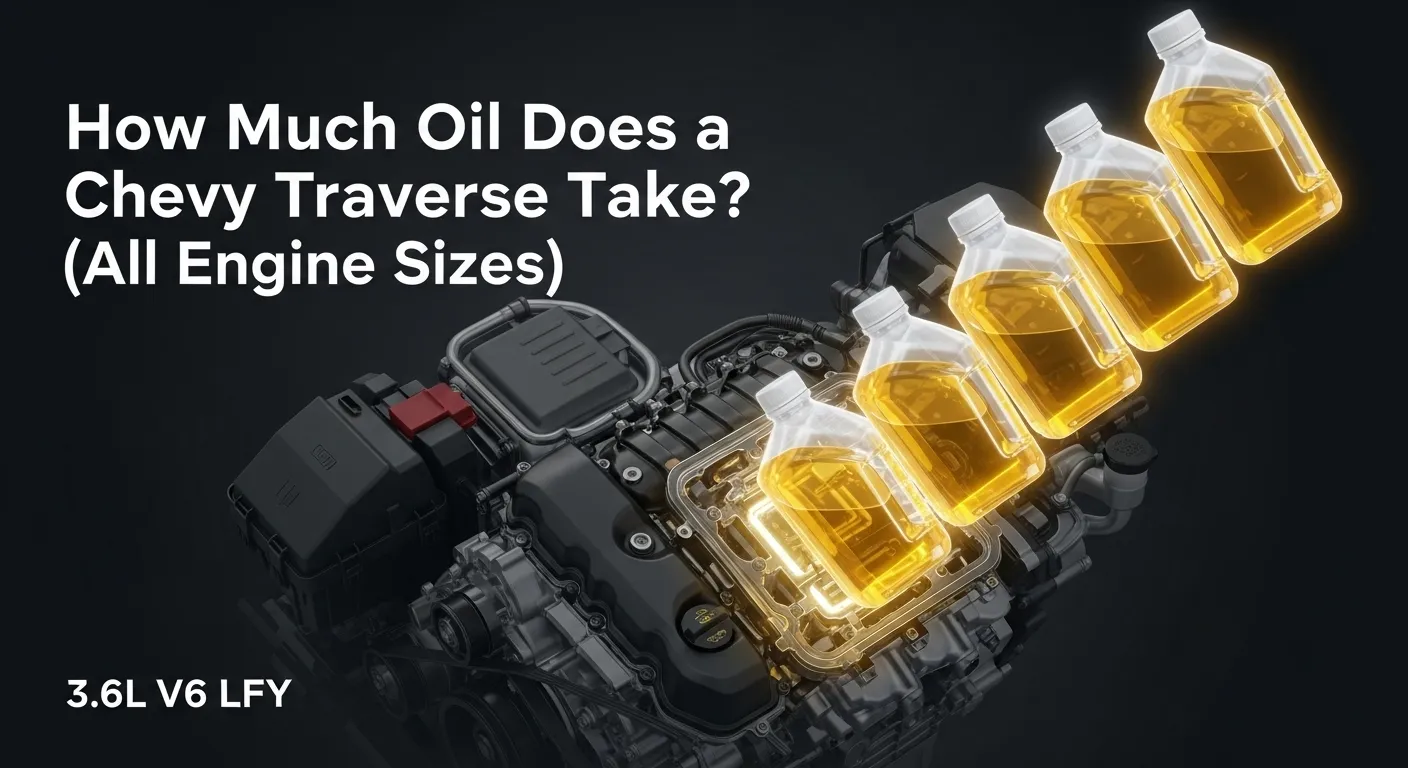
Your Traverse takes 6 quarts of oil with the filter. That’s for the 3.6L V6 engine you’ll find in the 2018 through 2025 models. Not 5. Not 5.5. Six quarts.
Now, the newer 2025 Traverse with the 2.5L four-cylinder is different—that one takes about 5 quarts. But if you’ve got the V6, which most people do, it’s six quarts every single time.
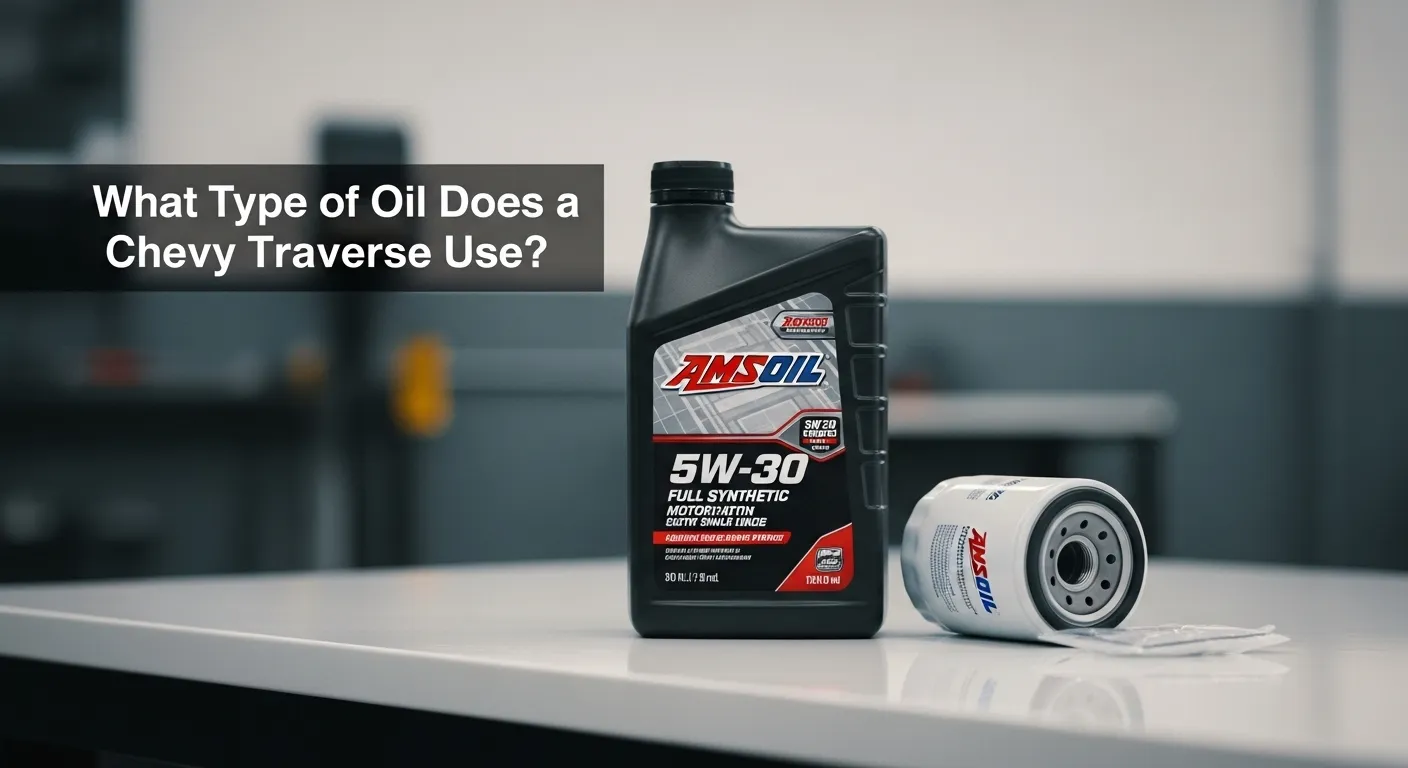
Use 5W-30 full synthetic oil. Chevy requires Dexos approval, which basically means the oil meets their performance standards. Stick with that and you’re good. Let me explain why this matters and what happens when you mess it up.
What Oil Your Traverse Actually Needs
This drives me absolutely crazy. I’ve watched quick lube shops put conventional oil in these things. “It’s cheaper,” they tell customers. Chevy specifies 5W-30 full synthetic for a reason. The 3.6L V6 runs hot, works hard, has tight tolerances. Conventional oil breaks down faster, especially if you’re towing or driving in stop-and-go traffic.
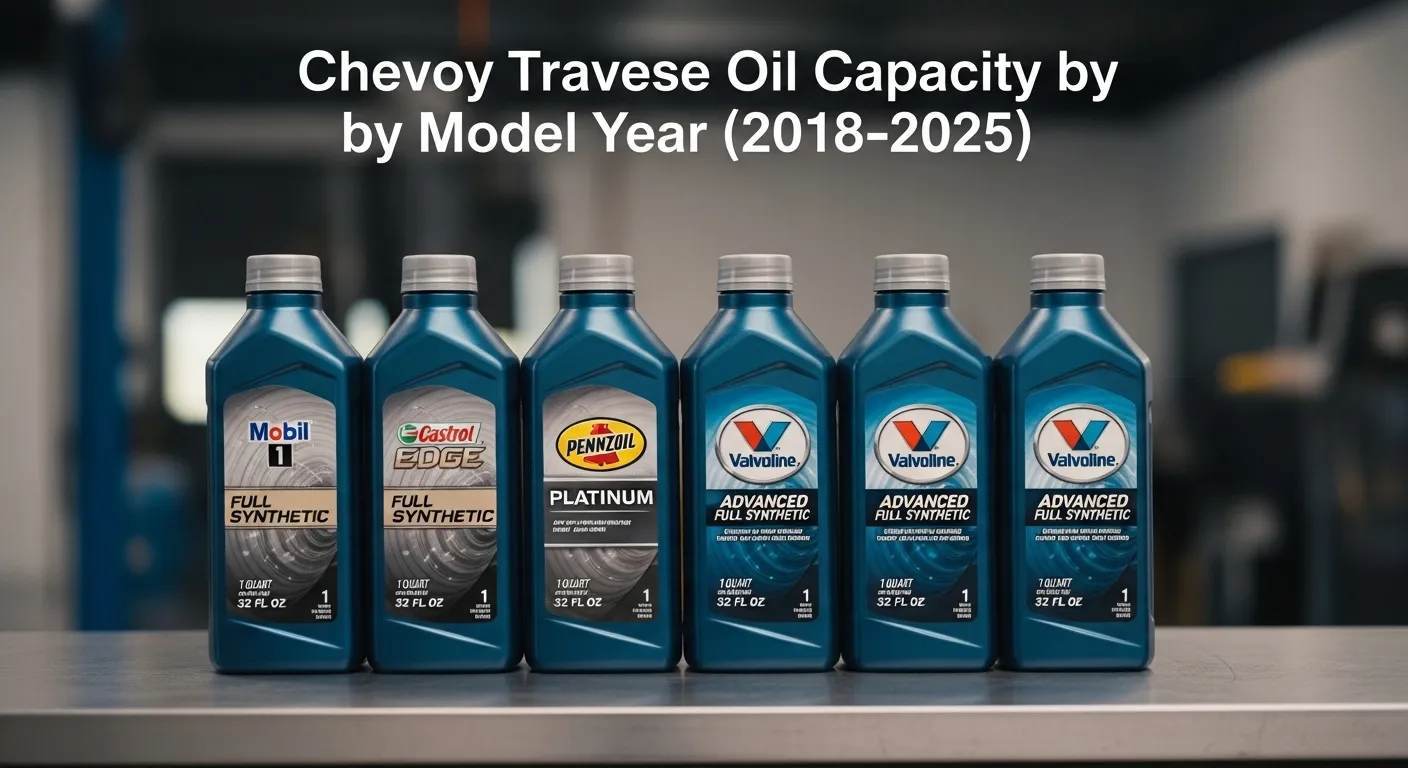
Last summer this woman brings in her 2020 Traverse. Says it’s sluggish. Getting lousy gas mileage. I check her service records—some shop had been using conventional oil the whole time. We switched her to AMSOIL Signature Series 5W-30. Three weeks later she calls me back.
I don’t know what you did, but my Traverse drives like it’s brand new again. Yeah. That’s what proper oil does. Synthetic costs more upfront. Maybe fifteen or twenty bucks extra per change. But it protects better, lasts longer, keeps your engine cleaner. Over the life of the vehicle you actually save money because you’re not fixing problems caused by cheap oil.
The Dexos Thing Everyone Asks About
Dexos is Chevy’s certification. Means the oil passed their testing for fuel economy, wear protection, sludge prevention. Can you use non-Dexos oil? Technically, yeah. Will it void your warranty? Maybe. Depends on your dealer and whether they’re looking for reasons to deny coverage.
I always tell people—why risk it? Dexos-approved oils aren’t hard to find. AMSOIL makes several options. So does Mobil 1. Pennzoil has some too. Just check the bottle. If it says Dexos, you’re fine.
Oil Capacity Breakdown by Model Year
Most folks assume every Traverse is identical. Close, but not quite. From 2018 through 2025, if you’ve got the 3.6L V6—and that’s the majority of them—you need 6 quarts with the filter. That hasn’t changed.
But the 2025 model year introduced a 2.5L four-cylinder turbo option. That engine takes about 5 quarts. Different engine, different capacity.
Here’s how it breaks down:
| Model Year | Engine | Oil Capacity (with filter) | Recommended Filter |
|---|---|---|---|
| 2018–2025 | 3.6L V6 | 6 quarts | AMSOIL EAO17, WIX WL10255 |
| 2025 | 2.5L Turbo | 5 quarts | Check owner’s manual |
Older Traverses—like the first generation from 2009 to 2017—also used the 3.6L V6 and took 6 quarts. So if you’re working on an older one, same capacity applies.
Why the Filter Matters (And Why I Don’t Trust Cheap Ones)
Ever seen a failed oil filter? I have. Twice. First time was on a customer’s Traverse. They’d bought the cheapest filter at the auto parts store. Thing split at the seam during normal driving. Dumped all six quarts of oil onto the highway in maybe thirty seconds.
Engine locked up before they could even pull over. Second time was on my buddy’s truck. Filter cartridge collapsed internally. Blocked oil flow. Engine started knocking within a week. Both times people saved maybe five bucks on a filter. Both times it cost them an engine.
I use either AMSOIL EAO17 or WIX WL10255. Both are quality filters with proper construction and adequate filtration. They cost a little more but they actually do their job. Your oil is only as good as the filter cleaning it.
How Often Should You Actually Change Your Oil?
Chevy says 7,500 to 10,000 miles. Your Traverse has an oil life monitor that calculates it based on driving conditions. But here’s the thing nobody tells you. Those intervals assume you’re using high-quality synthetic oil and driving mostly highway miles in moderate weather. If you’re doing short trips in cold weather, towing, sitting in traffic a lot—you need to change it more often.
I change mine every 7,500 miles. Some people push it to 10,000. I’ve seen folks using premium synthetics like AMSOIL go 15,000 or even 25,000 miles with oil analysis confirming it’s still good. Your call. But I wouldn’t push cheap oil past 5,000 miles, no matter what the monitor says.
What That Oil Life Monitor Actually Tells You
The system tracks engine revolutions, temperature, other factors to estimate oil degradation. When it hits 15 percent you get a “change oil soon” message. At zero percent it’s overdue. Does it work? Yeah, mostly.
But it doesn’t know if you’re using quality oil or garbage. Doesn’t know if your engine has a small leak or burns a little oil. Can’t tell if the last guy put in 5 quarts instead of 6. So use it as a guide. Don’t treat it like gospel.
And for the love of all that’s holy, reset it after every oil change. Otherwise you’ll be staring at a “change oil” message when you’ve got fresh oil in there.
How to Change Your Traverse Oil Yourself
Changing oil on a Traverse isn’t complicated. I’ve taught my teenage son to do it.
You need:
- 6 quarts of 5W-30 synthetic oil
- New oil filter (AMSOIL EAO17 or WIX WL10255)
- Oil drain pan
- 15mm socket or wrench
- Filter wrench (sometimes)
- Funnel
- Rags
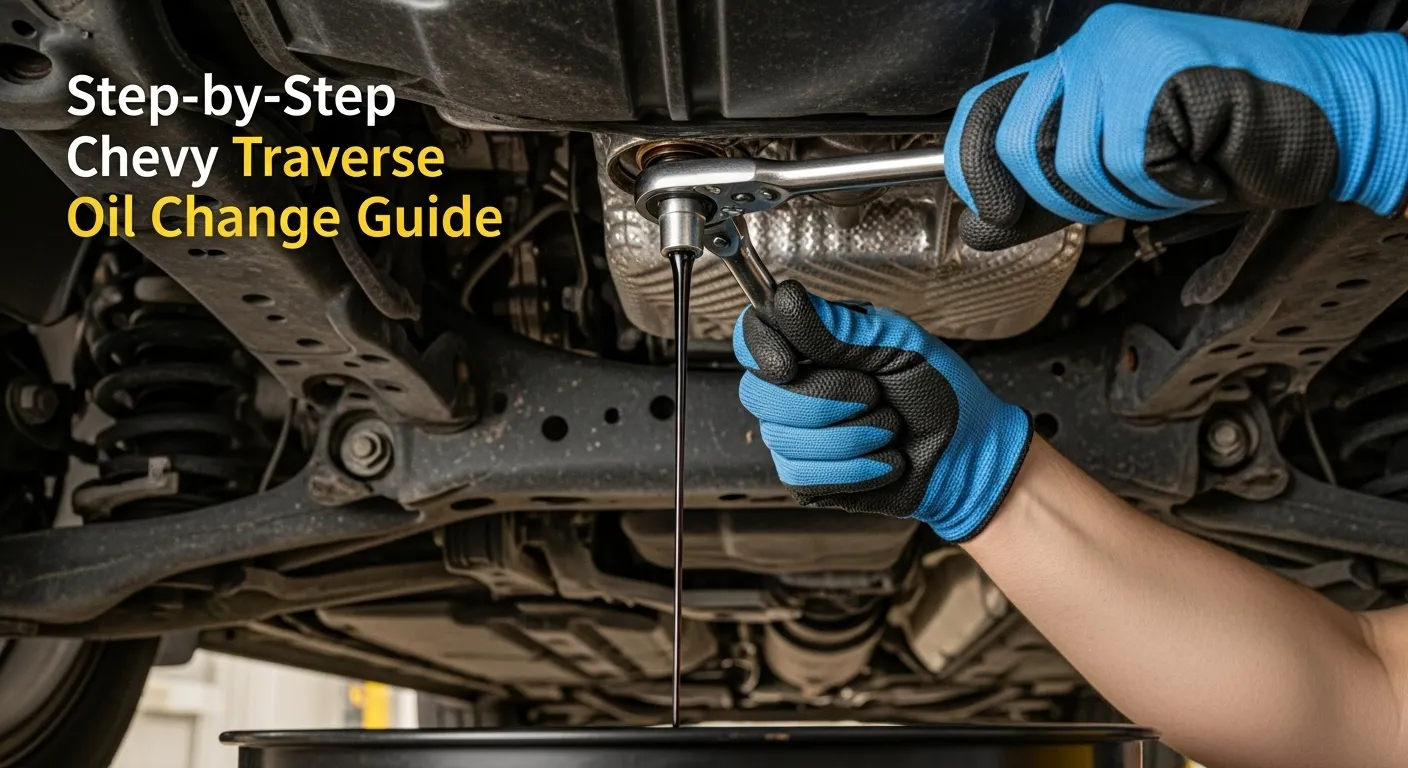
Run the engine for a few minutes to warm the oil. Not hot—just warm enough to flow easily. Jack up the front end or drive onto ramps. Crawl underneath. Find the drain plug on the oil pan—it’s toward the back. Hard to miss.
Loosen it with the 15mm wrench. Let the old oil drain completely. Takes maybe five minutes. While that’s draining, move to the oil filter. It’s on the passenger side of the engine, mounted horizontally. Sometimes you can unscrew it by hand. Sometimes you need a filter wrench.
Remove the old filter. Wipe the mounting surface clean. Put a thin coat of fresh oil on the new filter’s gasket. Screw it on hand-tight—don’t crank it with tools. Go back to the drain plug. Wipe off the threads and sealing surface. Replace the crush washer if you have one. Torque it to 18 ft-lbs. Don’t overtighten—you’ll strip the threads.
Lower the vehicle. Pop the hood. Remove the oil cap on top of the engine. Pour in 5 quarts. Then add the sixth quart slowly while checking the dipstick. You want the level between the two marks—closer to the top mark is fine.
Start the engine. Let it run for thirty seconds. Shut it off. Wait a minute, then check the dipstick again. Add a little more if needed. Reset the oil life monitor through the dashboard menu. Takes me about twenty minutes. Maybe thirty if I’m taking my time.
The Torque Spec Nobody Follows (But Should)
That drain plug? It’s supposed to be torqued to 18 ft-lbs. Most people just crank it down “good and tight.” Which either means it’s too loose and starts leaking, or too tight and strips the threads.
I’ve re-tapped probably a dozen oil pans because someone gorilla-gripped the drain plug. Costs two hundred bucks to fix if you’re lucky. Sometimes you need a whole new oil pan. Get a torque wrench. They’re like thirty bucks. Use it. Your oil pan will thank you.
What It Costs to Get It Done
Dealer oil change on a Traverse? Between a hundred and a hundred fifty bucks. Independent shop? Maybe seventy-five to ninety. DIY? About seventy bucks for premium oil and a quality filter. Maybe fifty if you buy cheaper stuff.

Now look, I get it. Dealers use genuine parts and keep records in the system. That matters for warranty claims. But you’re also paying for their overhead, their fancy waiting room, the free coffee.
Independent shops are usually fine. Just make sure they’re using synthetic oil and not trying to upsell you on a dozen services you don’t need. Doing it yourself saves the most money. Plus you know it’s done right because you did it.
Hidden Costs When You Skip Oil Changes
Know what an engine replacement costs on a Traverse? Six to eight thousand dollars. Sometimes more if you want a new engine instead of rebuilt. That’s what happens when you skip oil changes or run it a quart low for too long. Bearings wear out. Camshafts get scored. Pistons start slapping.
I’ve seen it dozens of times. Engine starts making noise. Owner brings it in. We drop the oil pan and find metal shavings everywhere. Game over. Needs a new engine. Compare that to spending a hundred bucks every 7,500 miles. Suddenly oil changes seem pretty cheap.
Problems You’ll Face If You Ignore Maintenance
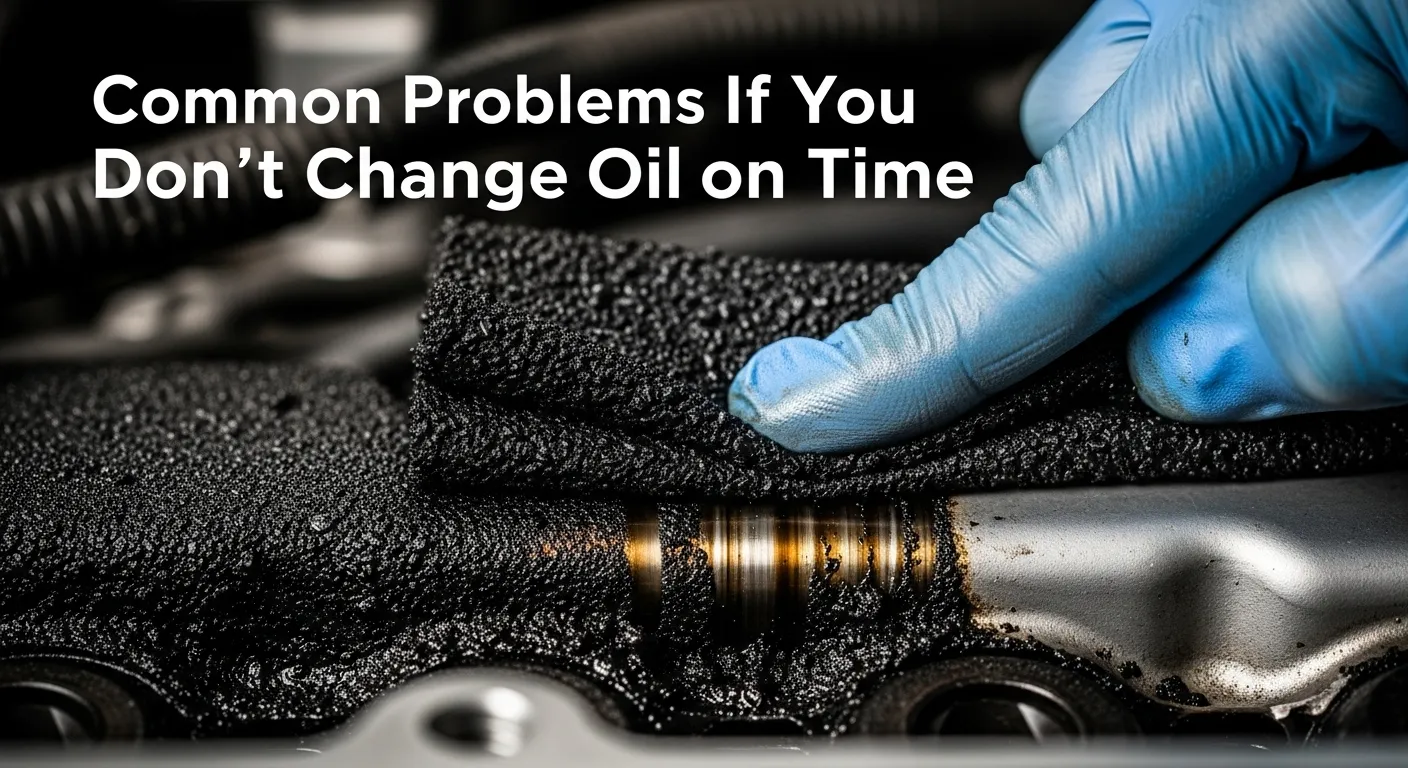
Sludge buildup is the big one. Old oil turns to sludge. Clogs passages. Starves parts of lubrication. Your engine starts running hot, making noise, losing power.
I pulled a valve cover off a neglected Traverse once. Inside looked like someone poured tar in there. Couldn’t even see the camshaft through all the buildup. That engine needed a complete teardown and cleaning. Cost the owner thirty-five hundred bucks. Could’ve avoided it with regular oil changes.
Other Stuff That Goes Wrong
Oil leaks. Worn seals. Increased oil consumption. Your Traverse might start burning a quart every thousand miles. That’s not normal. Usually means worn piston rings or valve seals—problems that develop when the oil isn’t protecting things properly.
Fuel economy drops too. Dirty oil increases friction. Engine works harder. Burns more gas. And then there’s the emissions system. Neglected oil changes can foul oxygen sensors, clog catalytic converters, trigger check engine lights.
I’ve had customers fail emissions tests because they’d been skipping oil changes. Ended up needing a new catalytic converter.
Why This Matters More Than You Think
Some people say oil is oil. They’re wrong. Conventional oil comes from refined crude. Works okay for older engines with loose tolerances. Breaks down faster. Doesn’t handle heat as well.

Synthetic oil is engineered at the molecular level. Flows better in cold weather. Resists breakdown at high temperatures. Keeps engines cleaner. For a modern engine like the Traverse’s 3.6L V6, synthetic isn’t optional. It’s required.
I’ve tested both. Pulled oil samples after 5,000 miles. Conventional oil was already breaking down—darker color, increased viscosity, more contaminants. Synthetic oil at 5,000 miles? Still looked good. Could’ve gone longer.
Which One Actually Wins?
I’ve used both. Here’s my take. Mobil 1 is solid. Available everywhere. Meets Dexos requirements. Gets the job done. AMSOIL performs better. Independent tests show it provides superior wear protection and thermal stability. Lasts longer between changes if you’re doing extended drain intervals.
Is AMSOIL worth the extra cost? For me, yeah. I drive my Traverse hard, tow a trailer, want maximum protection. For someone who just drives to work and back? Mobil 1 is perfectly fine. Both are lightyears better than conventional oil.
When You Actually Need It
Once your Traverse hits 75,000 miles, consider switching to high-mileage oil. These oils have extra additives that condition seals, reduce leaks, restore compression in worn engines. They also have more detergents to clean out accumulated deposits.
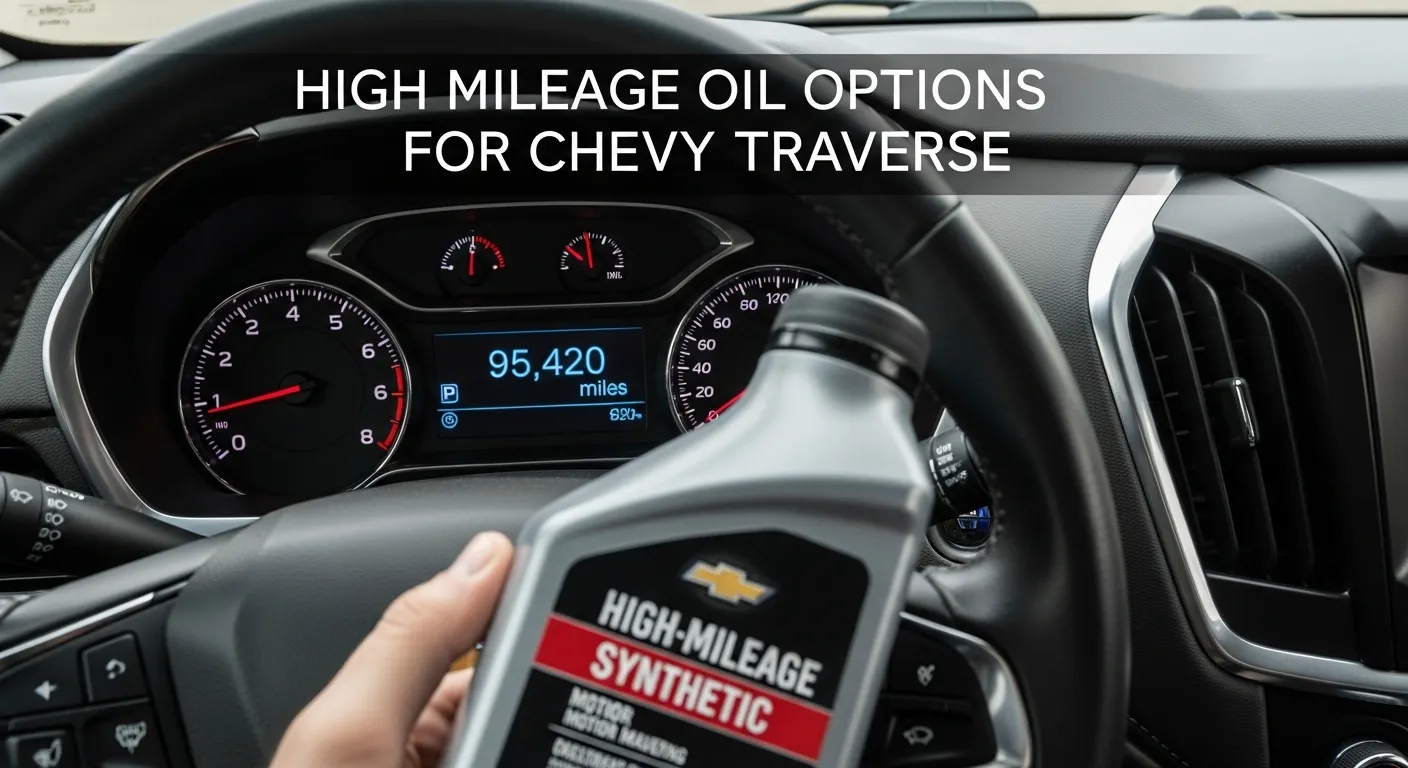
My Traverse has 140,000 miles on it. I switched to AMSOIL High-Mileage 5W-30 at 80,000 miles. Engine runs smoother. Uses less oil between changes. No leaks. Before I switched it was burning about half a quart every 3,000 miles. Now? Maybe a few ounces. Those seal conditioners actually work.
When to Make the Switch
Some people wait until they see problems. I think that’s too late. Switch at 75,000 miles as preventive maintenance. Before seals start leaking and rings start wearing.
If you’re already seeing issues—oil leaks, blue smoke, oil consumption—high-mileage oil might help. Won’t fix major problems but it can slow things down.
Worth a shot before you start looking at expensive repairs.
Other Fluids Your Traverse Needs
While we’re talking maintenance, don’t forget the other stuff.
Transmission fluid: Your Traverse has a 9-speed automatic. The 9T65 model. Holds about 10 quarts. Chevy says it’s “lifetime fill” but that’s nonsense. Change it every 60,000 miles if you want the transmission to actually last.
Rear differential: If you have AWD, the rear diff needs 75W-90 gear oil. AMSOIL Severe Gear works great. Change it every 50,000 miles.
Coolant: Should be changed every 5 years or 150,000 miles. Use Dex-Cool or equivalent. Don’t mix different types.
Brake fluid: DOT 3 or DOT 4. Should be flushed every 3 years. Brake fluid absorbs moisture over time, which lowers its boiling point and reduces braking performance.
I’ve seen too many people obsess over oil changes but completely ignore transmission fluid. Then they’re shocked when the transmission fails at 100,000 miles. Maintain everything. Not just the engine.
Common Questions People Keep Asking Me
Can I use 5W-20 instead of 5W-30?
No. Use what the manufacturer specifies. The 5W-30 is chosen for specific clearances and operating conditions in your engine.
What if I overfill it by half a quart?
Half a quart over isn’t the end of the world, but I’d drain some out. Overfilling can cause foaming, which reduces lubrication effectiveness.
Do I really need Dexos oil?
For warranty purposes, yes. For real-world performance, any quality synthetic 5W-30 will work. But why risk warranty issues over a few bucks?
How do I reset the oil life monitor?
Turn the ignition to on. Don’t start the engine. Press the accelerator pedal three times within five seconds. The system will reset.
Can I switch between brands?
Yep. Synthetic oils are compatible. You can switch from Mobil 1 to AMSOIL or whatever without issues.
Should I change the filter every time?
Absolutely. A filter costs ten bucks. Don’t skip it.
My Final Advice After Twenty Years of Doing This
Keep it simple. Six quarts of 5W-30 synthetic oil. Change it every 7,500 miles. Use a quality filter. Check the level every month. That’s it. That’s the formula for making your Traverse last 200,000 miles.
I’ve got customers with Traverses over 180,000 miles. Original engines. No major problems. They all followed the same routine—regular oil changes with good oil.
I’ve also seen Traverses with blown engines at 60,000 miles. Those owners cut corners. Used cheap oil. Skipped changes. Ignored warning signs.
Your choice which path you want to take. Spend a hundred bucks twice a year on maintenance, or spend six thousand bucks on an engine rebuild. Math’s pretty simple.
Everything You Need to Know
Oil Capacity: 6 quarts (with filter) for 3.6L V6
Oil Type: 5W-30 Full Synthetic (Dexos-approved)
Change Interval: 7,500–10,000 miles
Filter Options: AMSOIL EAO17, WIX WL10255
Drain Plug Torque: 18 ft-lbs
Best Oil Brands: AMSOIL Signature Series, Mobil 1, Pennzoil Platinum
High-Mileage Threshold: 75,000 miles
Other Fluids to Watch:
- Transmission: 10 quarts, change every 60k
- Rear Diff (AWD): 75W-90, change every 50k
- Coolant: 5 years or 150k
- Brake Fluid: 3 years
Frequently Asked Questions
How much oil does a Chevy Traverse take?
Six quarts with the filter for the 3.6L V6 engine in 2018–2025 models. The 2025 Traverse with the 2.5L four-cylinder takes 5 quarts.
How many quarts of oil does a 3.6L V6 hold?
The 3.6L V6 in the Traverse holds exactly 6 quarts when you include the oil filter.
How much oil does a 2025 Traverse 2.5L take?
About 5 quarts. It’s a smaller engine so it needs less oil than the V6.
Can I use conventional oil in my Traverse?
Technically yes but Chevy requires synthetic. Conventional oil doesn’t provide adequate protection and could void your warranty.
What happens if I put in too much oil?
Overfilling causes foaming, which reduces lubrication. Can also damage seals and increase pressure in the crankcase. Don’t go more than half a quart over.
How do I know when to change my oil?
Your Traverse has an oil life monitor. When it hits 15 percent you’ll get a reminder. But 7,500 miles is a safe interval regardless of what the monitor says.
Is AMSOIL really better than other brands?
In my experience, yes. Better wear protection, longer drain intervals, superior thermal stability. But Mobil 1 and Pennzoil Platinum are also solid choices.
What oil filter should I use?
AMSOIL EAO17 or WIX WL10255. Both are quality filters. Skip the cheap ones—they’re not worth the risk.