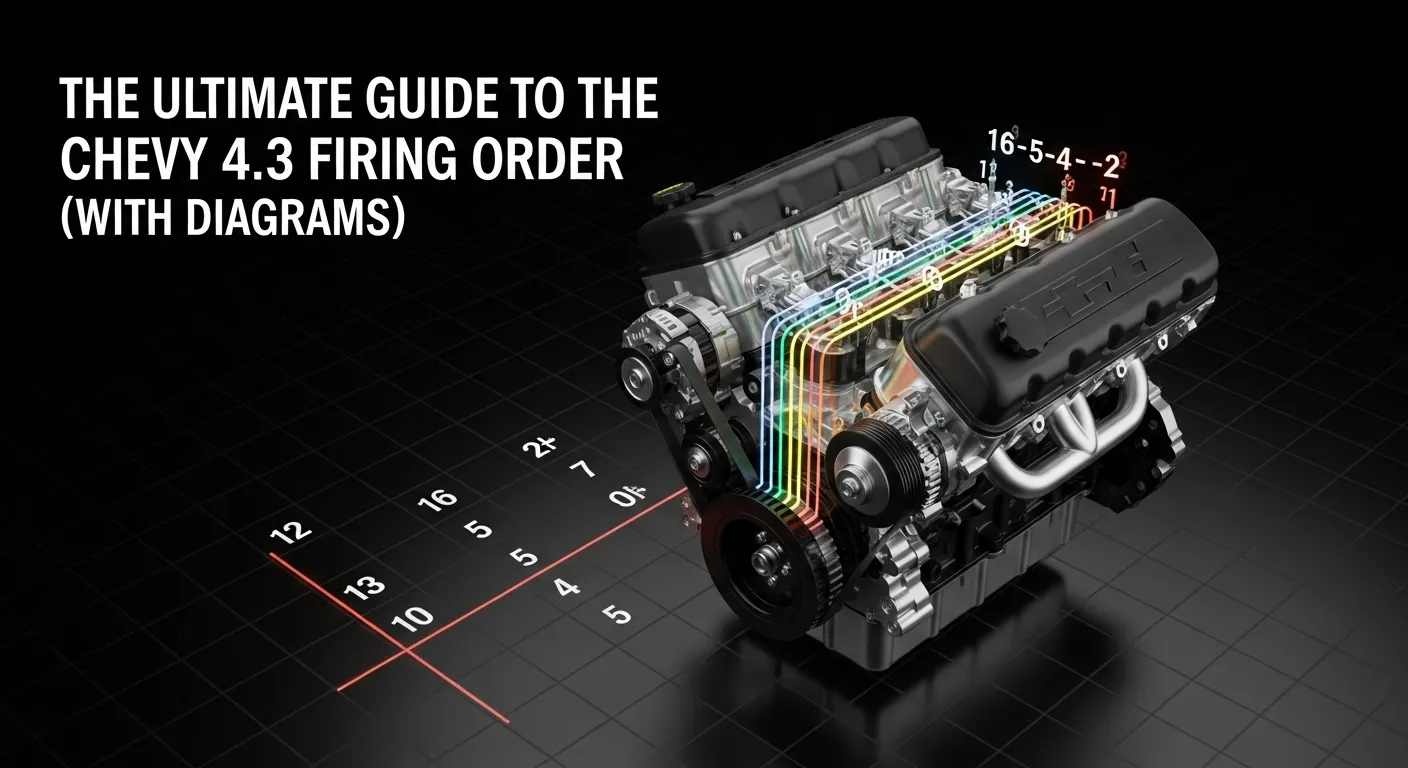
The Ultimate Guide to the Chevy 4.3 Firing Order (with Diagrams)

- Ford Expedition Years to Avoid A Mechanic’s Complete Guide (2026) - January 28, 2026
- 5 Signs You Need to Change Your Transmission Fluid Chevy Silverado - January 27, 2026
- Ford Maverick Years to Avoid: Worst & Best Models (2022-2026) - January 26, 2026
Two weeks ago this guy brings his 2006 Silverado into my shop. Engine’s running like absolute garbage. Rough idle. Hesitation when you hit the gas. Check engine light flashing. I pop the hood. Start checking things. Spark plug wires are all over the place. Completely wrong order.
Who worked on this? I ask. My nephew did a tune-up last month. His nephew had mixed up the firing order. Got the wires crossed. Engine had been misfiring for weeks. Took me maybe twenty minutes to put the wires back in the right sequence. Truck fired right up. Ran smooth as butter. Cost him eighty bucks for the diagnostic and correction. Could’ve been way worse if he’d kept driving it like that. Misfiring for too long can damage valves, wreck catalytic converters, even crack pistons.
All because nobody knew the correct firing order for the Chevy 4.3 liter V6. So yeah. If you own one of these engines, knowing the firing order isn’t optional. It’s basic knowledge that can save you thousands in repairs. Let me walk you through everything about the Chevy 4.3L firing order so you never make that mistake.
Quick Answer
The Chevy 4.3L V6 firing order is 1-6-5-4-3-2. That’s it. Six numbers. Same order every single time whether you’ve got the old Vortec or the newer LV1 or LV3 versions. Right bank has cylinders 1, 3 and 5. Left bank has cylinders 2, 4 and 6. Cylinder one is closest to the radiator on the right side.
Get those wires in the wrong spots and your engine runs terrible. Get them right and everything works exactly like it should. Now let me explain why this matters and how to actually use this information without screwing it up.
History of the Chevy 4.3L Engine
The 4.3 liter V6 showed up back in the early 1980s. GM basically took their small block V8 and lopped off two cylinders. Gave them a compact V6 that shared a lot of parts with the V8 engines. Made sense from a manufacturing standpoint. Cheaper to produce. Easier to service. Parts were everywhere.
This engine ended up in everything. Chevy Silverados. GMC Sierras. Chevy Express vans. GMC Savana vans. S10 pickups. Blazers. Astro vans. You name it. Ran for over three decades in various forms. That’s pretty remarkable for any engine design.
Why’d it last so long? Because it worked. Decent power for a V6. Good fuel economy compared to the V8s. Reliable as hell if you maintained it properly. I’ve personally seen these engines go 300,000 miles with nothing but oil changes and basic tune-ups. Frame rusts out before the engine quits.
By the time production ended in the mid 2010s, millions of these engines were on the road. Still tons of them running today.
What is a Firing Order and Why It Matters
Firing order is just the sequence that spark plugs fire in. Creates the power strokes that make your engine run. Each cylinder fires at a specific time. Has to be perfectly timed with the other cylinders. Get the timing wrong and the whole thing falls apart.
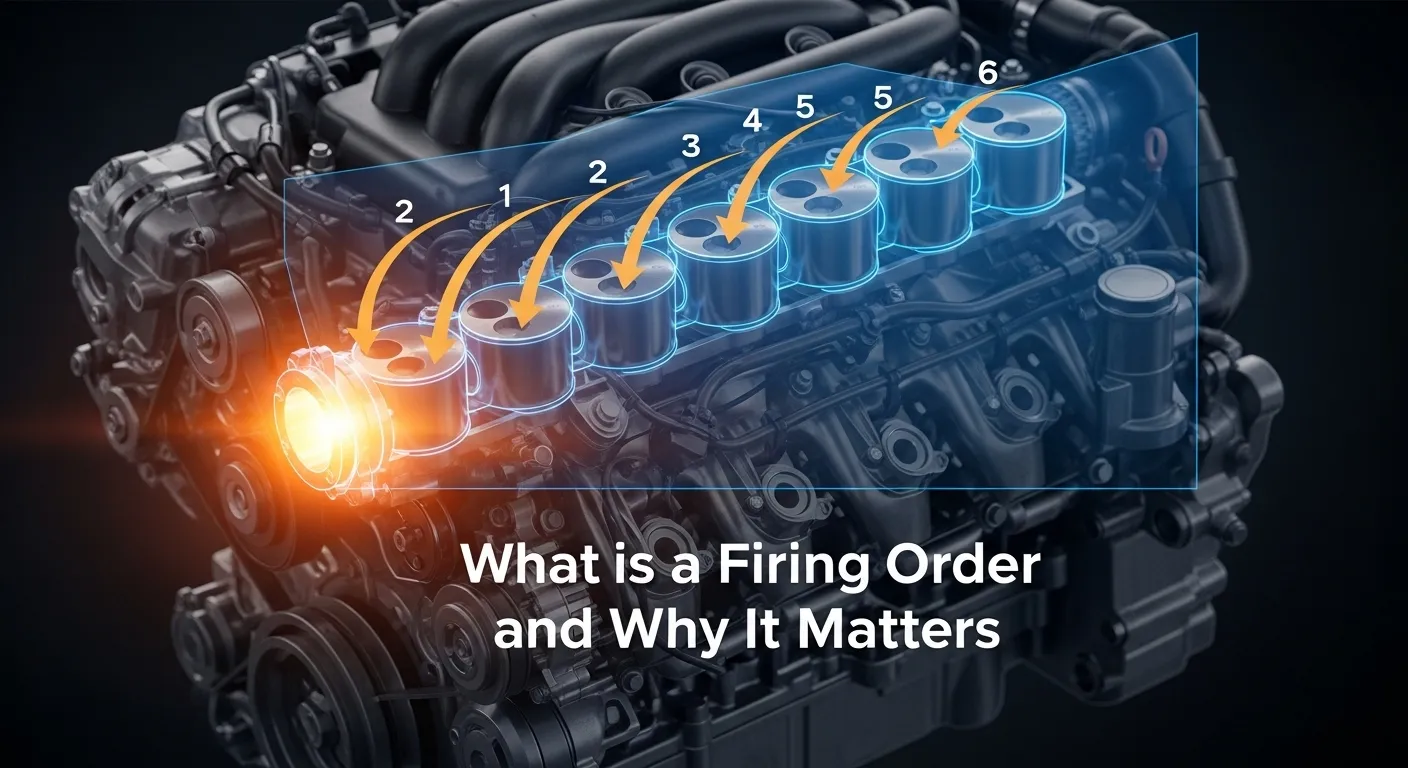
Think of it like a drumline. Everyone has to hit their beat at exactly the right moment. One guy off tempo and the whole thing sounds terrible. Same with an engine. One cylinder firing at the wrong time throws everything off. Engine shakes. Runs rough. Loses power. Burns fuel inefficiently.
For the 4.3L V6, the firing order determines how forces balance across the crankshaft. Wrong order means excessive vibration. That vibration wears out engine mounts, damages accessories, eventually causes mechanical failures. Correct firing order keeps everything smooth and balanced. Engine runs quiet. Power delivery is consistent. Parts last way longer.
This matters especially when you’re doing any work involving spark plugs or plug wires. Mix them up and you’ve instantly created a misfire situation.
Chevy 4.3L V6 Firing Order Explained
The official firing order for the Chevy 4.3L V6 is 1-6-5-4-3-2. Not 1-2-3-4-5-6 like you might expect. Not some other random sequence. Always 1-6-5-4-3-2.
This applies to every version of the 4.3L. Old Vortec from the 90s and early 2000s? Same order. Newer LV1 that came out in 2014? Same order. Latest LV3 Ecotec version? Still the same order.
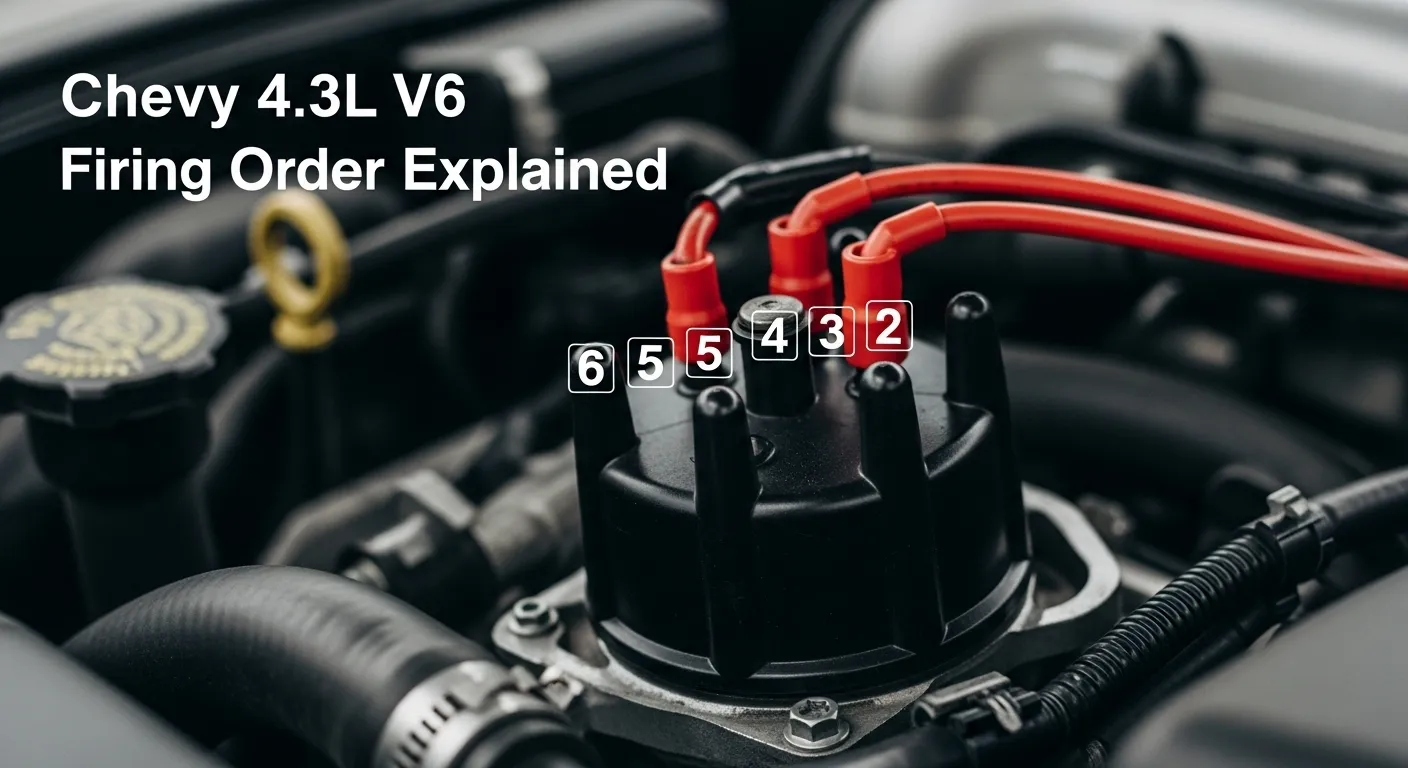
Only difference between those versions is the fuel system and engine management. LV1 added direct injection. LV3 added active fuel management where it shuts down cylinders to save gas. But the firing order never changed.
Now here’s where people get confused. There was also a 4.3L V8 way back in the day. Different engine entirely. That one fired in a completely different sequence because it had eight cylinders instead of six.
Don’t confuse the two. If you’ve got a V6, it’s always 1-6-5-4-3-2. Period. I’ve seen guys try to use V8 firing orders on their V6. Doesn’t work. Can’t work. Wrong number of cylinders.
Chevy 4.3L Cylinder Numbering & Diagram
Cylinder numbering is straightforward once you know the pattern. Stand in front of the truck looking at the engine. Right side has cylinders 1, 3 and 5. Left side has cylinders 2, 4 and 6.
Cylinder one is always at the front. Closest to the radiator. On the right bank. So looking from front to back on the right side you’ve got 1, then 3, then 5. Left side from front to back is 2, then 4, then 6.

Pretty simple pattern. Odd numbers on the right. Even numbers on the left. Numbering starts at the front. This matches GM’s V8 layout. Makes it easier if you work on different engines. Once you know one, you basically know them all.
When you’re hooking up spark plug wires, you need to know exactly which cylinder is which. Mix them up and you’ve got wires going to the wrong spots. I always start at cylinder one. Connect that wire first. Then work through the firing order from there. Keeps everything organized.
Right bank holds 1, 3, 5. Left bank holds 2, 4, 6. Front cylinder on the right is always number one. Remember that and you’re good.
2006 Chevy 1500 4.3 V6 Firing Order & Dead Center
The 2006 Chevy Silverado 1500 with the 4.3L V6 uses the same 1-6-5-4-3-2 firing order as every other version. But when you’re setting timing or installing a distributor, you also need to know about top dead center. That’s when the piston is at its highest point in the cylinder.
For cylinder one, you want it at top dead center on the compression stroke when you’re installing the distributor. Both valves should be closed. Piston all the way up.
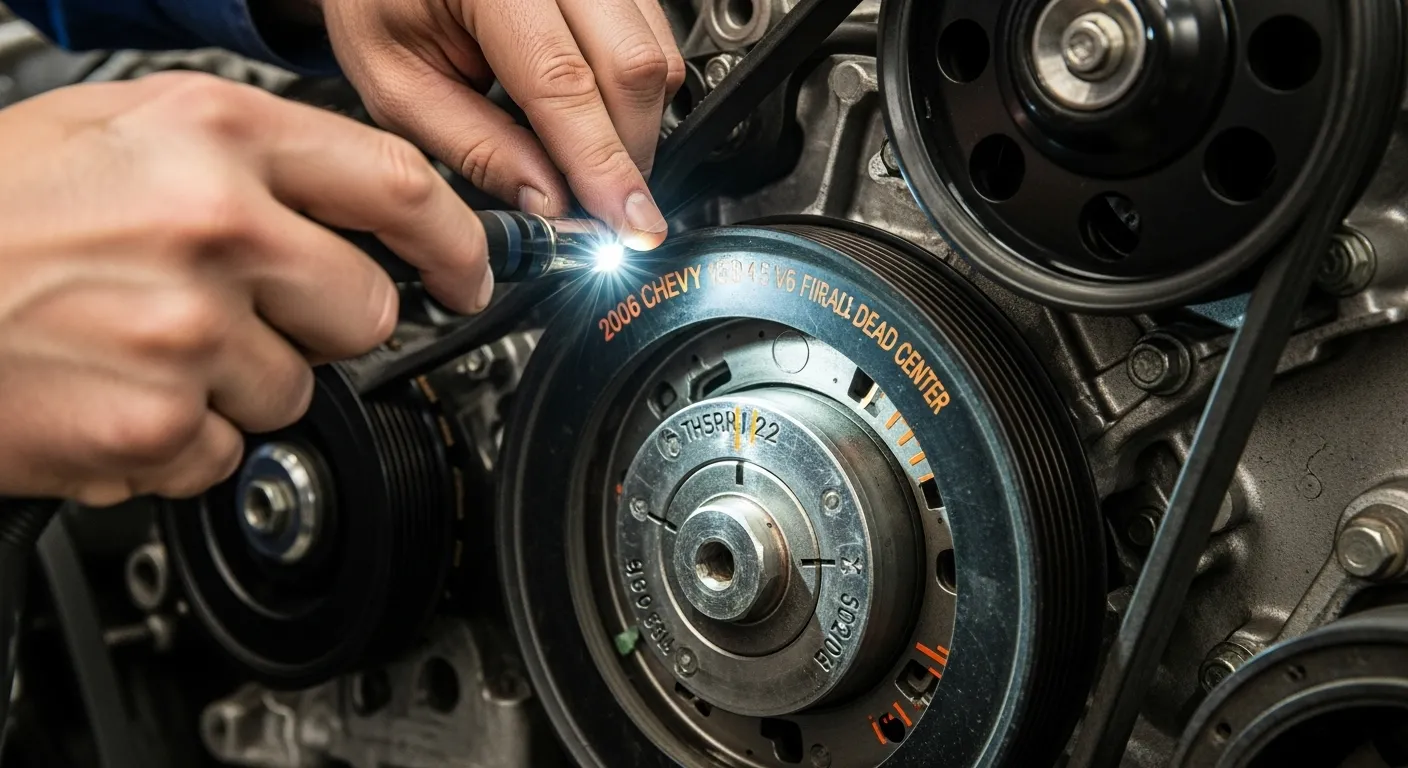
You can find this by removing the number one spark plug and sticking a screwdriver or a long piece of dowel in the hole. Rotate the engine by hand using a wrench on the crank pulley. When the screwdriver or dowel gets pushed out as far as it’ll go, you’re at top dead center.
Make sure you’re on the compression stroke though. The piston comes up twice per cycle. Once on compression, once on exhaust. You want compression. Easy way to tell is both valves will be closed.
Once you’ve got cylinder one at top dead center on compression, the rotor in the distributor should point to the number one terminal. Then you follow the firing order around the distributor cap. Get this wrong and the engine might not start at all. Or it’ll start but run backwards. Yeah, that’s actually possible.
Chevy 4.3L Vortec Engine Firing Order & Variants
The Vortec version of the 4.3L was the most common. Ran from the mid 90s through the early 2010s. Still used the 1-6-5-4-3-2 firing order. No changes there.
Main difference with Vortec was the cylinder head design and fuel injection system. Made more power than the older throttle body injection models. Better fuel economy too.

Then in 2014 GM introduced the LV1 version. Direct injection. Variable valve timing. More sophisticated engine management. But same firing order. The LV3 came after that. Added active fuel management. Engine could shut down cylinders 1 and 4 during light load cruising. Improved highway fuel economy by a few MPG.
Even with all those changes, firing order stayed 1-6-5-4-3-2. GM wasn’t about to redesign the crankshaft and change a firing order that had worked perfectly for decades. So whether you’re working on a 1995 Vortec in a GMC Sierra or a 2016 LV3 in a Silverado, the spark plug wires go in the same sequence.
Makes life easier for mechanics. Don’t have to memorize different orders for different years. Just remember one sequence and you’re covered.
Vehicle Applications: Where the 4.3L V6 Was Used
This engine showed up in so many different vehicles it’s hard to list them all. Chevy Silverado 1500. GMC Sierra 1500. Both used it as the base V6 option for years.
Chevy Express vans. GMC Savana vans. Perfect for work vans and shuttle buses that needed decent power without V8 fuel consumption.

Chevy S10 and GMC Sonoma compact pickups. Gave them enough power to tow light trailers without being overkill. Chevy Blazer and GMC Jimmy SUVs. Good balance of power and efficiency for family hauling.
Chevy Astro and GMC Safari vans. Popular with contractors and families alike. Even some Cadillac Escalades in certain markets got a version of this engine. Point is, if it was a GM truck, van or SUV between 1985 and 2014, there’s a decent chance it could be ordered with the 4.3L V6.
Made it one of the most common engines on American roads. Parts were cheap. Mechanics knew how to work on them. Owners trusted them.
Common Problems with Wrong Firing Order
Hook up the plug wires in the wrong order and you’ll know immediately. Engine runs terrible. Rough idle. Shakes like crazy. No power when you hit the gas. Check engine light comes on. Usually throws misfire codes for multiple cylinders.
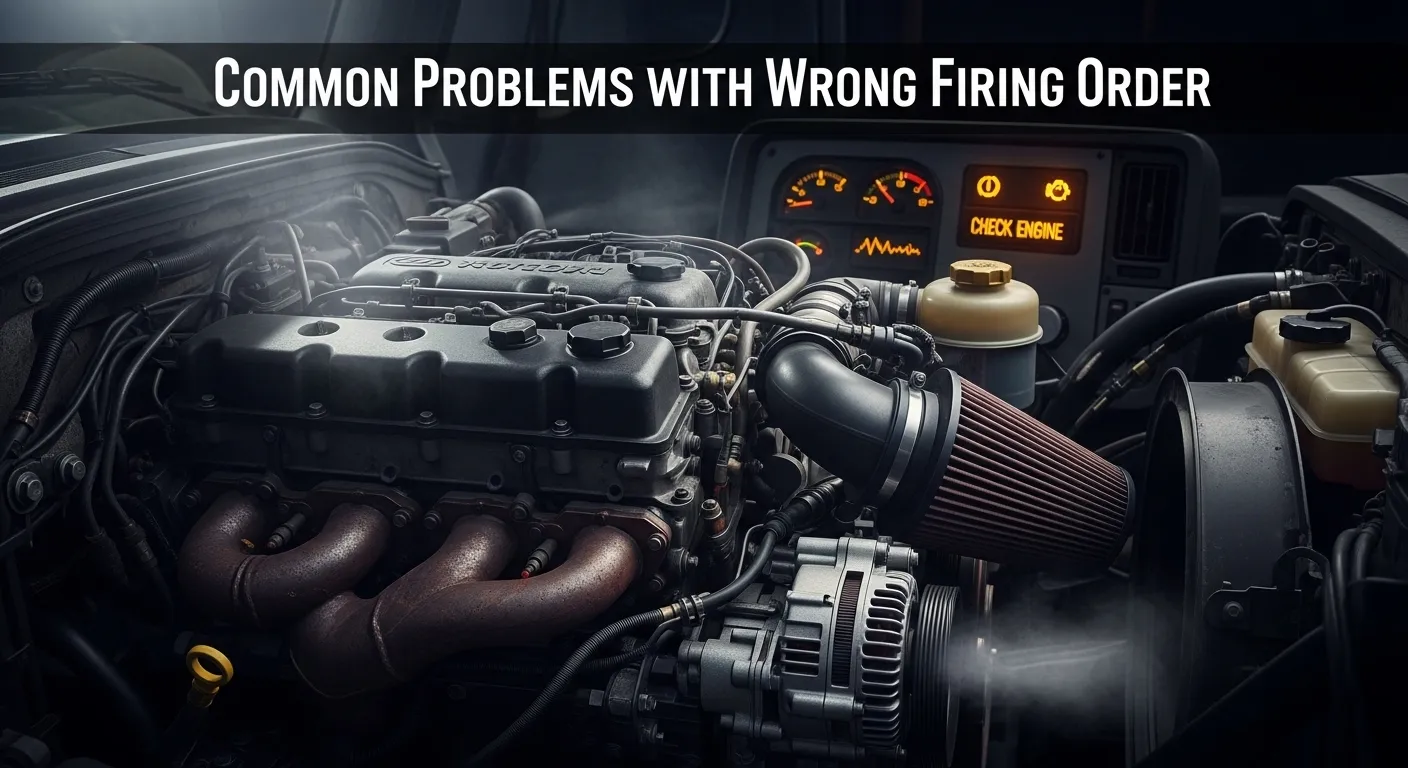
Fuel economy tanks because combustion timing is all wrong. You’re burning gas without making proper power. Keep driving it like that? You’ll damage stuff. Exhaust valves get burned because they’re opening at the wrong time. Catalytic converter gets overloaded with unburned fuel. Pistons can crack from detonation.
I’ve seen engines with 5,000 bucks worth of damage because somebody ran them with the wrong firing order for months. Thought they just had a bad engine. Never bothered checking if the wires were right.
Quick diagnosis is pretty simple. Pull the plug wires off one at a time while the engine’s running. If removing a wire makes no difference in how the engine runs, that cylinder wasn’t firing anyway. Probably means the wire’s going to the wrong spot.
Correct fix takes maybe twenty minutes. Note where each wire is. Pull them all off. Clean the contacts. Put them back in the right order using the 1-6-5-4-3-2 sequence. Start with cylinder one. Connect that wire. Then follow the firing order. Next wire goes to cylinder six. Then five. Then four. Then three. Last wire goes to cylinder two.
Double check everything before you start the engine. Make sure each wire is seated properly in the distributor cap and on the spark plug. Fire it up. If you did it right, engine runs smooth immediately.
Firing Order Charts: Chevy vs Ford vs Mopar vs AMC
Different manufacturers used different firing orders. Worth knowing if you work on multiple brands. Chevy 4.3L V6 is 1-6-5-4-3-2 like we’ve covered. Ford’s 4.2L V6 used 1-4-2-5-3-6. Completely different pattern.
Most Chevy V8s run 1-8-4-3-6-5-7-2. That’s for small block and LS engines. Mopar V8s like the 318 or 360 use 1-8-4-3-6-5-7-2. Same as Chevy actually. Old AMC inline six engines fired 1-5-3-6-2-4. Totally different because it’s a straight six instead of a V configuration.
Point is, you can’t assume. Have to know what you’re working on. Look it up if you’re not sure. I keep a firing order chart posted in my shop. Reference it anytime I’m doing plug wires on something I don’t work on regularly. Saves me from making stupid mistakes.
Expert Tips, Maintenance Advice & Final Thoughts
Always verify cylinder numbering before you start any work. Right bank is 1-3-5. Left bank is 2-4-6. Front cylinder on the right is number one.
When replacing spark plug wires, do one wire at a time. Pull the old wire off cylinder one. Put the new wire on cylinder one. Then move to the next cylinder. Keeps you from getting confused.
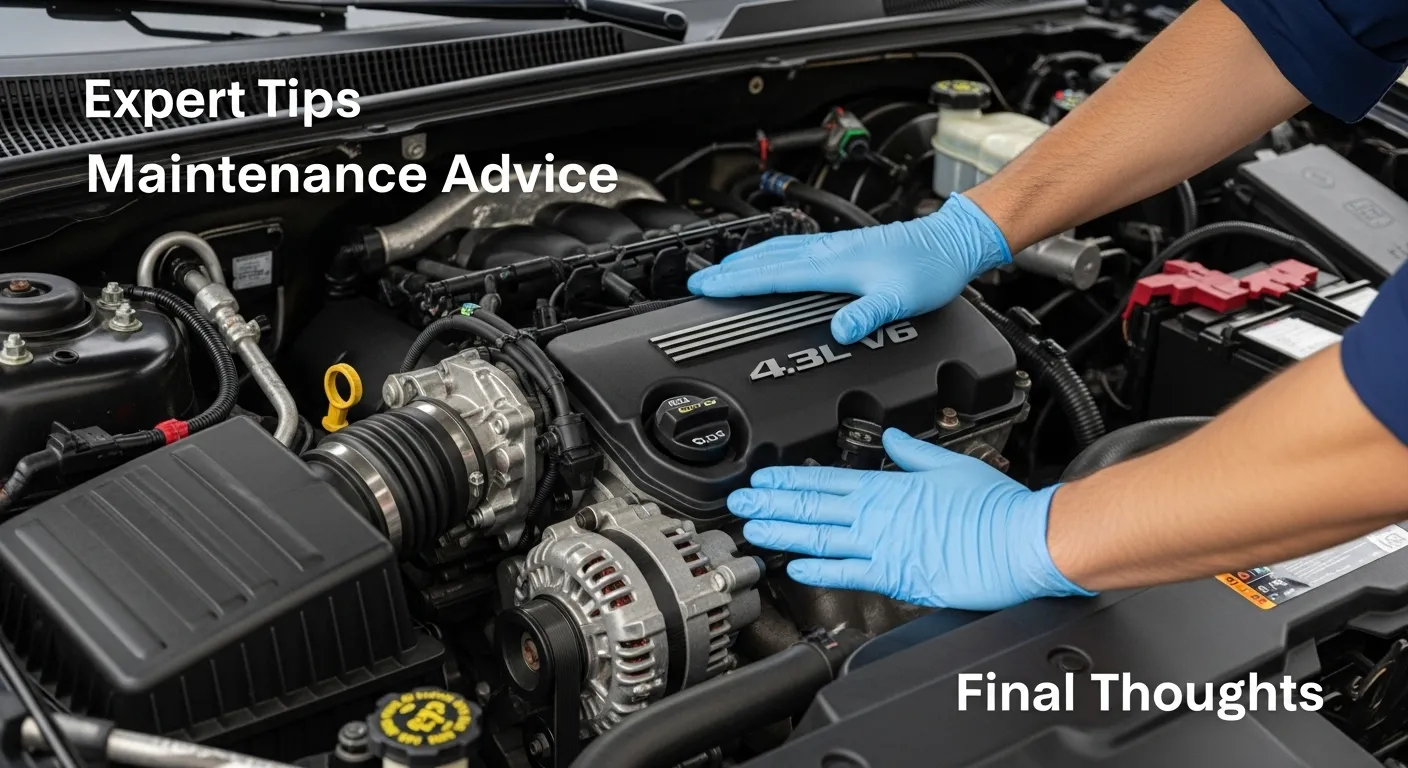
If you’re installing a distributor, make absolutely sure cylinder one is at top dead center on the compression stroke. Both valves closed. Rotor pointing at the number one terminal on the cap.
Mark your plug wires with tape and a marker if you need to. Write the cylinder number on the tape. Makes reconnecting them foolproof. Use dielectric grease on the plug wire boots. Helps them seal better. Prevents moisture from causing misfires.
Check your plug wires for cracks or damage while you’re in there. These engines generate a lot of heat. Wires get brittle over time. Replace them if they look questionable. The 4.3L is a good engine. Reliable. Easy to work on. But you have to do the basics right. Wrong firing order will trash it fast.
Whether you’ve got an old Vortec or a newer LV1 or LV3, the sequence is always 1-6-5-4-3-2. Write it down. Memorize it. Check it twice before you start the engine. Do it right and this engine will run forever. Screw it up and you’re looking at expensive repairs.
FAQs
What are the common problems with a 4.3 Chevy engine?
Common issues include intake manifold gasket leaks, distributor problems and occasional misfires if maintenance is neglected. Most of these are easy fixes if you catch them early.
What is the best firing order for a V6?
For the Chevy 4.3L V6, the best and only correct firing order is 1-6-5-4-3-2. Other V6 engines from different manufacturers might use different sequences but this one works perfectly for the Chevy.
What is the firing order of the 2002 GMC Sonoma 4.3L?
The 2002 GMC Sonoma with the 4.3L V6 uses the standard 1-6-5-4-3-2 firing order. Cylinder layout is the same as all other 4.3L engines.
What engine firing order is 1-8-4-3-6-5-7-2?
That firing order belongs to most Chevy small block V8 engines and some Mopar V8s. It’s for eight cylinder engines, not the six cylinder 4.3L we’re discussing here.
What happens if a firing order is wrong?
Engine runs extremely rough, loses power, gets terrible fuel economy and throws misfire codes. Keep running it wrong and you’ll damage valves, crack pistons or destroy the catalytic converter. Fix it immediately if you suspect wrong firing order.